
Huawei is betting that the future of AI infrastructure will depend as much on energy systems as on computing power
Updated
August 10, 2026 5:56 PM

Blue light painting with a lightbulb. PHOTO: UNSPLASH
As AI companies build larger models and deploy more AI agents, the industry is running into a new constraint: electricity. The challenge is no longer just about computing power. It is increasingly about how to supply, manage and sustain the energy needed to run AI infrastructure at scale.
That was the central argument behind Huawei’s latest AI data center strategy unveiled at its Global AIDC Industry Summit in Dongguan.
The company introduced what it calls a grid-interactive AIDC strategy, focused on redesigning AI data centers around power supply, cooling systems and energy management. AIDC refers to AI data centers built specifically for large-scale AI computing workloads.
The announcement reflects a broader shift happening across the industry. As AI systems grow larger, data centers are consuming more electricity and generating more heat than traditional computing infrastructure was designed to handle. Companies are now being forced to rethink not just chips and servers, but the physical systems supporting them.
Huawei argues that future AI infrastructure will need closer coordination between computing systems and energy grids. The company says traditional data center designs are struggling to keep up with fluctuating AI workloads, rising power density and the growing use of renewable energy sources.
Hou Jinlong, Director of the Board of Huawei and President of Huawei Digital Power, said: "The booming AI industry, widely adopted large models, and numerous AI agents are creating huge energy demands, set to boost the global AIDC capacity. Electricity is essential for computing; energy is the foundation for AI long-term development. Computing and electricity will deeply synergize and empower each other, progressively building an integrated framework that brings together new power systems and AI infrastructure."
A large part of Huawei’s strategy focuses on power architecture. AI workloads can create sudden spikes in electricity demand, especially in high-density computing environments. To manage that, Huawei says it plans to develop new power systems that combine grid-friendly UPS infrastructure with energy storage technologies.
Cooling is becoming another major pressure point. AI servers generate significantly more heat than traditional enterprise systems and Huawei says liquid cooling is now becoming essential for large-scale AI deployments. The company introduced a liquid cooling system designed to improve long-term thermal management inside high-density AI environments.
Huawei is also pushing modular construction methods to reduce deployment times for AI data centers. Instead of building infrastructure entirely onsite, parts of the system can be prefabricated and tested in factories before installation.
Bob He, Vice President of Huawei Digital Power, said: "The global AI industry is booming, and the token demand surges. As such, the AIDC industry is entering the Token era."
As part of that shift, Huawei introduced a proposed measurement system called the TokEnergy Index. The company says the metric is designed to measure the relationship between energy consumption and AI computing output, rather than relying only on traditional data center efficiency metrics such as PUE.
The broader message behind the strategy is that AI infrastructure is becoming an energy engineering problem as much as a computing problem. As global demand for AI continues to rise, companies across the sector are beginning to realise that the future of AI may depend not only on better models, but also on whether power grids and data centers can keep up with them.
Keep Reading
The IT services firm strengthens its collaboration with Google Cloud to help enterprises move AI from pilot projects to production systems
Updated
March 17, 2026 1:02 AM
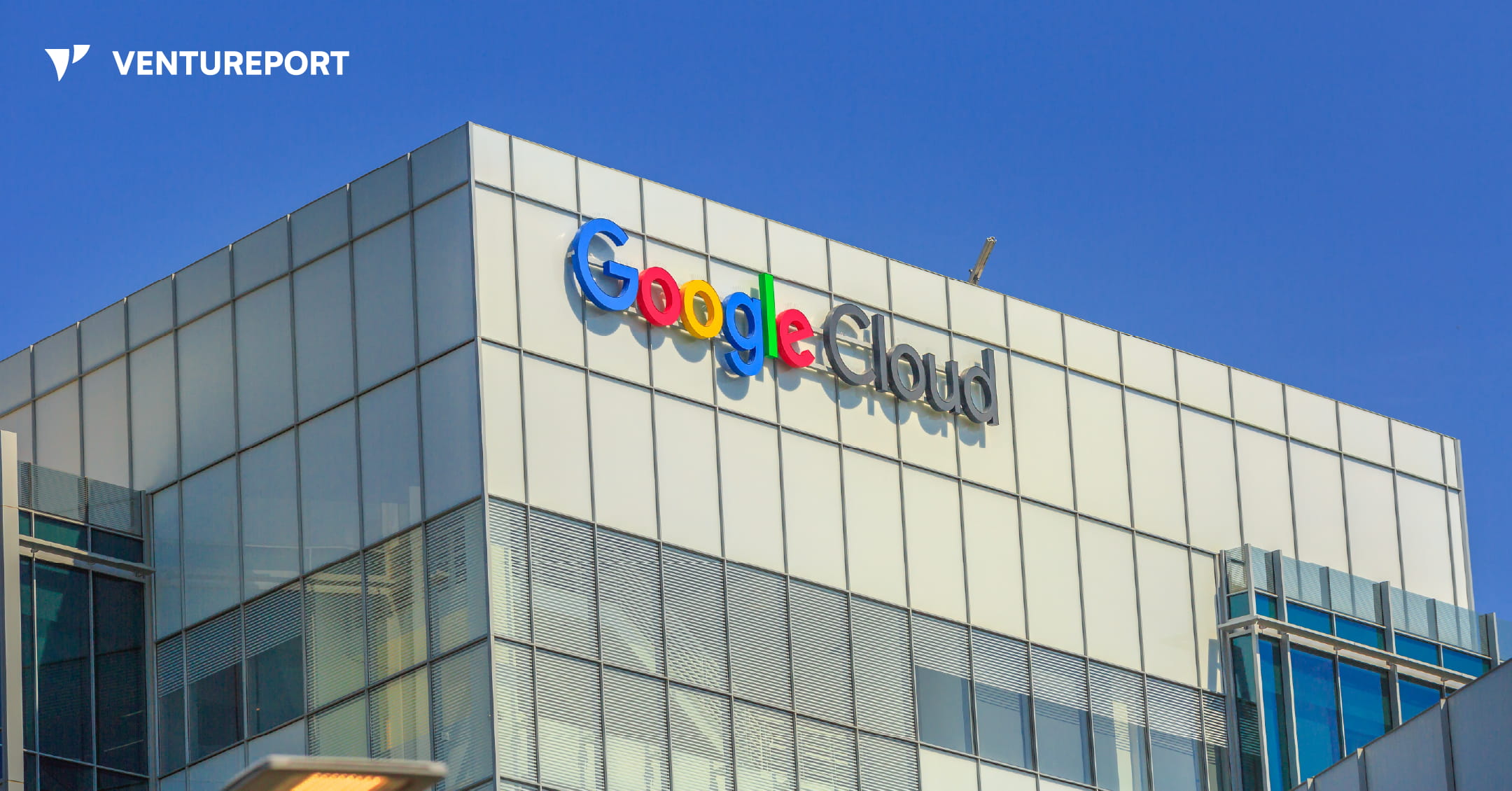
Google Cloud building. PHOTO: ADOBE STOCK
Enterprise interest in AI has moved quickly from experimentation to execution. Many organizations have tested generative tools, but turning those tools into systems that can run inside daily operations remains a separate challenge. Cognizant, an IT services firm, is expanding its partnership with Google Cloud to help enterprises move from AI pilots to fully deployed, production-ready systems.
Cognizant and Google Cloud are deepening their collaboration around Google’s Gemini Enterprise and Google Workspace. Cognizant is deploying these tools across its own workforce first, using them to support internal productivity and collaboration. The idea is simple: test and refine the systems internally, then package similar capabilities for clients.
The focus of the partnership is what Cognizant calls “agentic AI.” In practical terms, this refers to AI systems that can plan, act and complete tasks with limited human input. Instead of generating isolated outputs, these systems are designed to fit into business workflows and carry out structured tasks.
To make that workable at scale, Cognizant is building delivery infrastructure around the technology. The company is setting up a dedicated Gemini Enterprise Center of Excellence and formalizing an Agent Development Lifecycle. This framework covers the full process, from early design and blueprinting to validation and production rollout. The aim is to give enterprises a clearer path from the AI concept to a deployed system.
Cognizant also plans to introduce a bundled productivity offering that combines Gemini Enterprise with Google Workspace. The targeted use cases are operational rather than experimental. These include collaborative content creation, supplier communications and other workflow-heavy processes that can be standardized and automated.
Beyond productivity tools, Cognizant is integrating Gemini into its broader service platforms. Through Cognizant Ignition, enabled by Gemini, the company supports early-stage discovery and prototyping while helping clients strengthen their data foundations. Its Agent Foundry platform provides pre-configured and no-code capabilities for specific use cases such as AI-powered contact centers and intelligent order management. These tools are designed to reduce the amount of custom development required for each deployment.
Scaling is another element of the strategy. Cognizant, a multi-year Google Cloud Data Partner of the Year award winner, says it will rely on a global network of Gemini-trained specialists to deliver these systems. The company is also expanding work tied to Google Distributed Cloud and showcasing capabilities through its Google Experience Zones and Gen AI Studios.
For Google Cloud, the partnership reinforces its enterprise AI ecosystem. Cloud providers can offer models and infrastructure, but enterprise adoption often depends on service partners that can integrate tools into existing systems and manage ongoing operations. By aligning closely with Cognizant, Google strengthens its ability to move Gemini from platform capability to production deployment.
The announcement does not introduce a new AI model. Instead, it reflects a shift in emphasis. The core question is no longer whether AI tools exist, but how they are implemented, governed and scaled across large organizations. Cognizant’s expanded role suggests that execution frameworks, internal deployment and structured delivery models are becoming central to how enterprises approach AI.
In that sense, the partnership is less about new technology and more about operational maturity. It highlights how AI is moving from isolated pilots to managed systems embedded in business processes — a transition that will likely define the next phase of enterprise adoption.