
A planned city explores how real-time data and automation can shape everyday urban systems
Updated
May 1, 2026 2:25 PM

A package being delivered by drone using the Meituan app. PHOTO: ADOBE STOCK
A newly built district in northern China is being used to test how cities function when infrastructure, data and automation are integrated from the ground up. In Xiong'an New Area, traffic systems, public monitoring and urban services are designed to respond in real time rather than operate on fixed rules.
At the centre of this is a traffic management system powered by more than 20,000 roadside sensors. These track traffic flow, vehicle types and congestion levels, feeding data into an AI system that adjusts signals in milliseconds. Official figures show this has reduced the average number of stops per vehicle by half. The system also detects equipment faults, sends alerts and generates maintenance requests without manual input.
Automation extends beyond roads. Drones are deployed across the city for routine monitoring. In the Rongdong district, roadside units release drones that follow fixed patrol routes of around 1.27 kilometres, completing each run in about five minutes. They are used to monitor traffic, detect illegal parking and inspect public spaces. Similar systems operate in parks to track water levels and issue flood alerts, while in some work zones, drones transport packages of up to five kilograms between buildings.
These applications reflect a broader approach: integrating multiple systems into a single, connected urban framework. Unlike older cities where infrastructure evolves in layers, Xiong’an has been built with coordinated digital systems from the outset. This allows transport, maintenance and public services to operate through shared data systems rather than in isolation.
Alongside this, the area is being developed as a technology and innovation hub. Since its establishment in 2017, it has attracted more than 400 branches of state-owned enterprises and over 200 companies working in sectors such as artificial intelligence, aerospace information and digital technology.
This ecosystem supports projects like the “Xiong’an-1” satellite, which completed research, design, production and testing within eight months of regulatory approval in 2025. The satellite is currently undergoing testing, with a planned launch expected in the second quarter of 2026. It forms part of a broader push to build an aerospace information industry in the region.
The area is also structured to bring companies, research and production closer together. At the Zhongguancun Science Park in Xiong’an, which spans 207,000 square metres, 269 technology companies operate across sectors including AI, robotics and biotechnology. The park hosts more than 2,700 researchers and industry professionals, with companies organised into sector-specific clusters.
Policy support continues to shape this development. In early 2026, the State Council approved the upgrade of Xiong’an’s high-tech industrial development zone to national level status, with a focus on attracting high-end research and strengthening links between scientific development and industrial output.
Xiong’an is positioned as a testing ground for how smart city systems can be deployed at scale. The model depends on coordinated planning, integrated infrastructure and sustained policy support. Whether these systems can be adapted to existing cities, where infrastructure and governance are more fragmented, remains an open question.
Keep Reading
As global financial landscapes shift, Noah outlines a new AI-first approach to helping families protect and grow their wealth.
Updated
January 8, 2026 6:31 PM
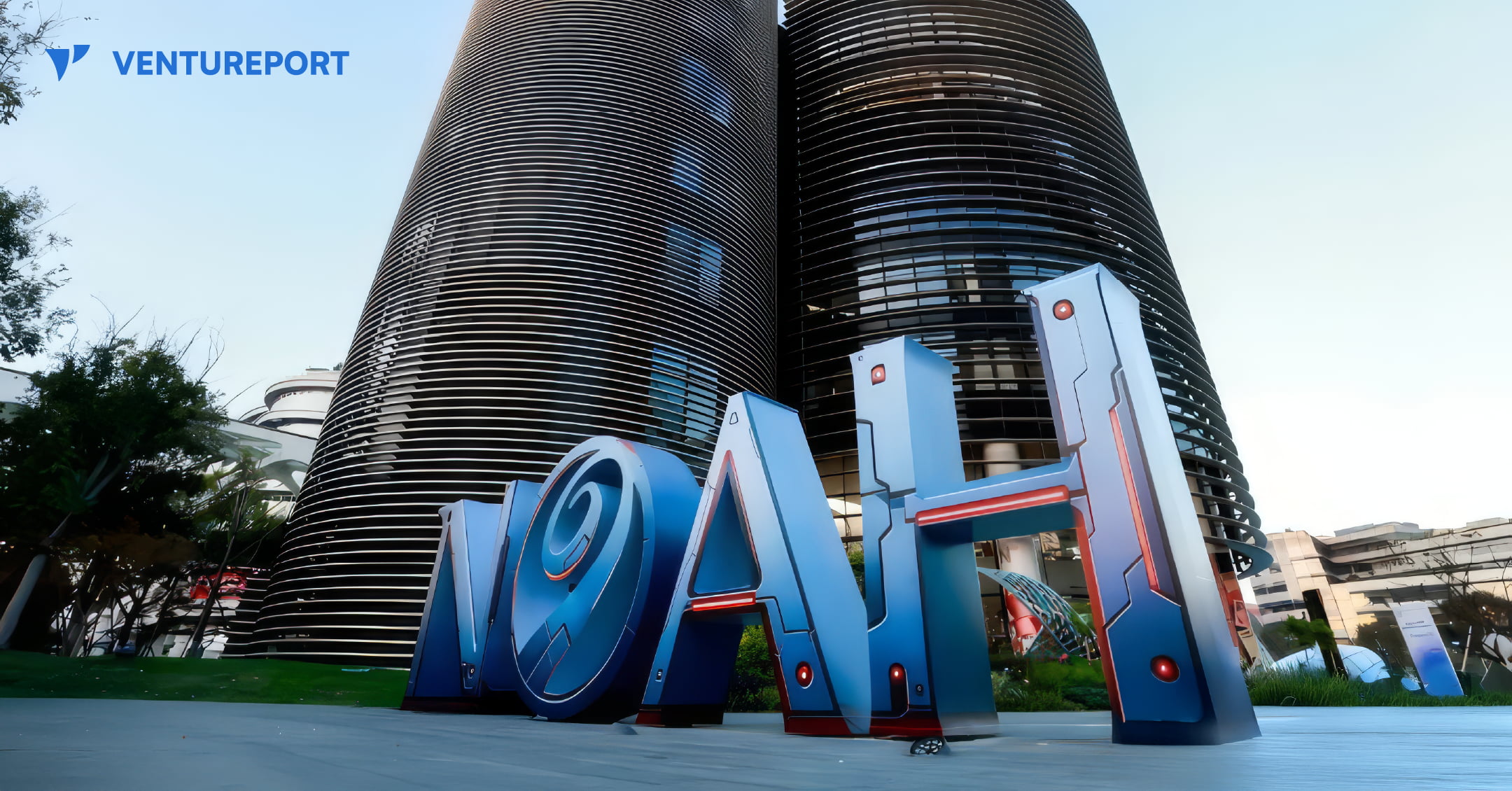
Noah’s Black Diamond Summit. PHOTO: ARK WEALTH
Noah Holdings, one of Asia’s leading wealth management firms serving global Chinese high-net-worth families, hosted its annual Black Diamond Summit in Macau from December 7–11. The city has become a significant gathering place for Noah’s community, where clients, partners, and experts converge each year to explore how global trends are transforming wealth and family life. This year’s theme, “AI Together, Co-Generating the Future”, set the tone for a conversation about how modern wealth management must adapt in an age defined by artificial intelligence.
More than 3,000 attendees joined discussions that connected technology, global mobility, and long-term family planning. The Summit built on earlier sessions held in Shanghai, creating a continuous dialogue around one central question: how can families prepare for a world that is becoming more digital, more complex and more interconnected?
A major moment came when Noah introduced “Noya”, its new AI Relationship Manager. Noya is now part of the upgraded iARK Hong Kong and Singapore apps. It is built to support licensed human advisors, not replace them. The goal is simple: combine human judgment with AI intelligence to help clients understand their wealth more clearly and manage it across borders. Noya offers real-time insights, deeper personalisation, cleaner access to global financial information, smoother coordination between regions, and end-to-end execution through Noah’s global booking centres.
The Summit’s tone shifted toward long-term thinking when Co-Founder and Chairwoman Norah Wang delivered her keynote, “From Chaos to Clarity: Building a Global Operating System for Wealth Management”. She reflected on twenty years of serving more than 400,000 clients and explained that families today face new pressures. As she put it, “The real pain point for Chinese families today is not investment performance, but navigating the growing complexities of a global lifestyle”. Her message was straightforward: wealth is no longer just about returns. It is about managing uncertainty in a world where technology, geopolitics, and mobility collide.
Wang described how two major shifts have shaped modern wealth—first the Internet Era, which changed how people built wealth, and now what she calls the AI Civilisation Era, which is changing how people must protect it. She outlined the forces that influence today’s decisions: geopolitical shifts, persistent inflation, the rising importance of security and supply-chain technologies, the spread of AI, and the need for stronger family governance across generations. Each of these factors adds complexity, and families need tools that help them see the bigger picture.
To respond to this reality, Noah presented its integrated global wealth infrastructure. It is built on three pillars:
Together, these pillars function as an AI-supported system designed to simplify global complexity and help families preserve long-term stability.
One of the most discussed conversations featured Noah’s CEO, Zander Yin, and Tony Shale, Co-Founder & Chairman of Asian Private Banker China. They spoke about how AI is transforming private banking in Asia. Their view was that wealth management is moving from a product-centred model to one led by insight, trust, and human-tech collaboration. AI may accelerate analysis, but human expertise will continue to guide judgment, relationships, and long-term strategy.
The closing message of the Summit centred on redefining what prosperity means in an AI-driven age. For Noah, wealth is no longer a destination. It is an ongoing journey through a world that is increasingly fast-moving and unpredictable. As Wang noted, “With AI reshaping the very foundations of civilisation, wealth and financial freedom represent not a static endpoint, but a continuous journey. Here, we find our purpose: to help global Chinese investors navigate an increasingly complex world and achieve true prosperity, supported by resilient wealth management infrastructure and deep human expertise”.
The Summit ended on that note—a reminder that the future of wealth is not only about financial assets, but about clarity, confidence and the ability to adapt as the world transforms.