
Here’s the story of how a quirky toy transformed into a worldwide phenomenon.
Updated
January 8, 2026 6:35 PM
.jpg)
Labubu vinyl figure displayed with surprise blind boxes in a store in Guayaquil, Ecuador. PHOTO: ADOBE STOCK
Trends move fast. One moment it's Dubai’s viral “Kunafa” chocolate bar, the next it’s Labubu—a mischievous-looking doll—racks up US$670 million in revenue this year, even outpacing Barbie and Hot Wheels. Celebrities like BLACKPINK’s Lisa and Dua Lipa have been spotted with Labubu dolls—whether as bag charms or in playful social posts.
For those unfamiliar, Labubu is the breakout character from the book series“The Monster” by Hong Kong-born, Belgium-based artist Kasing Lung. Alongside Labubu, the series features other quirky monsters like Zimomo, Mokoko and Tycoco—often grouped together as “Labubus”. These vinyl Labubu figures first entered the collectible scene in 2011 as “Monsters”, produced by Hong Kong-based production house How2Work. In 2019, Lung signed an exclusive licensing deal with Pop Mart, a Beijing-based toy collectible company, which further boosted the recognition and popularity of the franchise.
At first glance, Labubu might seem like just another fad. But the craze shows something deeper: in digital marketing, virality doesn’t happen by accident. It’s the result of timing, relatability and the rway global communities amplify trends.
So, what can marketers learn from the Labubu phenomenon? Let’s take a closer look.
Labubu’s unconventional aesthetics—a notorious grin, sharp teeth and wide eyes—break the traditional mold of “cute” toys. The social listening report from Meltwater, a media intelligence company reveals that from January to May 2025, mentions of “cute” outnumbered “ugly” nearly five to one. This “ugly-cute” look gave Labubu its identity and helped it stand out in a crowded market.
Marketing lesson: In a world of where everything blends together on endless feeds, uniqueness wins. Standing out with bold, even unconventional design choices can spark curiosity and desire. By leaning into what makes a product different, brands create instant recognition and give people something worth talking about.
Labubu’s surge in popularity is deeply rooted in Pop Mart’s focus on building genuine relationships with its fans. The company encourages user-generated content— unboxings, fan art, influencer stories—that fueled Labubu’s spread online and build brand engagement. Fans weren’t just buying toys; they were becoming part of a community that celebrated each new design.
Marketing lesson: Customers don’t want to feel like faceless buyers. They want to feel seen, heard and part of something bigger. By encouraging engagement and valuing contributions, brands can turn casual customers into loyal advocates who spread the word on their behalf.
While Pop Mart notes Labubu is most popular among women aged 18–30, its audience has broadened beyond that group. The design draws on influences from Nordic mythology and East Asian “kawaii” culture, making it feel both familiar and new to global audiences.
For Millennials and Gen Xers, Labubu also sparks nostalgia for toy crazes like Tickle Me Elmo and Beanie Babies that once lit up childhoods before fading away. Together, these layers of cultural resonance and cross-generational charm give Labubu an unusually broad reach.
Marketing lessons: Relatability is a powerful driver of virality. When a product can connect across generations and cultures, it expands far beyond a niche fan base. Brands that blend familiarity with novelty can build bridges to much larger audiences.
Labubu’s blind box model makes buying feel like a game. The thrill of not knowing which design you’d unwrap made collecting Labubus fun. It also turns buying into an emotional experience rather than a rational choice, fueling the urge to complete entire collections.
Besides, the suspense itself became content—millions watched unboxing videos to share in the excitement. Even BLACKPINK’s Lisa admitted she began with “only three to four” Labubus but soon wanted “a whole box” of the latest collection.
Marketing lesson: Mystery creates excitement, and excitement drives repeat purchases. By adding an element of surprise, brands can make the buying experience feels less like a transaction and more like a story unfolding. That thrill keeps customers coming back and makes the product easy to share online.
Pop Mart releases Labubus in limited drops, often tied to holidays or cultural events. Some editions include ultra-rare “chase” figures—appearing only once in every 144 boxes—creating a strong sense of urgency and fear-of-missing out (FOMO) among buyers. This strategy fuels a booming resale market, where regular figures retailing at US$25 can sell for US$200–US$300, and rare editions have even fetched prices up to US$150,000.
Marketing lessons: Scarcity isn’t just about limiting supply—it’s about building anticipation. By tying releases to events and sprinkling in rare editions, brands keep fans watching for the next drop. This combination of urgency and exclusivity transforms ordinary products into must-have collectibles.
Labubu has expanded its reach through creative brand collaborations. For instance, the Labubu x Coca-Cola series features figures in iconic red-and-white themes, while a Vans Old Skool drop merged streetwear in the clothing brand’s notable checkerboard pattern with collectibles. The One Piece collaboration blended Labubu’s quirky style with beloved anime heroes, appealing to fans of both worlds.
Marketing takeaway: Collaborations breathe fresh life into a brand and open doors to new audiences. Partnering with well-known names adds cultural weight and collectible value, while keeping the brand relevant in different communities. Done right, collaborations turn niche products into mainstream sensations.
Labubu’s phenomenal success is more than a passing craze. It’s proof that bold design, authentic community building, clever scarcity and cultural collaborations can transform a quirky idea into a global movement.
For marketers, the takeaway is simple: don’t just chase trends—create something real and let your community shape the story with you. Be bold, stay authentic and bring your fans along for the ride. That’s how brands move from fleeting hype to lasting cultural icons.
Keep Reading
The Hong Kong startup combines 3D-printed reef tiles, biodiversity monitoring and long-term data to help companies manage their impact on marine ecosystems.
Updated
August 18, 2026 11:32 PM
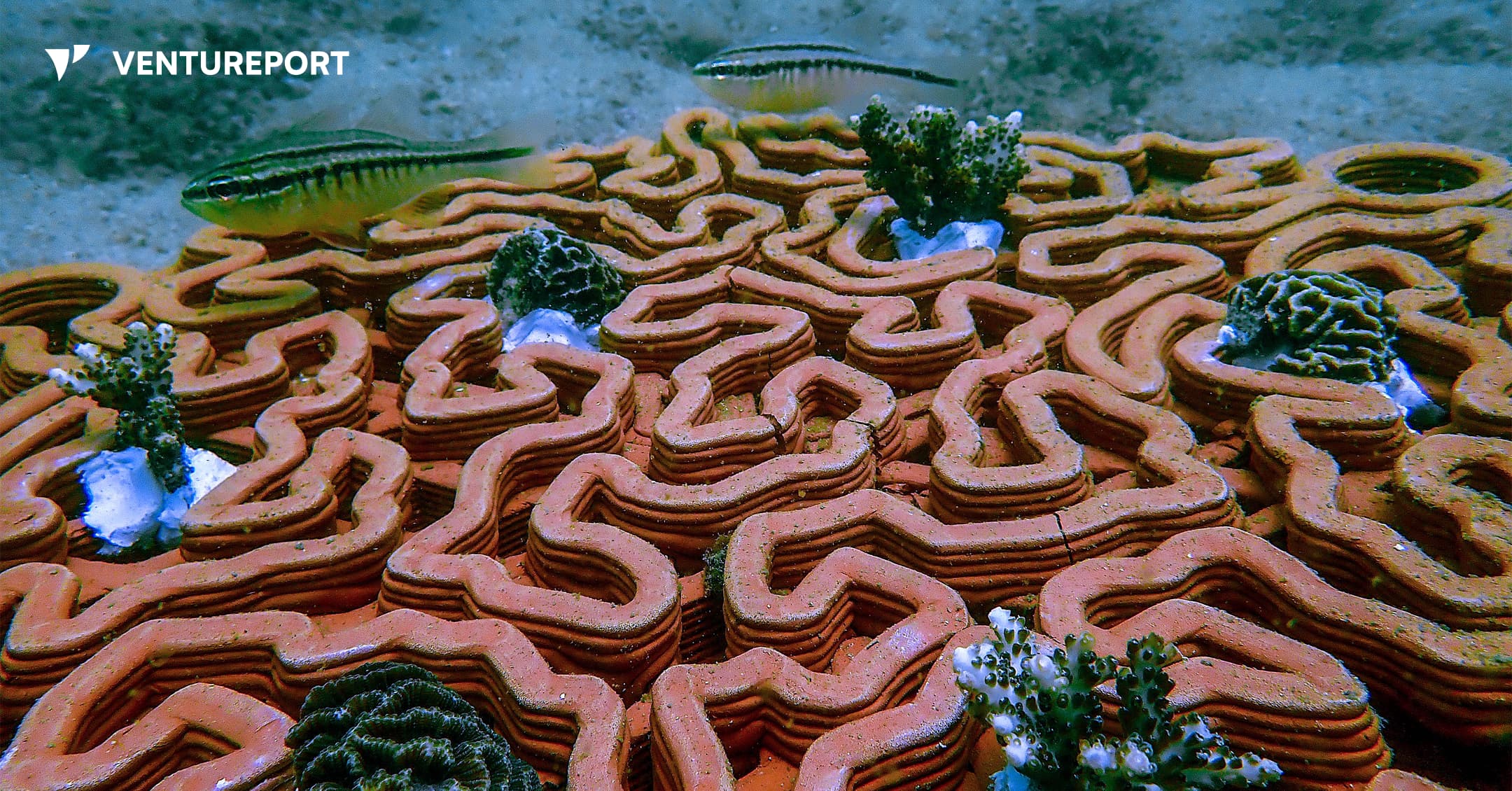
Young corals growing on Archireef's 3D-printed terracotta reef tiles beneath the sea. IMAGE: ARCHIREFF
Anyone who has snorkeled over a coral reef has probably admired its vibrant colours and the marine life swimming between its branches. What is less visible is how easily these ecosystems can be damaged. Rising ocean temperatures and pollution continue to put reefs under pressure, while coastal development creates another threat. Construction can stir up sediment that settles on corals, blocking the sunlight they need and making it harder for damaged reefs to recover.
Protecting marine ecosystems is becoming a shared responsibility. Alongside scientists, governments and conservation groups, businesses whose operations affect the ocean are increasingly expected to understand, manage and reduce their environmental impact. They must also show regulators, banks and investors that they are meeting their environmental commitments.
Archireef helps businesses meet those demands. Founded by Vriko Yu, the Hong Kong-rooted B2B startup specializes in marine ecosystem restoration and ocean nature risk management. Drawing on years of research at the University of Hong Kong, Yu built the company to help organisations understand, measure and reduce their impact on marine ecosystems.
Yu describes Archireef as an “end-to-end ocean nature risk management company”.
“What we offer them is a credible way to meet those obligations and stand behind the results,” she says.
One of the company’s main tools for restoring damaged marine ecosystems is its flagship 3D-printed terracotta reef tile. The tiles provide a stable foundation where young corals can attach, grow and survive over time.
Archireef chose terracotta instead of concrete and other conventional materials because it is pH-neutral and does not release harmful chemicals into the water. Its surface also gives corals a suitable place to attach naturally.
Before placing a single tile in the ocean, the team studies the proposed restoration site to determine whether recovery is possible. It assesses the water quality, biodiversity and general health of the ecosystem. As Yu explains, restoration should begin only where nature has a realistic chance to recover.
“Restoration isn’t about replacing nature or engineering a reef into existence. It is about removing the barriers and giving a degraded system the conditions it needs to begin recovering on its own”, she says.
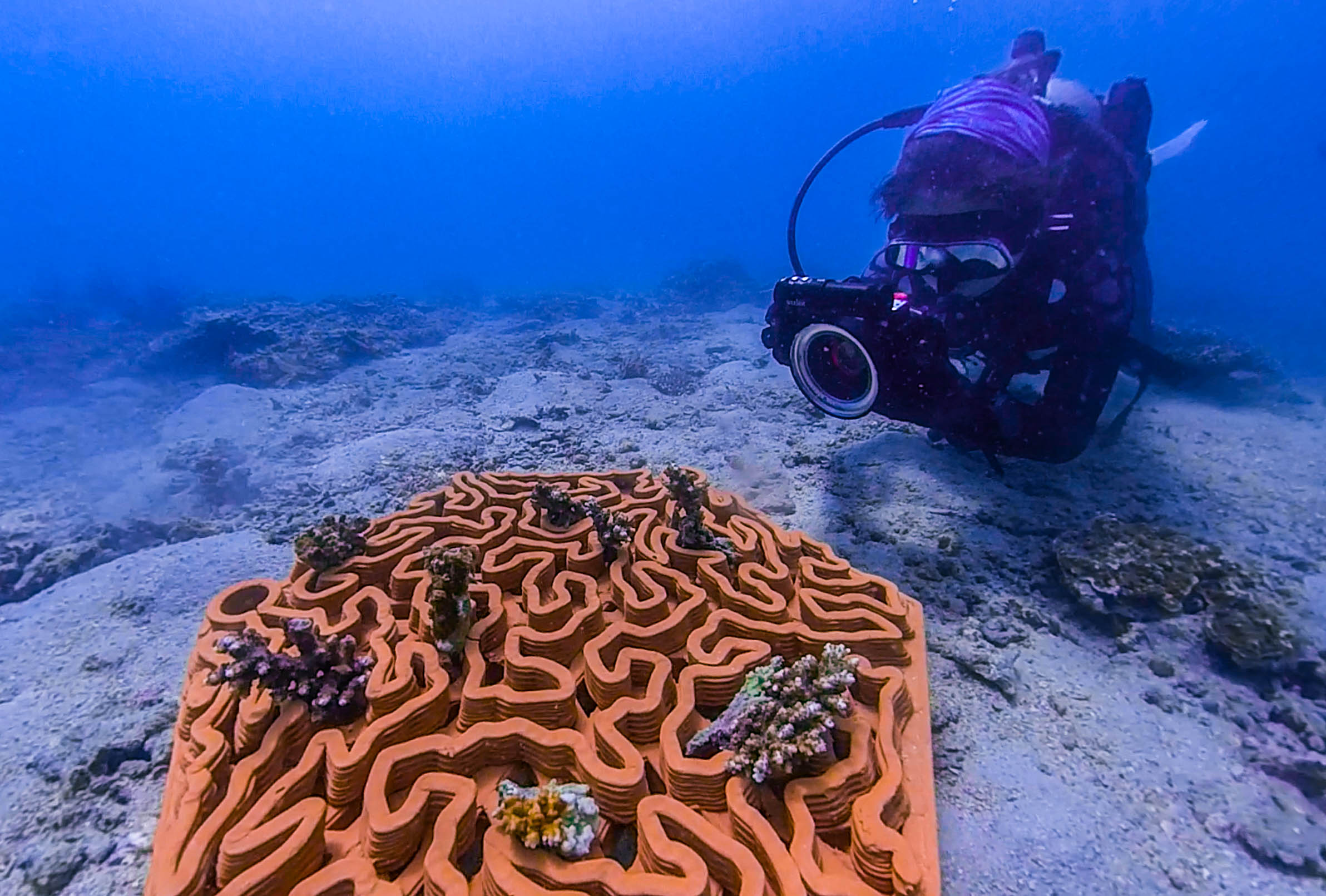
Once the team selects a site, divers carefully place the tiles on the seabed. Their curves, ridges and crevices imitate the structure of a natural coral reef, creating sheltered spaces for marine species. The design also helps limit sediment build-up, which can block sunlight and smother young corals.
.webp)
Archireef adjusts the shape of its reef tiles for each project.
“There’s no universal reef, so there’s no universal tile”, Yu says.
Instead of producing one standard model, the company adapts each design to the coral species, water conditions and surrounding marine environment. A coral restoration project in Hong Kong may therefore require a different tile from one in Saudi Arabia, even when the same manufacturing process is used.
“The biggest adaptation from site to site is usually the match between design, species and environment, not the manufacturing itself ”, Yu explains.
Although the reef tile is Archireef’s most recognizable innovation, Yu sees it as one part of a much broader service.
“The reef tile gets the attention because it’s tangible,” she says. “But the real product is the proof — defensible, audit-ready evidence of nature recovery that an organization can put in a disclosure and stand behind under scrutiny”.
Producing that evidence requires years of biodiversity monitoring. Long after the reef tiles have been installed, Archireef continues to track coral survival and the health of the surrounding marine ecosystem. Its monitoring methods include ecological surveys, AI-assisted species recognition, photogrammetry and environmental DNA testing.
Photogrammetry uses photographs to produce detailed 3D models of the reef. These models allow the team to measure changes in coral growth and reef structure over time.
Environmental DNA, commonly known as eDNA, offers another way to monitor marine biodiversity. Traditional ecological surveys often depend on divers recording the species they can see. eDNA testing instead examines traces of genetic material left in the water by marine organisms, including skin cells, mucus and waste.
By analyzing these traces, Archireef can detect species that may be hidden, difficult to identify or absent during a dive. This gives the company a more complete picture of the ecosystem and how it is changing.
For Archireef, the success of a coral reef restoration project is determined by what happens several years after installation.
“The indicators that matter aren’t the ones that look good on deployment day”, Yu says. “They’re the ones that show, two, three and five years on, whether a genuine ecosystem is establishing and sustaining itself”.
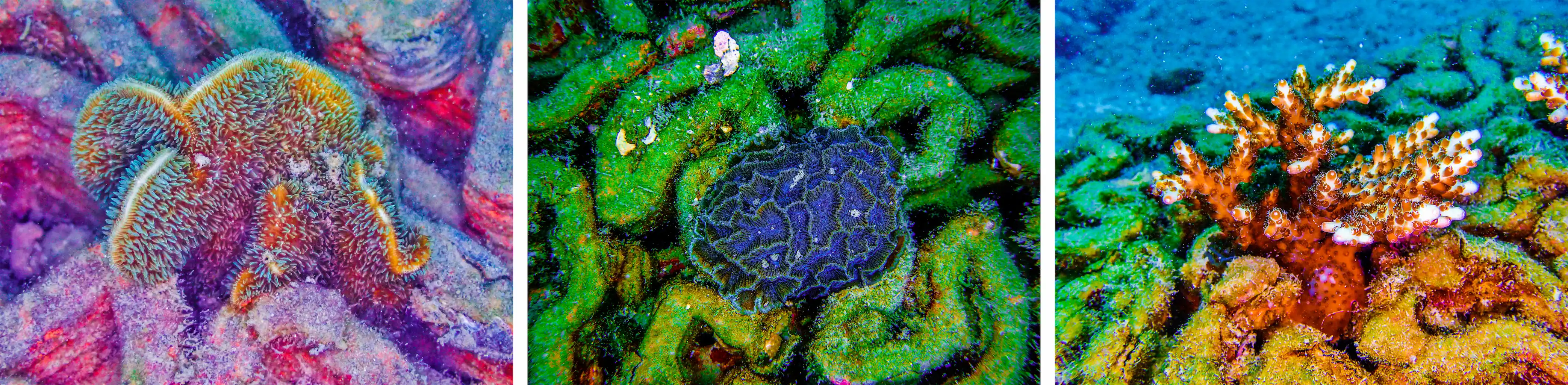
At the company’s first restoration site in Hoi Ha Wan, Hong Kong, around 90% of the transplanted corals remained alive four years after deployment. The long-term survival rate suggests that the ecosystem is recovering rather than simply appearing healthy during the early stages of the project.
Results like these have helped Archireef move beyond academic research and secure collaborations across the public and private sectors. In Hong Kong, the company has worked with government departments and public organisations responsible for coastal infrastructure and marine conservation.