
Sensing technology is facilitating the transition of drone delivery services from trial phases to regular daily operations.
Updated
January 23, 2026 10:41 AM

A quadcopter drone with package attached. PHOTO: FREEPIK
A new partnership between Hesai Technology, a LiDAR solutions company and Keeta Drone, an urban delivery platform under Meituan, offers a glimpse into how drone delivery is moving from experimentation to real-world scale.
Under the collaboration, Hesai will supply solid-state LiDAR sensors for Keeta’s next-generation delivery drones. The goal is to make everyday drone deliveries more reliable as they move from trials to routine operations. Keeta Drone operates in a challenging space—low-altitude urban airspace. Its drones deliver food, medicine and emergency supplies across cities such as Beijing, Shanghai, Hong Kong and Dubai. With more than 740,000 deliveries completed across 65 routes, the company has discontinued testing the concept. It is scaling it. For that scale to work, drones must be able to navigate crowded environments filled with buildings, trees, power lines and unpredictable conditions. This is where Hesai’s technology comes in.
Hesai’s solid-state LiDAR is integrated into Keeta's latest long-range delivery drones. LiDAR stands for Light Detection and Ranging. In simple terms, it is a sensing technology that helps machines understand their surroundings by sending out laser pulses and measuring how they bounce back. Unlike GPS, LiDAR does not rely solely on satellites to determine position. Instead, it gives drones a direct sense of their surroundings, helping them spot small but critical obstacles like wires or tree branches.
In a recent demonstration, Keeta Drone completed a nighttime flight using LiDAR-based navigation alone without relying on cameras or satellite positioning. This shows how the technology can support stable operations even when visibility is poor or GPS signals are limited.
The LiDAR system used in these drones is Hesai’s second-generation solid-state model known as FTX. Compared with earlier versions, the sensor offers higher resolution while being smaller and lighter—important considerations for airborne systems where weight and space are limited. The updated design also reduces integration complexity, making it easier to incorporate into commercial drone platforms. Large-scale production of the sensor is expected to begin in 2026.
From Hesai’s perspective, delivery drones are one of several forms robots are expected to take in the coming decades. Industry forecasts suggest robots will increasingly appear in many roles from industrial systems to service applications, with drones becoming a familiar part of urban infrastructure rather than a novelty.
For Keeta Drone, this improves safety and reliability. And for the broader industry, it signals that drone logistics is entering a more mature phase—one defined less by experimentation and more by dependable execution. Taken together, the partnership highlights a practical evolution in drone delivery.
As cities grow more complex, the question is no longer whether drones can fly but whether they can do so reliably, safely and at scale. At its core, this partnership is not about drones or sensors as products. It is about what it takes to make a complex system work quietly in real cities. As drone delivery moves out of pilot zones and into everyday use, reliability matters more than novelty.
Keep Reading
The Canberra biotech startup is helping processors detect spoilage risks before milk reaches the shelf.
Updated
August 13, 2026 1:01 AM
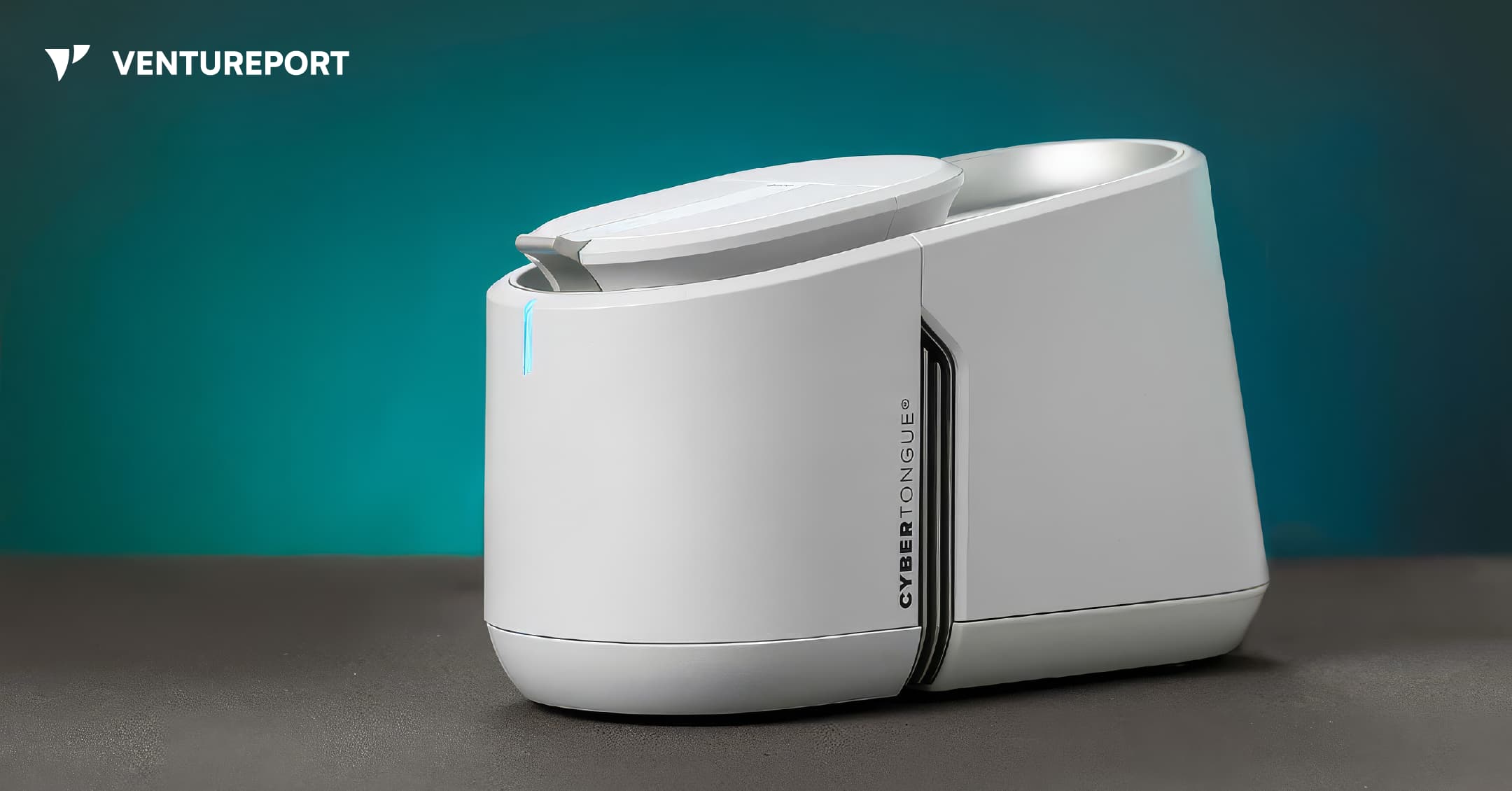
CYBERTONGUE® Food Testing System, developed by PPB Technology. IMAGE: PPB Technology
Anyone who has opened a carton of milk before its expiry date only to find that it smells off or tastes bitter has experienced the problem firsthand. For dairy processors, the same issue can play out across thousands of litres. Milk may pass routine quality checks, make it through production and still spoil before reaching the end of its expected shelf life.
CYBERTONGUE®, a biosensing platform, is designed to give dairy processors an earlier warning.
Developed by Canberra-based biotech startup PPB Technology, the compact food testing system allows processors to analyse milk on-site and receive results within minutes. Its first commercial application detects protease, an enzyme linked to spoilage, shorter shelf life and production losses across dairy products.
Dairy companies already test milk for fat, protein, bacteria, antibiotics and other indicators. Samples from individual farms may be sent to central laboratories, while tanker loads are tested again when they reach processing plants. These checks provide useful information, but they do not always show whether milk will remain stable in a UHT carton, meet a supermarket’s shelf-life requirements or produce the expected amount of cheese.
Even after heat treatment, protease can continue affecting milk. For processors making UHT milk, fresh milk or mature cheese, that creates a costly blind spot.
“Right now, dairy processors are working blind on this,” PPB Technology founder Stephen Trowell told Ventureport. “It’s becoming more of a problem as customers expect longer shelf lives and higher quality.”
CYBERTONGUE® uses engineered biosensing proteins that emit blue and green light. The balance between the two colours changes when the protein reacts with a target substance. The reader measures that shift and calculates how much of the target is present.
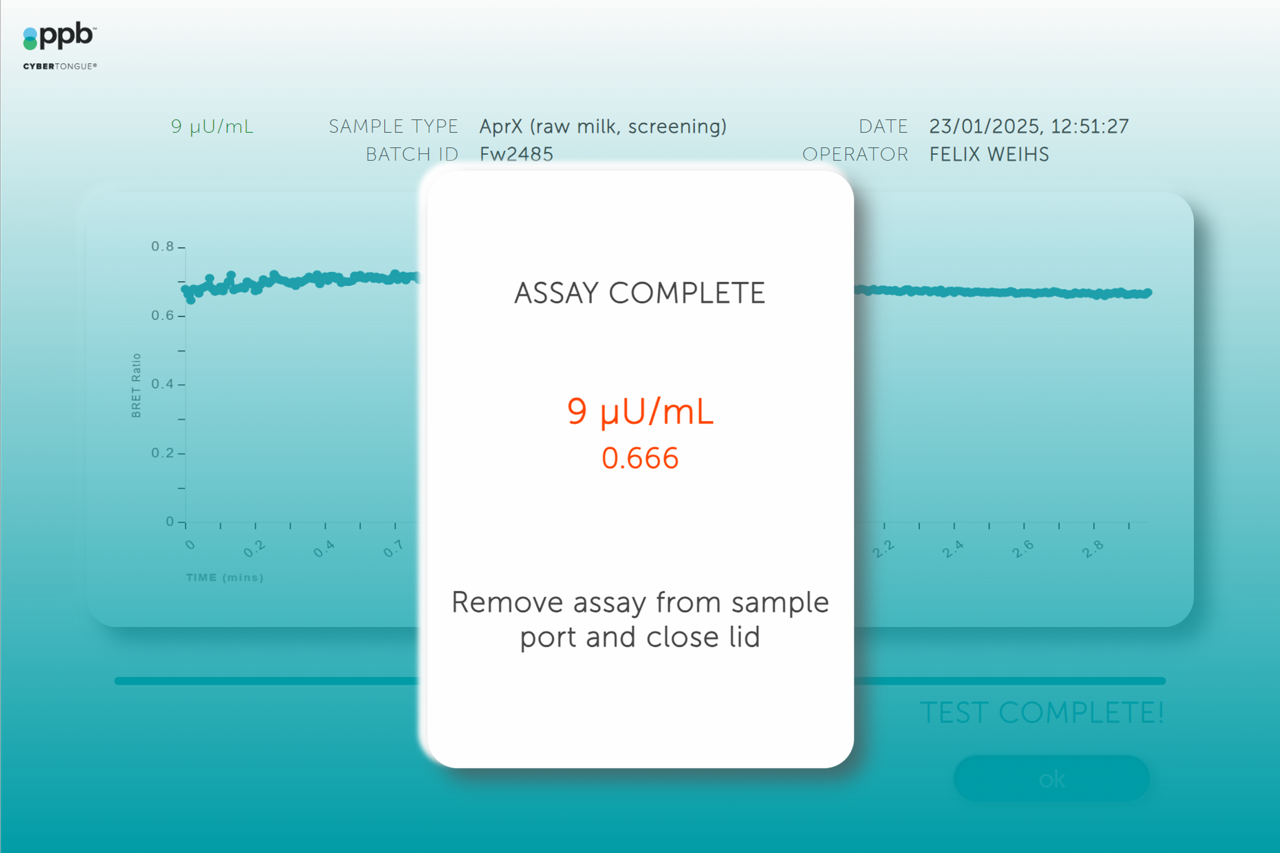
Trowell describes himself as a protein engineer at heart. He spent around three decades at CSIRO, Australia's national science and technology agency, and close to four decades in research before becoming a startup founder. The technology behind CYBERTONGUE® grew out of years of biological research, including earlier experiments involving wine aromas and explosives detection.
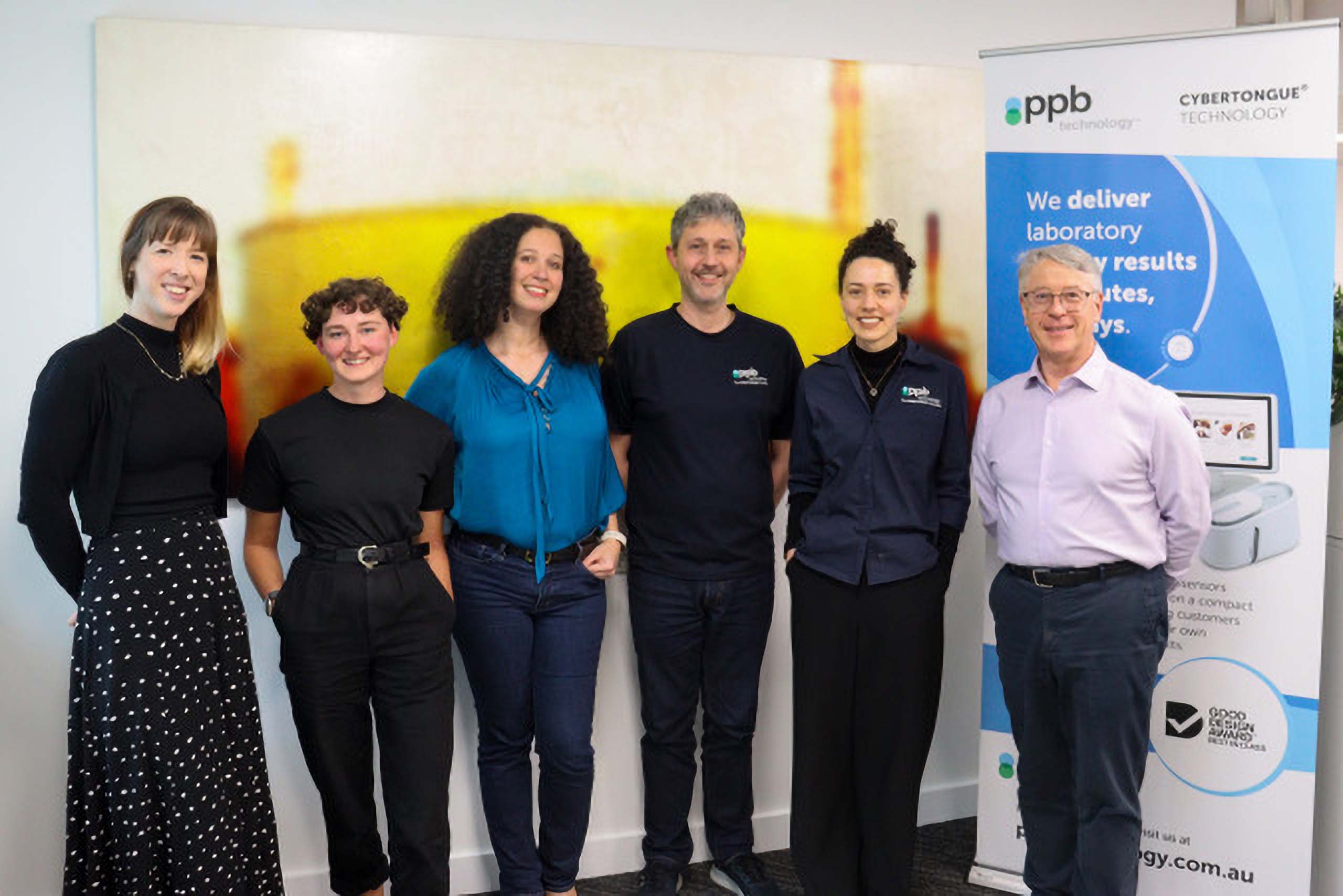
PPB initially developed its technology to measure plasmin, an enzyme derived from cows. After feedback from the dairy industry, the company shifted its focus to bacterial proteases, which were identified as a more pressing spoilage problem. The platform can make some existing tests faster, but PPB chose to focus first on a measurement previously unavailable to processors.
“Where we’ve chosen to lead is with a measurement nobody else can do at all,” he said. “The blue ocean, if you like.”
That focused entry point shapes PPB’s wider strategy. CYBERTONGUE® could eventually test for lactose, allergens, microbial toxins and other targets. Yet launching everything at once would stretch a six-person company too far. Protease gives it a clear route into dairy, where the financial value is easier to demonstrate.
A processor that detects high protease activity may redirect a batch of milk away from long-life products and use it for yoghurt, curd or another product where the enzyme causes less damage. PPB also says its tests can help trace problems in the milk supply and detect biofilms on processing equipment, allowing factories to take corrective cleaning measures.
Fresh milk presents another sizeable opportunity, with the global market estimated at around US$81 billion in 2026 and projected to grow at 6.83% annually through 2035. At that scale, even small gains in shelf-life consistency could prevent substantial losses. Supermarkets often require milk to have a minimum amount of shelf life remaining on delivery. Products that fall short may be rejected, discounted or discarded at the processor’s expense. While Australian processors typically aim for a shelf life of 19 to 21 days, they do not always achieve it. CYBERTONGUE® could help them reach that target more consistently.
Cheese producers face a related issue. Protease can create bitter flavours in hard cheeses and reduce production yield. Cheesemakers add another enzyme, chymosin, during production, often without knowing how much protease activity is already present in the milk. Better information could help them adjust the process and get more value from the same raw material.
PPB sells the reader as laboratory equipment, but its long-term business model centres on repeat testing. Customers buy the machine, then purchase a PPB reagent cartridge each time they run an assay. Future tests are intended to work on the same reader, making the system more useful as the catalogue expands.
CYBERTONGUE®’s compact design reflects PPB’s focus on practical onsite testing. The device is small enough to fit into two cupped hands and comes with a tablet running PPB’s software.
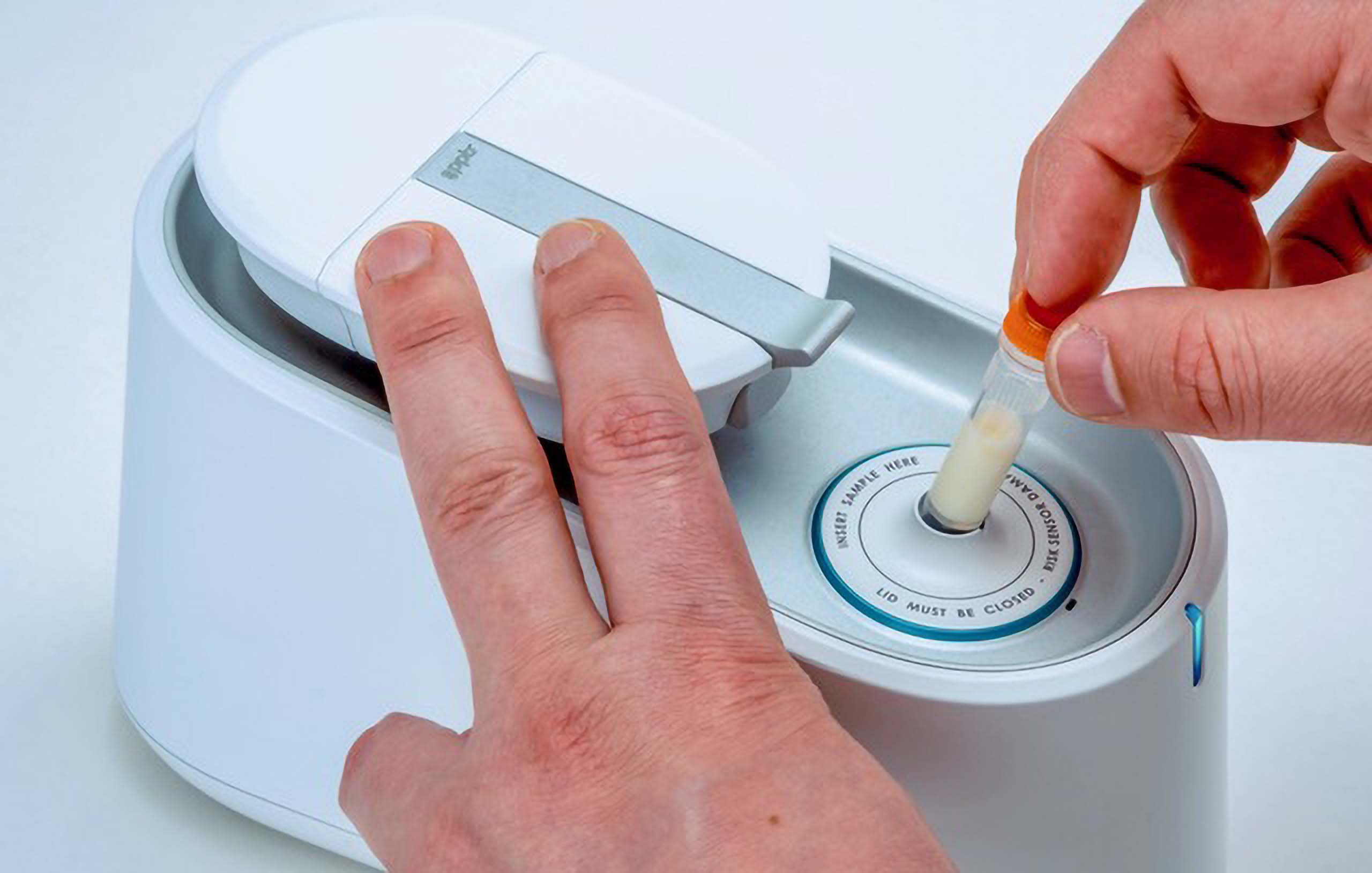
At the time of the interview, 13 to 15 systems had been installed with paying customers. PPB had made sales in 11 countries across five continents, with Europe as its largest market.
Trowell describes PPB as “born global”. While Australia and New Zealand have sophisticated dairy industries, Trowell thinks CYBERTONGUE® may offer even more value in regions where milk quality is less consistent, transport routes are longer or refrigeration is harder to maintain.
Trowell also believes PPB has a strong competitive moat, with the combination of manufacturing both the hardware and consumable reagents. Patents form one layer, but he does not consider legal protection sufficient on its own. A competitor would need expertise in protein engineering, reagent production, optical hardware, software and dairy processing.
Calibration adds another barrier. For each new box of reagents, PPB securely uploads the required calibration data to the customer’s machine. A third party could not simply manufacture a cartridge with the same dimensions and expect it to work correctly.
“We own the whole stack,” Trowell said, referring to everything from the sensing molecule to the hardware, software and cloud platform.
That said, he accepts that no technology is impossible to copy. His view is that PPB’s mix of scientific knowledge, integrated system and experience in dairy gives it enough of a head start to build a meaningful position before competitors catch up.
The technology could eventually reach beyond food. Trowell sees possible uses in environmental testing, veterinary care and medical diagnostics, including the analysis of blood, serum or saliva. PPB has already discussed potential applications with organisations outside the food industry.
For now, however, moving directly into clinical diagnostics would create more risk than opportunity. Medical products can require years of trials, extensive regulatory work and large development budgets. PPB would also need to build new sales channels and choose between many possible clinical uses without knowing which one would attract the strongest demand.
For these reasons, food testing offers PPB a clearer path. The regulatory barriers are generally lower, customers have immediate operational problems, and PPB has already built relationships in dairy. Once the platform has proved itself commercially, the company could enter other sectors through partnerships or licensing.
Trowell has held that view for years. The immediate goal is to build a successful food testing company rather than chase the prestige often attached to medical biotechnology.
The opportunity may also expand as food production becomes more complex. Dairy factories increasingly process oat, soy and other alternatives on equipment that also handles cow’s milk. This creates cross-contamination and allergen risks, offering another potential use for CYBERTONGUE®.
PPB still has plenty to prove. It must secure repeat reagent orders, convert early trials into wider deployments and expand its test catalogue without compromising accuracy. Scaling an integrated biotech hardware business across international markets will not be simple.
Still, its approach offers a useful lesson for other deep-tech startups. Instead of beginning with every possible application, PPB picked a specific problem that costs customers money today. It built a product around that pain point, then used the same technology as the foundation for a broader platform.
As Trowell put it, customers “need it fast, and they need it right.” CYBERTONGUE® is betting that food testing can deliver both.