
Vizrt shows how live video can be produced anywhere, without complex studio setups
Updated
August 10, 2026 5:56 PM

A camera filming a still life on a table. PHOTO: UNSPLASH
Vizrt, a media technology company, has introduced a new AI-powered tool to simplify the creation of virtual scenes in live production. Its latest release, the AI Keyer, is built around a simple idea: remove the need for green screens and make virtual production possible in almost any environment.
Traditionally, creating virtual backgrounds or augmented reality (AR) scenes requires controlled studio setups, green screens, precise lighting and skilled operators. That makes high-end visual production expensive and difficult to scale, especially for smaller teams or live, on-the-ground reporting.
The AI Keyer is designed to address that gap. It uses AI trained on real-world footage to identify people in a frame and separate them from the background in real time. This allows production teams to replace backgrounds, insert AR graphics or place presenters into virtual environments—whether they are indoors, outdoors or on location.
"Creating XR environments typically demands large infrastructure investments and requires specialized skills for daily operations. The Vizrt AI Keyer removes all these constraints, so high-quality virtual scenes and AR graphics become a reality for live productions of every size", says Edouard Griveaud, Senior Product Manager at Vizrt.
In practical terms, this means a presenter can appear in a different location without moving, a remote speaker can be placed inside a virtual event space or branded graphics can be added to live interviews without a complex setup. The system works without chroma keying, reducing both preparation time and production overhead.
This shift also reflects how the company is approaching AI more broadly. Instead of treating it as a background feature, Vizrt is positioning AI as a core part of the content creation and delivery process.
"AI is transforming the world, and the creative industries are no exception. At Vizrt, we have been on this journey for years, embedding intelligence into our solutions, empowering storytellers and delivering real, measurable impact for our customers", says Rohit Nagarajan, CEO of Vizrt. "That is not a vision for tomorrow. That is happening today. The Vizrt AI Keyer is the latest proof point of our relentless commitment to innovation. Putting breakthrough technology in the hands of every creative, at every level, everywhere in the world".
Beyond the product itself, the direction is clear. By removing the need for green screens and complex setups, tools like the AI Keyer make it easier to produce high-quality visual content in more flexible settings. The result is a production model that is less tied to physical studios and more adaptable to real-world environments, where content can be created and adjusted in real time.
Keep Reading
From pre-orders to market entry, Rokid’s Taiwan campaign reflects how AI hardware is being introduced to consumers today.
Updated
January 8, 2026 6:30 PM
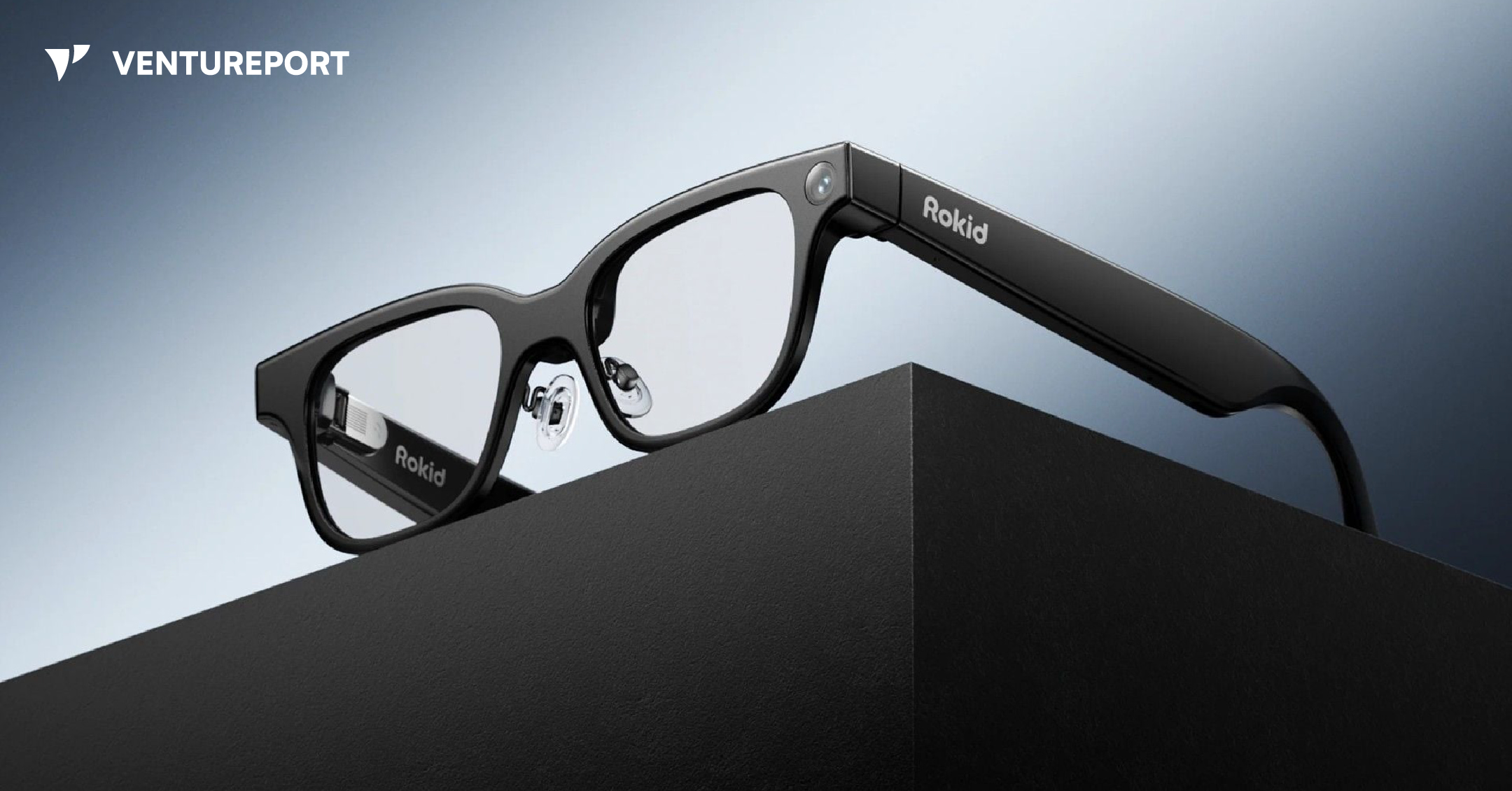
Rokid Glasses, a pair of AR glasses from Rokid. PHOTO: ROKID
Rokid has reached a significant crowdfunding milestone in Taiwan. Its Rokid Glasses campaign surpassed NT$62 million in pre-order funding on zeczec, Taiwan’s creative-oriented crowdfunding platform. The campaign ranked No. 1 across all categories on the platform in 2025 and entered the Top 10 funded campaigns in zeczec’s history, setting new records for AI and XR-related projects.
The campaign launched on October 28 and became one of the platform’s most prominent technology initiatives of the year. According to the company, the outcome followed growing visibility for Rokid Glasses after product showcases in New York, Berlin, Singapore and Paris, positioning the Taiwan campaign within a broader international rollout.
The crowdfunding achievement coincided with Rokid’s official market entry in Taiwan. On December 10, the company debuted Rokid Glasses locally, introducing the product to media, partners and early users in the region. The Taiwan launch mirrored earlier international events and connected the online crowdfunding campaign with a physical market presence.
Rokid Glasses combine augmented reality displays with built-in AI functions, including real-time multilingual translation, live transcription, navigation, object recognition and voice assistance. These capabilities were central to how the product was presented during both the crowdfunding campaign and the Taiwan launch, without framing the project as a traditional consumer electronics release.
The Taiwan campaign builds on Rokid’s prior crowdfunding history. The company previously raised more than US$4 million on Kickstarter, where Rokid Glasses became the highest-funded XR wearable project on the platform. The zeczec campaign extends that track record into one of Asia’s most established consumer electronics markets.
“Taiwan has one of the world's most mature and discerning consumer electronics markets”, said Said Justo Chang, Head of Global Channels at Rokid. “Reaching the top of Taiwan's crowdfunding platform is a great commercial achievement. We are excited to finally introduce Rokid Glasses to Taiwan”.
More broadly, the campaign highlights how crowdfunding platforms continue to function as launch and distribution channels for emerging AI and XR hardware. In Rokid’s case, product rollout, market entry and public participation converged within a single campaign, marking a notable moment for AI-enabled wearables in Taiwan’s technology landscape.