
Vizrt shows how live video can be produced anywhere, without complex studio setups
Updated
August 10, 2026 5:56 PM

A camera filming a still life on a table. PHOTO: UNSPLASH
Vizrt, a media technology company, has introduced a new AI-powered tool to simplify the creation of virtual scenes in live production. Its latest release, the AI Keyer, is built around a simple idea: remove the need for green screens and make virtual production possible in almost any environment.
Traditionally, creating virtual backgrounds or augmented reality (AR) scenes requires controlled studio setups, green screens, precise lighting and skilled operators. That makes high-end visual production expensive and difficult to scale, especially for smaller teams or live, on-the-ground reporting.
The AI Keyer is designed to address that gap. It uses AI trained on real-world footage to identify people in a frame and separate them from the background in real time. This allows production teams to replace backgrounds, insert AR graphics or place presenters into virtual environments—whether they are indoors, outdoors or on location.
"Creating XR environments typically demands large infrastructure investments and requires specialized skills for daily operations. The Vizrt AI Keyer removes all these constraints, so high-quality virtual scenes and AR graphics become a reality for live productions of every size", says Edouard Griveaud, Senior Product Manager at Vizrt.
In practical terms, this means a presenter can appear in a different location without moving, a remote speaker can be placed inside a virtual event space or branded graphics can be added to live interviews without a complex setup. The system works without chroma keying, reducing both preparation time and production overhead.
This shift also reflects how the company is approaching AI more broadly. Instead of treating it as a background feature, Vizrt is positioning AI as a core part of the content creation and delivery process.
"AI is transforming the world, and the creative industries are no exception. At Vizrt, we have been on this journey for years, embedding intelligence into our solutions, empowering storytellers and delivering real, measurable impact for our customers", says Rohit Nagarajan, CEO of Vizrt. "That is not a vision for tomorrow. That is happening today. The Vizrt AI Keyer is the latest proof point of our relentless commitment to innovation. Putting breakthrough technology in the hands of every creative, at every level, everywhere in the world".
Beyond the product itself, the direction is clear. By removing the need for green screens and complex setups, tools like the AI Keyer make it easier to produce high-quality visual content in more flexible settings. The result is a production model that is less tied to physical studios and more adaptable to real-world environments, where content can be created and adjusted in real time.
Keep Reading
The collaboration between Oversonic Robotics and STMicroelectronics highlights how robotics is beginning to fill gaps traditional automation cannot.
Updated
January 23, 2026 10:41 AM
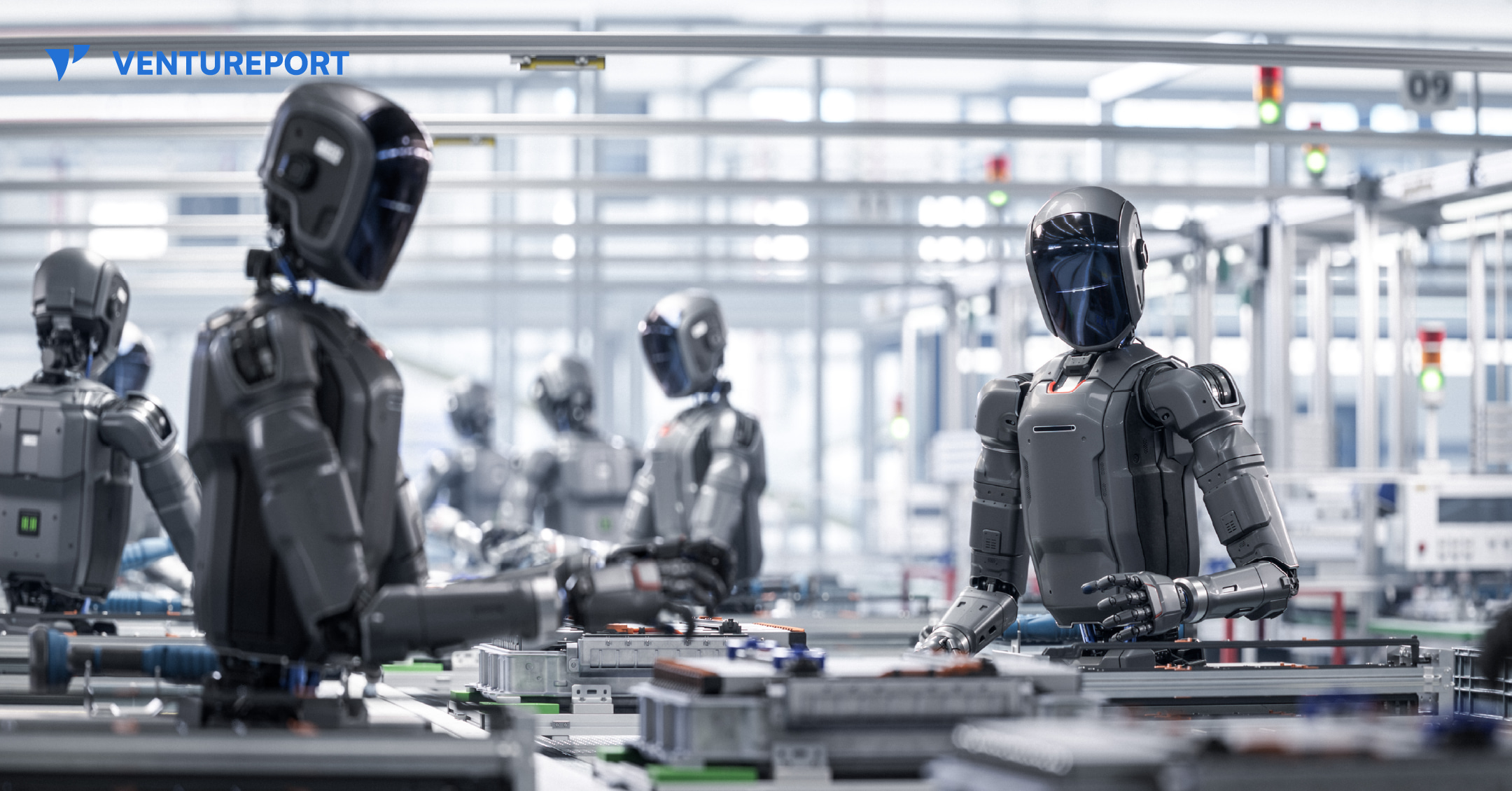
3D render of humanoid robots working in a factory assembly line. PHOTO: ADOBE STOCK
Oversonic Robotics, an Italian company known for building cognitive humanoid robots, has signed an agreement with STMicroelectronics, one of the world’s largest semiconductor manufacturers, to deploy humanoid robots inside semiconductor plants.
According to the companies, this is the first time cognitive humanoid robots will be used operationally inside semiconductor manufacturing facilities. And the first deployment has already taken place at ST’s advanced packaging and test plant in Malta.
At the center of the collaboration is RoBee, Oversonic’s humanoid robot. RoBee is designed to carry out support tasks within industrial environments, particularly where flexibility and interaction with human workers are required. In ST’s factories, the robots will assist with complex manufacturing and logistics flows linked to new semiconductor products. They are intended to work alongside existing automation systems, not replace them.
RoBee is notable for its ability to operate in environments shared with people. It is currently the only humanoid robot certified for use in both industrial and healthcare settings and is already in operation within several Italian companies. The robot is also being used in experimental hospital programs. That background helped position RoBee for deployment in tightly controlled manufacturing environments such as semiconductor plants.
Fabio Puglia, President of Oversonic Robotics, described the agreement as a milestone for deploying humanoid robots in complex industrial settings: “The partnership with STMicroelectronics is a great source of pride for us because it embodies the vision of cognitive robotics that Oversonic has brought to the industrial and healthcare markets. Being the first to introduce cognitive humanoid robots in a sophisticated production context such as semiconductors means measuring ourselves against the highest standards in terms of reliability, safety and operational continuity. This agreement represents a fundamental milestone for Oversonic and, more generally, for the industrial challenges these new machines are called to face in innovative and highly complex environments, alongside people and supporting their quality of work”.
From STMicroelectronics’ side, the use of humanoid robots is framed as part of a broader effort to manage growing manufacturing complexity. he company said RoBee will support complex tasks and help manage the intricate production flows required by newer semiconductor products. It is also expected to contribute to improved product quality and shorter manufacturing cycle times. The robots are designed to integrate with existing automation and software systems, helping improve safety and operational continuity.
In semiconductor manufacturing, precision and reliability leave little room for experimentation. Therefore, introducing humanoid robots into this environment signals a practical shift. It shows how robotics is starting to fill gaps that traditional automation has struggled to address.