
Vizrt shows how live video can be produced anywhere, without complex studio setups
Updated
August 10, 2026 5:56 PM

A camera filming a still life on a table. PHOTO: UNSPLASH
Vizrt, a media technology company, has introduced a new AI-powered tool to simplify the creation of virtual scenes in live production. Its latest release, the AI Keyer, is built around a simple idea: remove the need for green screens and make virtual production possible in almost any environment.
Traditionally, creating virtual backgrounds or augmented reality (AR) scenes requires controlled studio setups, green screens, precise lighting and skilled operators. That makes high-end visual production expensive and difficult to scale, especially for smaller teams or live, on-the-ground reporting.
The AI Keyer is designed to address that gap. It uses AI trained on real-world footage to identify people in a frame and separate them from the background in real time. This allows production teams to replace backgrounds, insert AR graphics or place presenters into virtual environments—whether they are indoors, outdoors or on location.
"Creating XR environments typically demands large infrastructure investments and requires specialized skills for daily operations. The Vizrt AI Keyer removes all these constraints, so high-quality virtual scenes and AR graphics become a reality for live productions of every size", says Edouard Griveaud, Senior Product Manager at Vizrt.
In practical terms, this means a presenter can appear in a different location without moving, a remote speaker can be placed inside a virtual event space or branded graphics can be added to live interviews without a complex setup. The system works without chroma keying, reducing both preparation time and production overhead.
This shift also reflects how the company is approaching AI more broadly. Instead of treating it as a background feature, Vizrt is positioning AI as a core part of the content creation and delivery process.
"AI is transforming the world, and the creative industries are no exception. At Vizrt, we have been on this journey for years, embedding intelligence into our solutions, empowering storytellers and delivering real, measurable impact for our customers", says Rohit Nagarajan, CEO of Vizrt. "That is not a vision for tomorrow. That is happening today. The Vizrt AI Keyer is the latest proof point of our relentless commitment to innovation. Putting breakthrough technology in the hands of every creative, at every level, everywhere in the world".
Beyond the product itself, the direction is clear. By removing the need for green screens and complex setups, tools like the AI Keyer make it easier to produce high-quality visual content in more flexible settings. The result is a production model that is less tied to physical studios and more adaptable to real-world environments, where content can be created and adjusted in real time.
Keep Reading
ICBC Asia's new competition gives Hong Kong students a chance to test their fintech ideas beyond the classroom.
Updated
October 2, 2026 9:16 AM
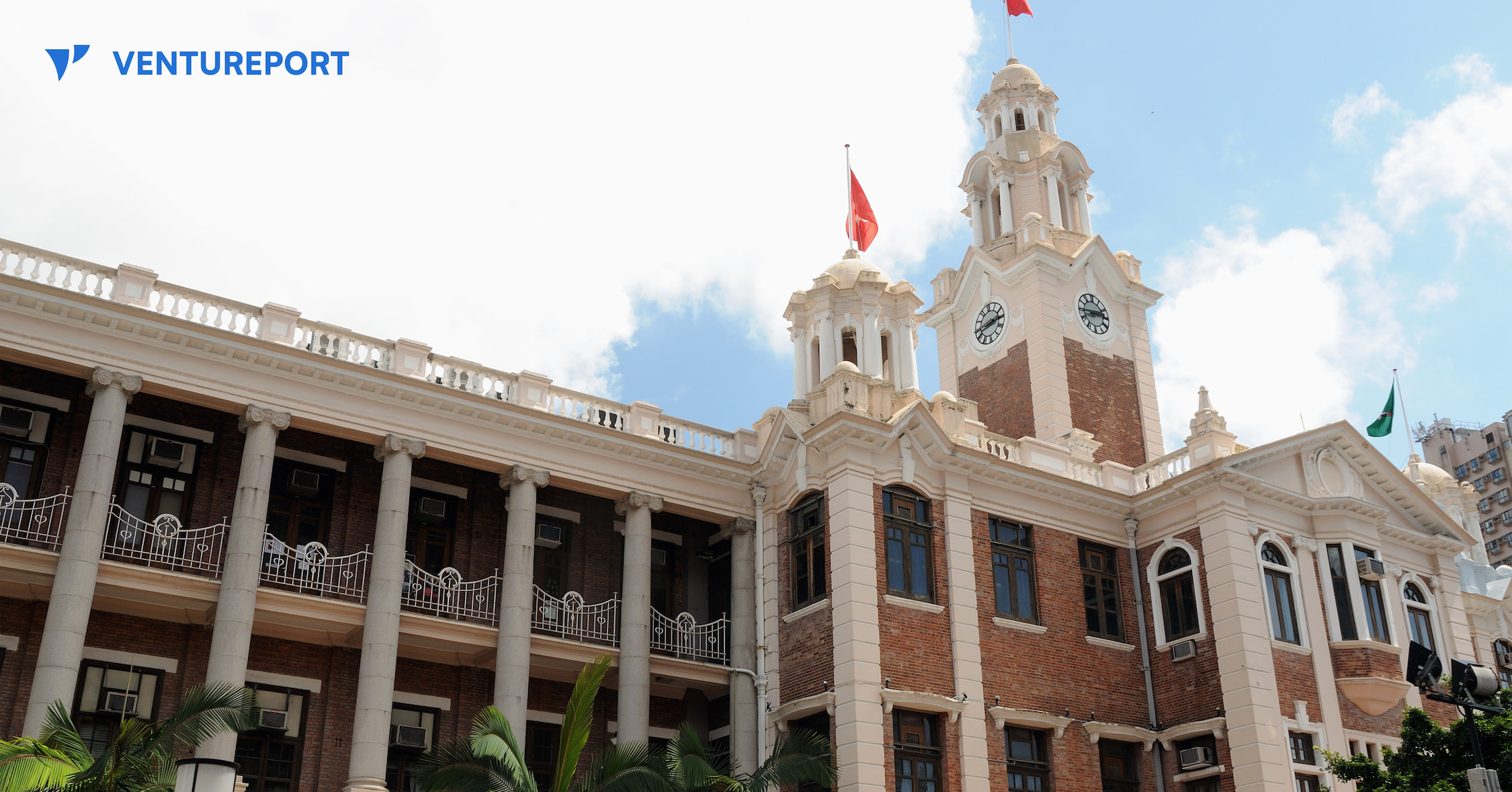
Main Building of the University of Hong Kong. PHOTO: ADOBE STOCK
Hong Kong university students are being invited to take part in the first Hong Kong University Students Fintech Innovation Competition, organised by Industrial and Commercial Bank of China (Asia). The competition gives students a chance to develop ideas around financial technology, with cash prizes, internship opportunities and a route to the national finals of the ICBC Cup on offer.
The competition is part of the 17th ICBC Cup and marks the first time ICBC has established a competition zone in Hong Kong. It is supported by the Financial Services and the Treasury Bureau and the Hong Kong Monetary Authority, with 12 Hong Kong universities also backing the initiative.
The participating universities are the University of Hong Kong, the Chinese University of Hong Kong, Hong Kong University of Science and Technology, Hong Kong Polytechnic University, City University of Hong Kong, Hong Kong Baptist University, Hong Kong Metropolitan University, Lingnan University, Hong Kong Shue Yan University, the Education University of Hong Kong, Hang Seng University of Hong Kong and St. Francis University.
For ICBC Asia, the competition is also intended to support the development of fintech in Hong Kong and expand the city's fintech talent pool. Dr. Liu Yagan, Chairman and Executive Director of Industrial and Commercial Bank of China (Asia), said the competition is designed to encourage students to develop practical applications for financial technology and explore new banking business models.
"This competition encourages university students across Hong Kong to propose practical solutions for fintech applications and banking business model innovation from the perspective of financial products and services, providing a platform for Hong Kong youth to connect with cutting-edge industries and unleash their innovative potential."
The initiative will also connect Hong Kong students with the wider ICBC Group. Liu said this would help deepen exchanges between young talent in Hong Kong and the Mainland.
The competition is open to full-time university students in Hong Kong and carries the theme "Digital Banking, Creating the Future." Students can develop ideas across 10 areas, ranging from fintech and digital finance to green finance, inclusive finance, pension finance and wealth management. The categories also include financial security services, specialised financial services, youth services and open innovation services.
The competition also offers cash prizes: the First Prize winner will receive HK$50,000; two Second Prize winners will receive HK$30,000 each; three Third Prize winners will receive HK$20,000 each; and four Honorable Mention recipients will receive HK$10,000 each.
Beyond the prize money, qualifying winners will have the opportunity to undertake internships at ICBC (Asia). The team that wins the Hong Kong First Prize will also have the opportunity to travel to Beijing in December for the ICBC Cup national finals, where it will compete against teams from across the country.
With registration now open, the competition gives Hong Kong university students an opportunity to take ideas in financial technology from the classroom into areas such as banking products, services and business models.