
From AI love affairs to cosmic survival, 2026 has it all.
Updated
January 8, 2026 6:28 PM

A man in a space suit looking upon a ringed marble. PHOTO: UNSPLASH
Grab your popcorn—the 2026 sci-fi movie slate is stacked. We’re getting everything from post-apocalyptic survival films to AI thrillers, plus a big-space adventure and a fresh DC superhero story. Some films launch new worlds, others expand familiar ones, but all of them aim to leave an impression, but all of them look like the kind of movies you’ll want to talk about after the credits.
Here are five upcoming sci-fi movies to mark on your calendar.

Release Date: January 9, 2026
Director: Kate Dolan
Stars: Lily Sullivan, David Rysdahl and Claudia Doumit
If you like your sci-fi with a creepy edge, Soulm8te is very much in that lane. A spin-off from the M3GAN universe, the film follows a man grieving the loss of his wife who turns to an AI android to ease the pain. At first, it seems to help. The connection feels real, even comforting. But before long, it becomes a little too real and slips into something far more dangerous. What makes Soulm8te unsettling is how close it feels to the present. AI companions are no longer science fiction, and the film plays with that reality in a way that feels intimate rather than futuristic. Directed by Kate Dolan, the story stays on quiet unease instead of spectacle, allowing tension to build as affection turns possessive and attachment becomes dangerous. The film is produced by Allison Williams and James Wan, both closely involved in the hit horror franchise M3GAN, and their experience with technology-driven horror is clearly felt here. Fans of grounded, psychological sci-fi should keep this one on their radar.
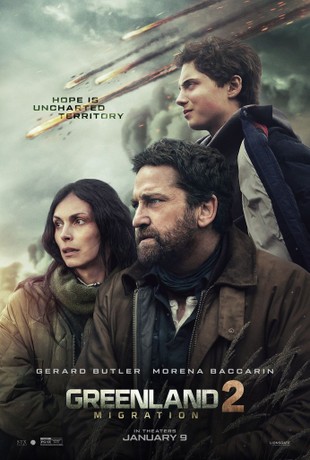
Release Date: January 9, 2026
Director: Ric Roman Waugh
Stars: Gerard Butler, Morena Baccarin, Amber Rose Revah, Sophie Thompson, Trond Fausa Aurvåg
Back in 2020, Greenland introduced audiences to John Garrity (Gerard Butler), a father racing against time to save his family as comet fragments threatened to wipe out life on Earth. The film ended with survivors heading into bunkers deep in Greenland, hanging on to the last thin thread of hope. This sequel follows the Garrity family as they leave the safety of underground shelters and face a world that no longer resembles home. The setting moves across a battered Europe, where every decision carries weight and every journey feels uncertain. Rather than repeating the ticking-clock chaos of the original, Migration leans into endurance, exhaustion and the question of whether rebuilding is even possible. It’s a post-apocalyptic movie about movement, loss and the cost of starting over.

Release Date: March 20, 2026
Director: Phil Lord & Chris Miller
Stars: Ryan Gosling, Milana Vayntrub, Sandra Hüller
Based on Andy Weir’s best-selling novel, Project Hail Mary is shaping up to be one of the most talked-about space survival films of 2026. Ryan Gosling stars as Ryland Grace, an unlikely astronaut whose journey into space begins with confusion rather than heroics. Grace, a former junior high science teacher, wakes up alone on a spacecraft, cut off from Earth and missing key memories about how he got there. As pieces slowly fall into place, so does the scale of the problem he’s been sent to solve. The film blends real science with high-stakes isolation, balancing quiet moments with the pressure of a mission that affects the entire planet. Directed by Phil Lord and Chris Miller, Project Hail Mary promises tension, curiosity and a heavy dose of human vulnerability set against the vastness of space.

Release Date: March 27, 2026
Director: Ridley Scott
Stars: Jacob Elordi, Josh Brolin
The Dog Stars strips the apocalypse down to its bare essentials. Based on Peter Heller’s novel of the same name, the film features a screenplay by Mark L. Smith and Christopher Wilkinson, known for The Revenant and Ali. The setup of The Dog Stars is simple and bleak: a virus has erased most of humanity. What’s left is silence, abandoned airfields and roaming scavengers known as the “Reapers” who prey on the few survivors left behind.
Jacob Elordi plays Hig, a pilot living in isolation with his dog and a heavily armed companion. His days follow a strict routine, broken only by short flights in his aging Cessna. That fragile balance shatters when a distant radio signal breaks through the quiet. It’s the first real sign of life he has heard in years, and it draws him toward a journey that could change everything. Directed by Ridley Scott, the film focuses less on large-scale destruction and more on loneliness, hope and the risk of reaching out in a broken world. The result is a post-apocalyptic thriller that feels intimate, reflective and quietly tense.

Release Date: June 26, 2026
Director: Craig Gillespie
Stars: Milly Alcock, Jason Momoa, Matthias Schoenaerts
Supergirl: Woman of Tomorrow offers a very different take on the DC universe. This is a cosmic sci-fi story first, superhero film second. Kara Zor-El is older, tougher and shaped by memories of a world she lost. Unlike her cousin Superman, she remembers the destruction of Krypton clearly, and that history weighs heavily on her. The film follows Kara as she crosses paths with a young alien seeking justice, pulling her into a dangerous journey across distant worlds. Rather than focusing on Earth-saving spectacle, the story explores identity, grief and what heroism looks like far from home. With Milly Alcock stepping into the role, Supergirl 2026 aims to expand DC’s sci-fi side while giving the character emotional depth rarely seen on screen.
One reason science fiction movies stick with us is that they ask big questions in a way that feels personal. What happens when tech starts filling emotional gaps? What does survival look like when the world doesn’t bounce back? And how far would you go to save everyone you’ve ever known? If you’re looking for 2026 sci-fi movies that range from gritty to hopeful to unsettling, this lineup has you covered.
Keep Reading
The Hong Kong startup combines 3D-printed reef tiles, biodiversity monitoring and long-term data to help companies manage their impact on marine ecosystems.
Updated
August 18, 2026 11:32 PM
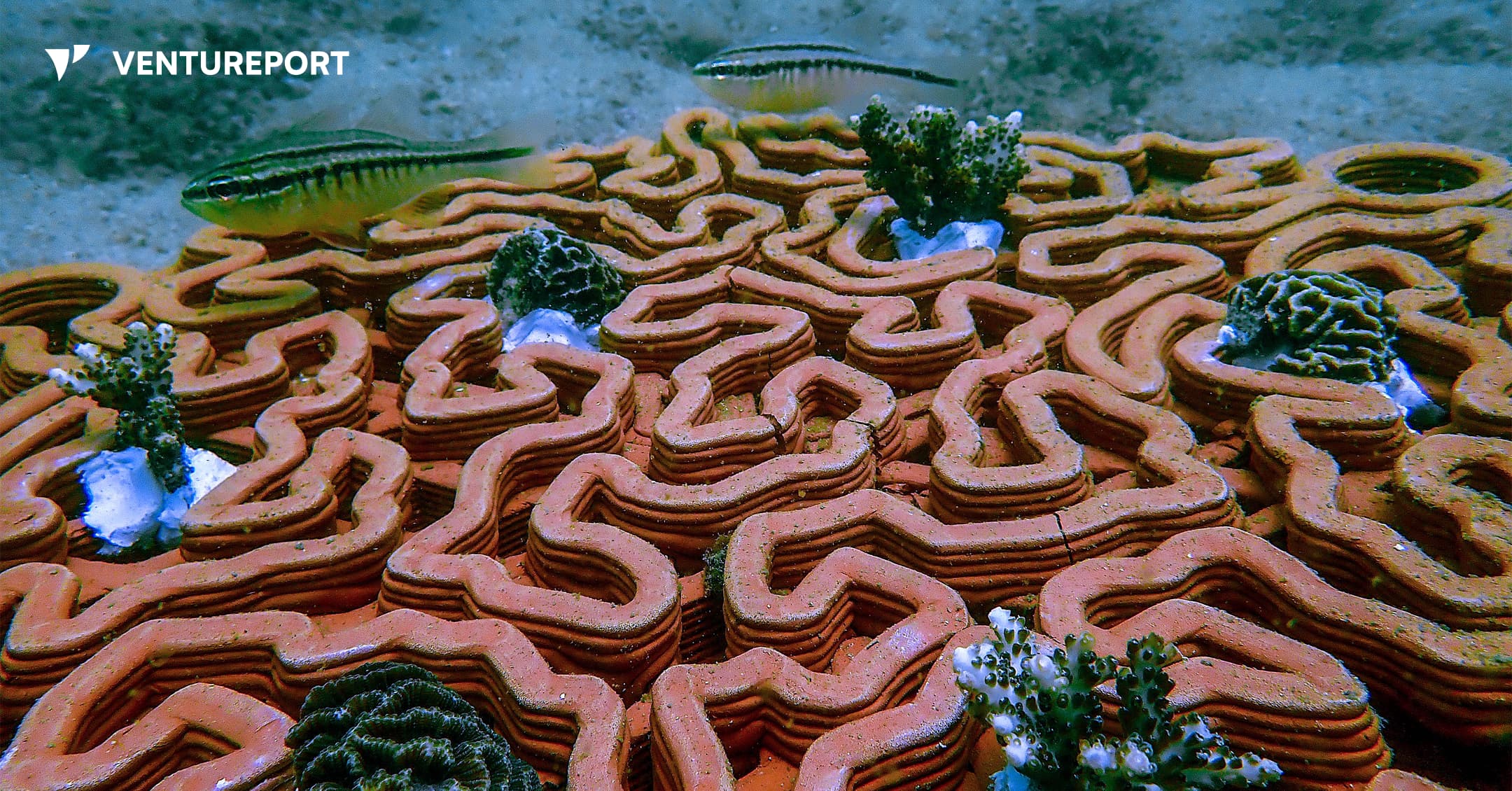
Young corals growing on Archireef's 3D-printed terracotta reef tiles beneath the sea. IMAGE: ARCHIREFF
Anyone who has snorkeled over a coral reef has probably admired its vibrant colours and the marine life swimming between its branches. What is less visible is how easily these ecosystems can be damaged. Rising ocean temperatures and pollution continue to put reefs under pressure, while coastal development creates another threat. Construction can stir up sediment that settles on corals, blocking the sunlight they need and making it harder for damaged reefs to recover.
Protecting marine ecosystems is becoming a shared responsibility. Alongside scientists, governments and conservation groups, businesses whose operations affect the ocean are increasingly expected to understand, manage and reduce their environmental impact. They must also show regulators, banks and investors that they are meeting their environmental commitments.
Archireef helps businesses meet those demands. Founded by Vriko Yu, the Hong Kong-rooted B2B startup specializes in marine ecosystem restoration and ocean nature risk management. Drawing on years of research at the University of Hong Kong, Yu built the company to help organisations understand, measure and reduce their impact on marine ecosystems.
Yu describes Archireef as an “end-to-end ocean nature risk management company”.
“What we offer them is a credible way to meet those obligations and stand behind the results,” she says.
One of the company’s main tools for restoring damaged marine ecosystems is its flagship 3D-printed terracotta reef tile. The tiles provide a stable foundation where young corals can attach, grow and survive over time.
Archireef chose terracotta instead of concrete and other conventional materials because it is pH-neutral and does not release harmful chemicals into the water. Its surface also gives corals a suitable place to attach naturally.
Before placing a single tile in the ocean, the team studies the proposed restoration site to determine whether recovery is possible. It assesses the water quality, biodiversity and general health of the ecosystem. As Yu explains, restoration should begin only where nature has a realistic chance to recover.
“Restoration isn’t about replacing nature or engineering a reef into existence. It is about removing the barriers and giving a degraded system the conditions it needs to begin recovering on its own”, she says.
Once the team selects a site, divers carefully place the tiles on the seabed. Their curves, ridges and crevices imitate the structure of a natural coral reef, creating sheltered spaces for marine species. The design also helps limit sediment build-up, which can block sunlight and smother young corals.
.webp)
Archireef adjusts the shape of its reef tiles for each project.
“There’s no universal reef, so there’s no universal tile”, Yu says.
Instead of producing one standard model, the company adapts each design to the coral species, water conditions and surrounding marine environment. A coral restoration project in Hong Kong may therefore require a different tile from one in Saudi Arabia, even when the same manufacturing process is used.
“The biggest adaptation from site to site is usually the match between design, species and environment, not the manufacturing itself ”, Yu explains.
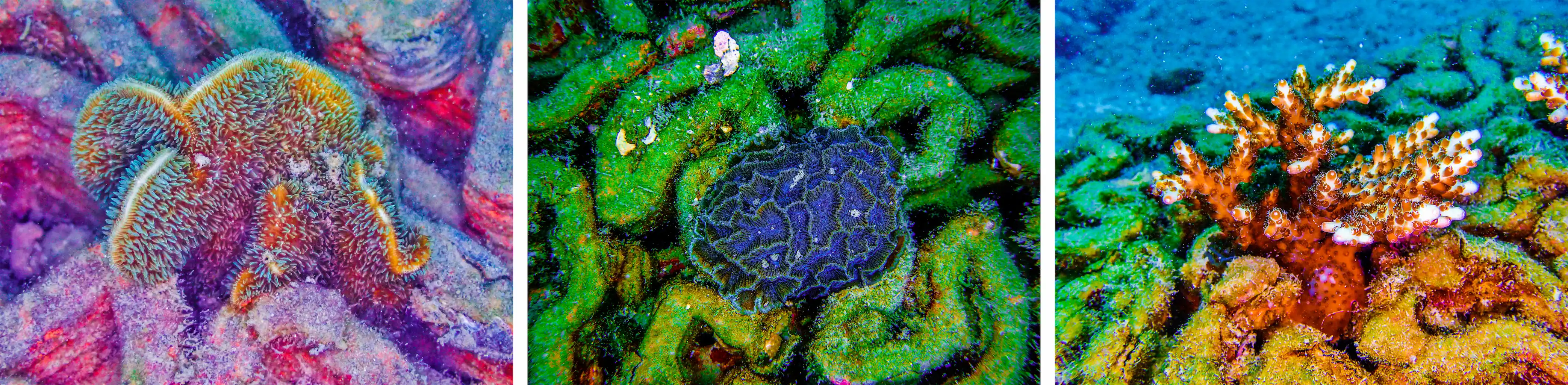
Although the reef tile is Archireef’s most recognizable innovation, Yu sees it as one part of a much broader service.
“The reef tile gets the attention because it’s tangible,” she says. “But the real product is the proof — defensible, audit-ready evidence of nature recovery that an organization can put in a disclosure and stand behind under scrutiny”.
Producing that evidence requires years of biodiversity monitoring. Long after the reef tiles have been installed, Archireef continues to track coral survival and the health of the surrounding marine ecosystem. Its monitoring methods include ecological surveys, AI-assisted species recognition, photogrammetry and environmental DNA testing.
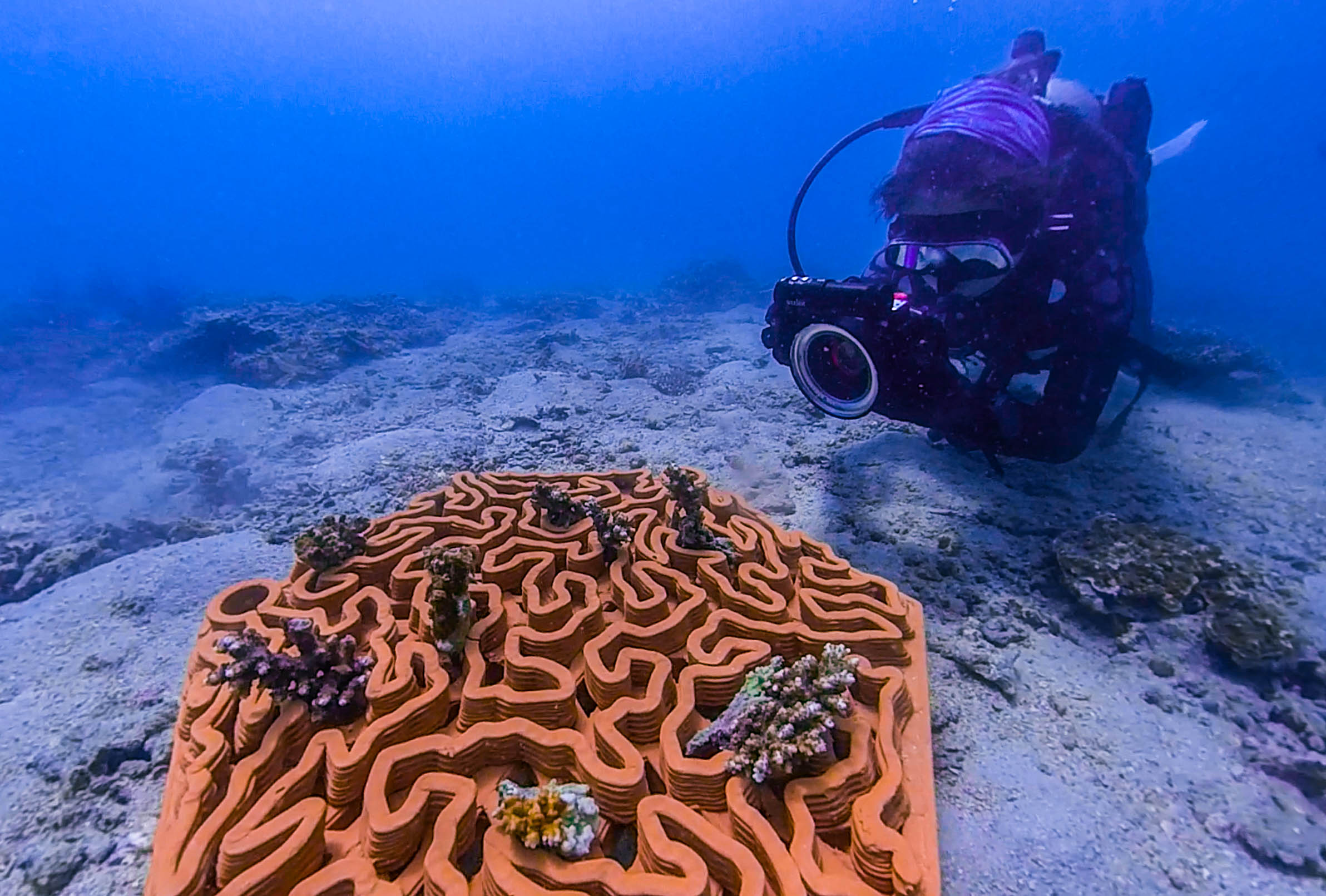
Photogrammetry uses photographs to produce detailed 3D models of the reef. These models allow the team to measure changes in coral growth and reef structure over time.
Environmental DNA, commonly known as eDNA, offers another way to monitor marine biodiversity. Traditional ecological surveys often depend on divers recording the species they can see. eDNA testing instead examines traces of genetic material left in the water by marine organisms, including skin cells, mucus and waste.
By analyzing these traces, Archireef can detect species that may be hidden, difficult to identify or absent during a dive. This gives the company a more complete picture of the ecosystem and how it is changing.
For Archireef, the success of a coral reef restoration project is determined by what happens several years after installation.
“The indicators that matter aren’t the ones that look good on deployment day”, Yu says. “They’re the ones that show, two, three and five years on, whether a genuine ecosystem is establishing and sustaining itself”.
At the company’s first restoration site in Hoi Ha Wan, Hong Kong, around 90% of the transplanted corals remained alive four years after deployment. The long-term survival rate suggests that the ecosystem is recovering rather than simply appearing healthy during the early stages of the project.
Results like these have helped Archireef move beyond academic research and secure collaborations across the public and private sectors. In Hong Kong, the company has worked with government departments and public organisations responsible for coastal infrastructure and marine conservation.