
WIRobotics is betting that years of real-world movement data could shape the next generation of humanoid robots
Updated
August 10, 2026 5:56 PM

3D render of a person in various colours. PHOTO: UNSPLASH
Investor interest in humanoid robotics is continuing to grow as startups race to build systems capable of working alongside humans in real-world environments. That momentum was reflected after WIRobotics announced a KRW 95 billion (USD 68 million) Series B funding round to accelerate development of its humanoid robotics platform, ALLEX.
The Seoul-based startup said the funding comes roughly two years after its KRW 13 billion Series A round in 2024. JB Investment led the financing alongside investors including InterVest, Hana Ventures, Smilegate Investment, SBVA, NH Investment & Securities, Company K Partners, GU Investment and FuturePlay.
WIRobotics has spent the past several years building wearable robotics systems designed to assist human movement. The startup is now using that foundation to expand deeper into humanoid robotics and Physical AI, a category focused on AI systems that can interact with the physical world through movement, perception and manipulation.
Its humanoid platform, ALLEX, is being developed to support human-level object manipulation and interaction capabilities. The startup was recently selected for NVIDIA’s Physical AI Fellowship, a global robotics and AI development initiative aimed at supporting next-generation robotics research.
Rather than building humanoid systems entirely from scratch, WIRobotics is drawing on movement data collected through its wearable walking-assist robot, WIM. Over the past three years, the startup says it has built large real-world datasets around gait patterns, mobility and human movement control.
That wearable robotics business has also started showing commercial traction. WIM has sold more than 3,000 cumulative units and expanded into overseas markets including Europe, China, Türkiye and Japan. Revenue grew from KRW 560 million in 2023 to KRW 1.3 billion in 2024, then to KRW 2.79 billion in 2025. According to the startup, first-quarter 2026 revenue has already surpassed its full-year 2024 total.
The startup believes that real-world movement data collected through wearable robotics could become a competitive advantage as humanoid systems move closer to commercial deployment. WIRobotics is also expanding its global footprint alongside its robotics development efforts. The startup said it is establishing a North American entity in California while growing partnerships with overseas distributors and healthcare networks.
Its humanoid ambitions are moving into a more operational phase as well. Beginning later this year, WIRobotics plans to supply a research-focused version of its Mobile ALLEX platform to global research institutions and international partners for testing and collaborative development. The startup is also in discussions with a global automotive manufacturer around manufacturing-focused platform validation projects.
Yeonbaek Lee said: "This investment represents global recognition that the real-world movement data and control technologies accumulated through wearable robotics can evolve into next-generation humanoid robotics. We aim to accelerate the arrival of humanoid robots capable of interacting naturally with people".
Yongjae Kim added: "All investors from our previous Series A round participated again in this Series B financing, demonstrating strong confidence in WIRobotics' technological capabilities and growth potential amid intensifying global humanoid competition. Our mission is to realize humanoids capable of fundamentally human-like interaction and force control, driving a paradigm shift in high-performance manipulation technologies".
As competition intensifies across humanoid robotics, startups are increasingly trying to differentiate themselves through real-world deployment data rather than simulation alone. WIRobotics is positioning its wearable robotics business as the foundation for that transition, betting that years of human movement data could help shape the next generation of humanoid systems.
Keep Reading
Amid AI and tech startups, Eastseabrother proved the power of demand and trust.
Updated
January 23, 2026 10:41 AM
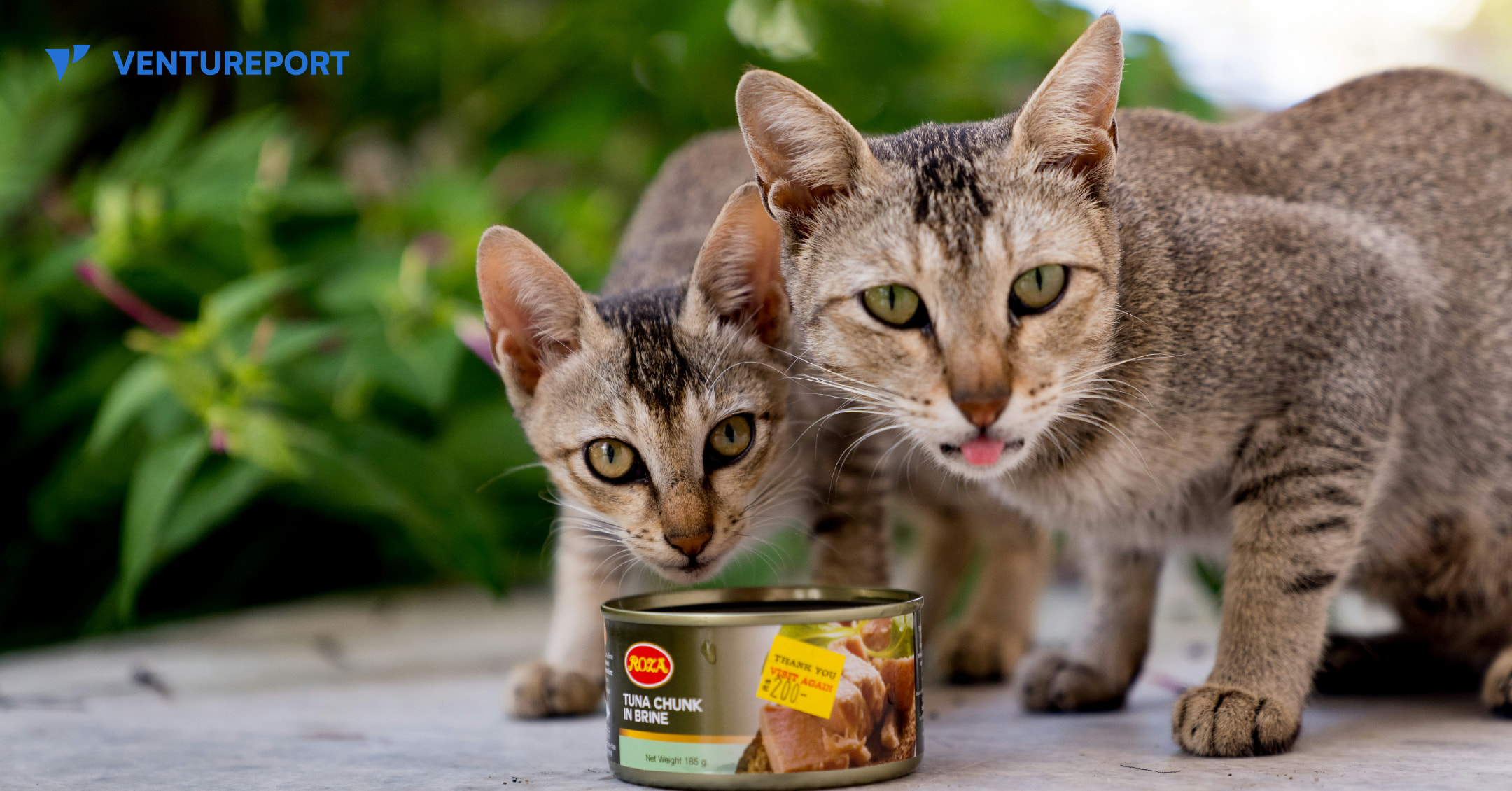
Cats having a jolly good time with a can of tuna. PHOTO: UNSPLASH
At a Silicon Valley pitch event crowded with AI, SaaS and deep-tech startups, the company that stood out was not selling software or algorithms. It was selling pet treats.
Eastseabrother, a premium pet food brand from South Korea, ranked first at a Plug and Play–hosted investor pitch competition in Sunnyvale. The product itself is simple: single-ingredient pet treats made from wild-caught seafood sourced from Korea’s East Sea. The company follows a principle it calls “Only What the Sea Allows”, working directly with regional fishermen while avoiding overfishing. With no additives and minimal processing, what sets Eastseabrother apart is not novelty, but control—over sourcing, supply chains and consistency.
That clarity helped the company walk away with both Best Product and Best Potential. “Investors asked detailed questions about repeat purchase rates and customer feedback, not just our technology or supply chain”, said Eunyul Kim, CEO of Eastseabrother. “That told us the market is shifting—real consumer trust now carries as much weight as a compelling tech narrative”.
What truly caught investors’ attention was not an ambitious vision of the future, but concrete evidence of traction today. Eastseabrother has already secured shelf space in specialty pet stores across California, New York and North Carolina, including an exclusive partnership with EarthWise Pet, a national specialty retail chain. At a consumer showcase at San Francisco’s Ferry Building, the brand recorded the highest on-site sales among all participating companies.
At its core, the pitch was built on simplicity: one ingredient, clear sourcing and a defined customer need. In a market saturated with complex products and abstract claims, that focus and transparency stood out.
The judges’ decision also reflects a broader shift in venture capital thinking. Not every successful startup is built on complex software or high-tech innovation. In categories like pet care—where trust, quality and transparency shape buying behavior—execution and credibility can matter more than technical sophistication.
Today, Eastseabrother has extended its reach beyond the U.S., expanding into Singapore and Hong Kong, with additional plans to grow further in North America as demand for premium pet food rises. And the broader takeaway from this pitch is not that consumer brands are overtaking tech startups. It is that investors are increasingly focused on fundamentals: who is buying, why they are returning and whether the business can sustain itself beyond the pitch deck.