
Circles is using AI to turn telecom support from a cost centre into a faster, more personalised growth engine
Updated
August 10, 2026 5:56 PM

A woman holding a phone while using a laptop. PHOTO: ADOBE STOCK
Circles, a Singapore startup that builds software for digital telecom operators, has launched an AI concierge as part of its partnership with OpenAI. The release marks a new step in the company’s effort to modernise how telecom providers serve and retain customers. The move reflects a wider shift in the telecom sector. Many operators still rely on older support systems that can be slow, fragmented and costly to run. AI is now being tested as a way to improve service while creating new revenue opportunities.
Circles said the concierge is built on OpenAI’s API platform and sits within what it calls an AI-native telecom stack. In practical terms, the system is designed to handle customer support, account changes and personalised offers through automated interactions.
One part of the platform is called CareX. According to the company, it can deal with billing issues, service requests and network-related problems. Circles said CareX currently resolves 85% of customer queries globally without human intervention and reaches a 95% resolution rate on end-to-end tasks. That matters because customer support remains one of the larger operating costs for telecom providers. Faster automated handling could lower pressure on service teams while reducing wait times for users.
The second part of the platform is Xplore IQ, which focuses on revenue growth. The tool is designed to predict what a customer may need, recommend a suitable plan or offer and complete upgrades or downgrades automatically. Circles said the early rollout has led to a 22% rise in average revenue per user for Circles.Life Singapore. It also said personalised offers helped reduce customer churn by 9%.
"AI should empower users - not force-fit into outdated journeys. OpenAI's role has been critical in enabling Circles to scale this vision globally. With the AI concierge, we are moving beyond providing simple answers to delivering real-world outcomes, along with balancing cost and latency to maximize value for operators and customers alike", said Awais Malik, Global Chief Growth Officer at Circles.
"Circles is demonstrating how advanced AI can modernize essential industries like telecommunications at scale. By combining frontier models with multi-agent systems, they are enabling telecom operators globally to deliver faster, smarter and more personalized customer experiences. This milestone is a strong example of how AI can deliver tangible value for businesses and customers they serve", Oliver Jay, Managing Director, International for OpenAI, added.
Together, the tools are intended to connect customer service, operations and sales into one system. Rather than treating support and monetisation as separate functions, the company is combining them into a single digital layer.
Circles said the partnership will continue over the next two years as both companies work toward a more autonomous telecom model. Whether that vision is achieved remains to be seen, but the direction is clear: telecom operators are increasingly treating AI as core infrastructure rather than an optional add-on.
Keep Reading
Rethinking 3D modelling for a world that generates too much, too quickly.
Updated
January 8, 2026 6:32 PM
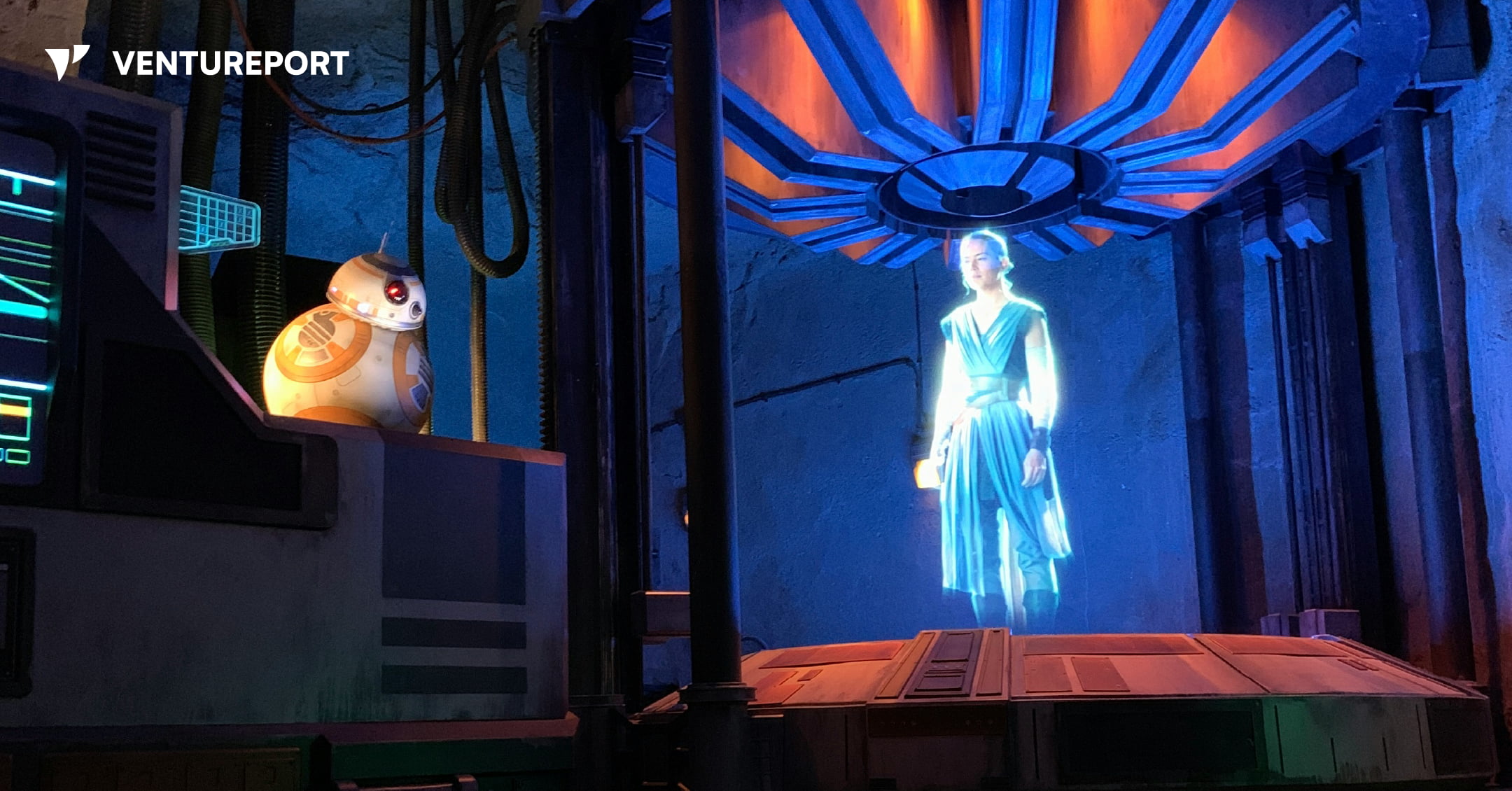
A hologram in the franchise Star Wars, in Walt Disney World Resort, Orlando. PHOTO: UNSPLASH
MicroCloud Hologram Inc. (NASDAQ: HOLO), a technology service provider recognized for its holography and imaging systems, is now expanding into a more advanced realm: a quantum-driven 3D intelligent model. The goal is to generate detailed 3D models and images with far less manual effort — a need that has only grown as industries flood the world with more visual data every year.
The concept is straightforward, even if the technology behind it isn’t. Traditional 3D modeling workflows are slow, fragmented and depend on large teams to clean datasets, train models, adjust parameters and fine-tune every output. HOLO is trying to close that gap by combining quantum computing with AI-powered 3D modeling, enabling the system to process massive datasets quickly and automatically produce high-precision 3D assets with much less human involvement.
To achieve this, the company developed a distributed architecture comprising of several specialized subsystems. One subsystem collects and cleans raw visual data from different sources. Another uses quantum deep learning to understand patterns in that data. A third converts the trained model into ready-to-use 3D assets based on user inputs. Additional modules manage visualization, secure data storage and system-wide protection — all supported by quantum-level encryption. Each subsystem runs in its own container and communicates through encrypted interfaces, allowing flexible upgrades and scaling without disrupting the entire system.
Why this matters: Industries ranging from gaming and film to manufacturing, simulation and digital twins are rapidly increasing their reliance on 3D content. The real bottleneck isn’t creativity — it’s time. Producing accurate, high-quality 3D assets still requires a huge amount of manual processing. HOLO’s approach attempts to lighten that workload by utilizing quantum tools to speed up data processing, model training, generation and scaling, while keeping user data secure.
According to the company, the system’s biggest advantages include its ability to handle massive datasets more efficiently, generate precise 3D models with fewer manual steps, and scale easily thanks to its modular, quantum-optimized design. Whether quantum computing will become a mainstream part of 3D production remains an open question. Still, the model shows how companies are beginning to rethink traditional 3D workflows as demand for high-quality digital content continues to surge.