
The funding highlights how service robotics is shifting from niche deployments to scaled commercial use across global markets
Updated
May 14, 2026 3:02 PM

An autonomous service robot with a cat face design standing inside a McDonalds restaurant. PHOTO: ADOBE STOCK
Pudu Robotics, a Shenzhen-based startup building robots for commercial environments, has raised nearly US$150 million in a new funding round, pushing its valuation past US$1.5 billion. The raise brings the company’s total funding to more than US$300 million.
The company focuses on service robotics across sectors such as delivery, cleaning and industrial logistics. Its systems are used in places like retail stores, warehouses and public venues where routine tasks can be automated. Over time, Pudu has expanded from single-purpose machines to a broader portfolio that combines hardware with AI-driven navigation and coordination.
The funding is expected to support several areas of growth. These include further development of its AI systems, expansion of its product range and continued international rollout. The company also plans to invest in manufacturing and supply chain capacity, suggesting a focus on scaling production alongside demand.
Pudu’s recent growth provides some context for the raise. The company reported a doubling of revenue by 2025, with its cleaning robots now accounting for the majority of its business. Its industrial delivery robots have also seen early traction, with thousands of units deployed within a year of launch.
Its products are already in use with large global retailers including Carrefour, Walmart and EDEKA. Industry estimates place Pudu among the largest players in commercial service robotics, with a leading share of the global market.
Technically, the company develops much of its core stack in-house, including navigation systems, multi-robot coordination software and motion control. This allows its robots to operate in complex real-world environments where multiple machines need to move and work together.
“This financial milestone is a powerful confirmation of Pudu’s industry leadership, the strength of its products and technology, its global brand, and its commercial infrastructure. With the support of our strategic investors and industry partners, Pudu will continue to push the boundaries of embedded AI and business service robotics. We remain committed to innovating with an inventor’s spirit and leveraging a global vision to accelerate robot adoption, thereby elevating the industry to new heights in the global value chain”. said Felix Zhang, founder and CEO of Pudu Robotics.
The funding round points to a broader shift in the sector. As service robotics moves from pilot deployments to wider adoption, companies are increasingly being judged on their ability to scale production and operate across markets, not just on the novelty of their technology.
Keep Reading
From pre-orders to market entry, Rokid’s Taiwan campaign reflects how AI hardware is being introduced to consumers today.
Updated
January 8, 2026 6:30 PM
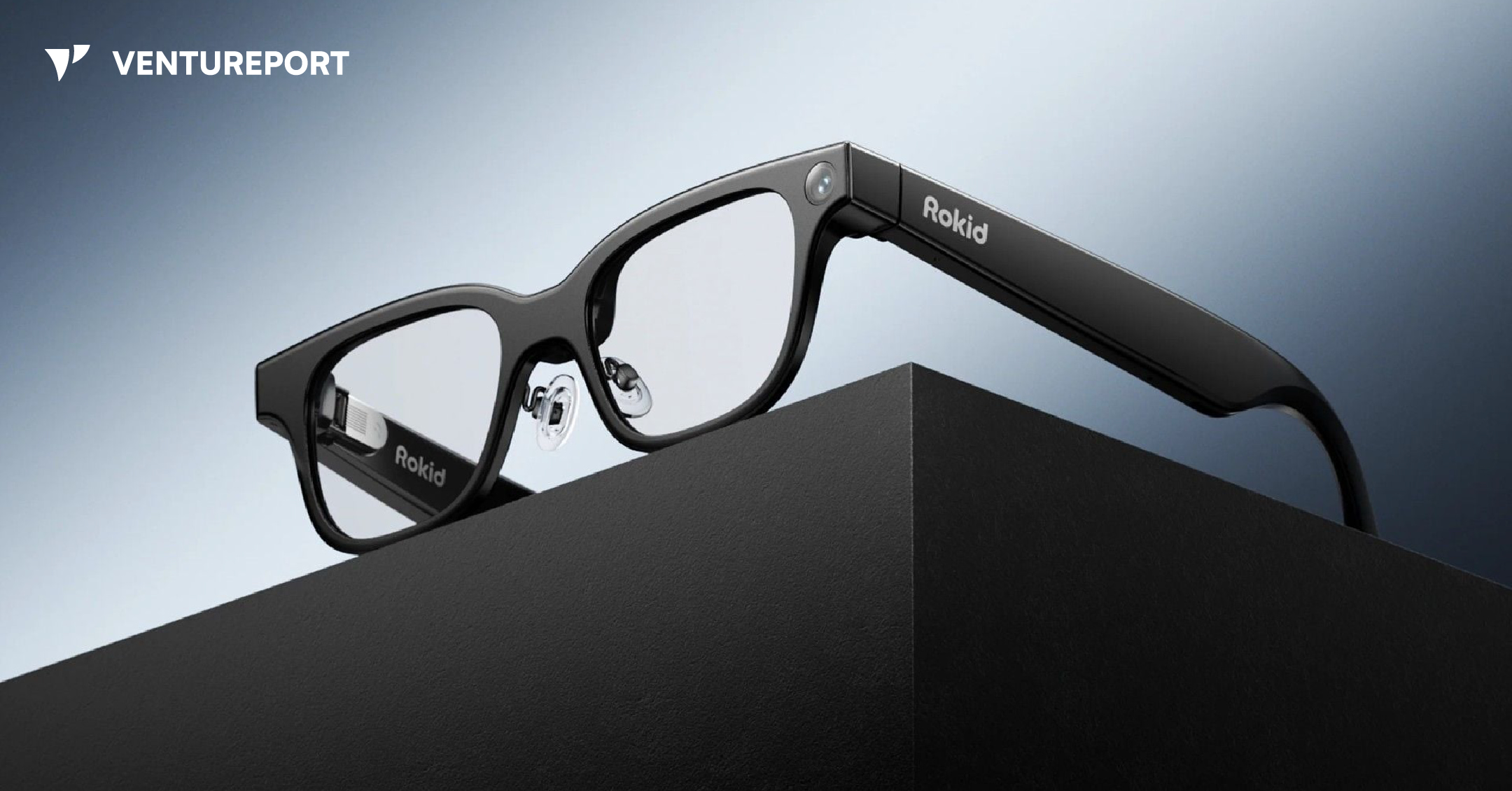
Rokid Glasses, a pair of AR glasses from Rokid. PHOTO: ROKID
Rokid has reached a significant crowdfunding milestone in Taiwan. Its Rokid Glasses campaign surpassed NT$62 million in pre-order funding on zeczec, Taiwan’s creative-oriented crowdfunding platform. The campaign ranked No. 1 across all categories on the platform in 2025 and entered the Top 10 funded campaigns in zeczec’s history, setting new records for AI and XR-related projects.
The campaign launched on October 28 and became one of the platform’s most prominent technology initiatives of the year. According to the company, the outcome followed growing visibility for Rokid Glasses after product showcases in New York, Berlin, Singapore and Paris, positioning the Taiwan campaign within a broader international rollout.
The crowdfunding achievement coincided with Rokid’s official market entry in Taiwan. On December 10, the company debuted Rokid Glasses locally, introducing the product to media, partners and early users in the region. The Taiwan launch mirrored earlier international events and connected the online crowdfunding campaign with a physical market presence.
Rokid Glasses combine augmented reality displays with built-in AI functions, including real-time multilingual translation, live transcription, navigation, object recognition and voice assistance. These capabilities were central to how the product was presented during both the crowdfunding campaign and the Taiwan launch, without framing the project as a traditional consumer electronics release.
The Taiwan campaign builds on Rokid’s prior crowdfunding history. The company previously raised more than US$4 million on Kickstarter, where Rokid Glasses became the highest-funded XR wearable project on the platform. The zeczec campaign extends that track record into one of Asia’s most established consumer electronics markets.
“Taiwan has one of the world's most mature and discerning consumer electronics markets”, said Said Justo Chang, Head of Global Channels at Rokid. “Reaching the top of Taiwan's crowdfunding platform is a great commercial achievement. We are excited to finally introduce Rokid Glasses to Taiwan”.
More broadly, the campaign highlights how crowdfunding platforms continue to function as launch and distribution channels for emerging AI and XR hardware. In Rokid’s case, product rollout, market entry and public participation converged within a single campaign, marking a notable moment for AI-enabled wearables in Taiwan’s technology landscape.