
The funding highlights how service robotics is shifting from niche deployments to scaled commercial use across global markets
Updated
August 10, 2026 5:56 PM

An autonomous service robot with a cat face design standing inside a McDonalds restaurant. PHOTO: ADOBE STOCK
Pudu Robotics, a Shenzhen-based startup building robots for commercial environments, has raised nearly US$150 million in a new funding round, pushing its valuation past US$1.5 billion. The raise brings the company’s total funding to more than US$300 million.
The company focuses on service robotics across sectors such as delivery, cleaning and industrial logistics. Its systems are used in places like retail stores, warehouses and public venues where routine tasks can be automated. Over time, Pudu has expanded from single-purpose machines to a broader portfolio that combines hardware with AI-driven navigation and coordination.
The funding is expected to support several areas of growth. These include further development of its AI systems, expansion of its product range and continued international rollout. The company also plans to invest in manufacturing and supply chain capacity, suggesting a focus on scaling production alongside demand.
Pudu’s recent growth provides some context for the raise. The company reported a doubling of revenue by 2025, with its cleaning robots now accounting for the majority of its business. Its industrial delivery robots have also seen early traction, with thousands of units deployed within a year of launch.
Its products are already in use with large global retailers including Carrefour, Walmart and EDEKA. Industry estimates place Pudu among the largest players in commercial service robotics, with a leading share of the global market.
Technically, the company develops much of its core stack in-house, including navigation systems, multi-robot coordination software and motion control. This allows its robots to operate in complex real-world environments where multiple machines need to move and work together.
“This financial milestone is a powerful confirmation of Pudu’s industry leadership, the strength of its products and technology, its global brand, and its commercial infrastructure. With the support of our strategic investors and industry partners, Pudu will continue to push the boundaries of embedded AI and business service robotics. We remain committed to innovating with an inventor’s spirit and leveraging a global vision to accelerate robot adoption, thereby elevating the industry to new heights in the global value chain”. said Felix Zhang, founder and CEO of Pudu Robotics.
The funding round points to a broader shift in the sector. As service robotics moves from pilot deployments to wider adoption, companies are increasingly being judged on their ability to scale production and operate across markets, not just on the novelty of their technology.
Keep Reading
A closer look at how startups are turning local AI into global opportunity
Updated
March 24, 2026 6:25 PM
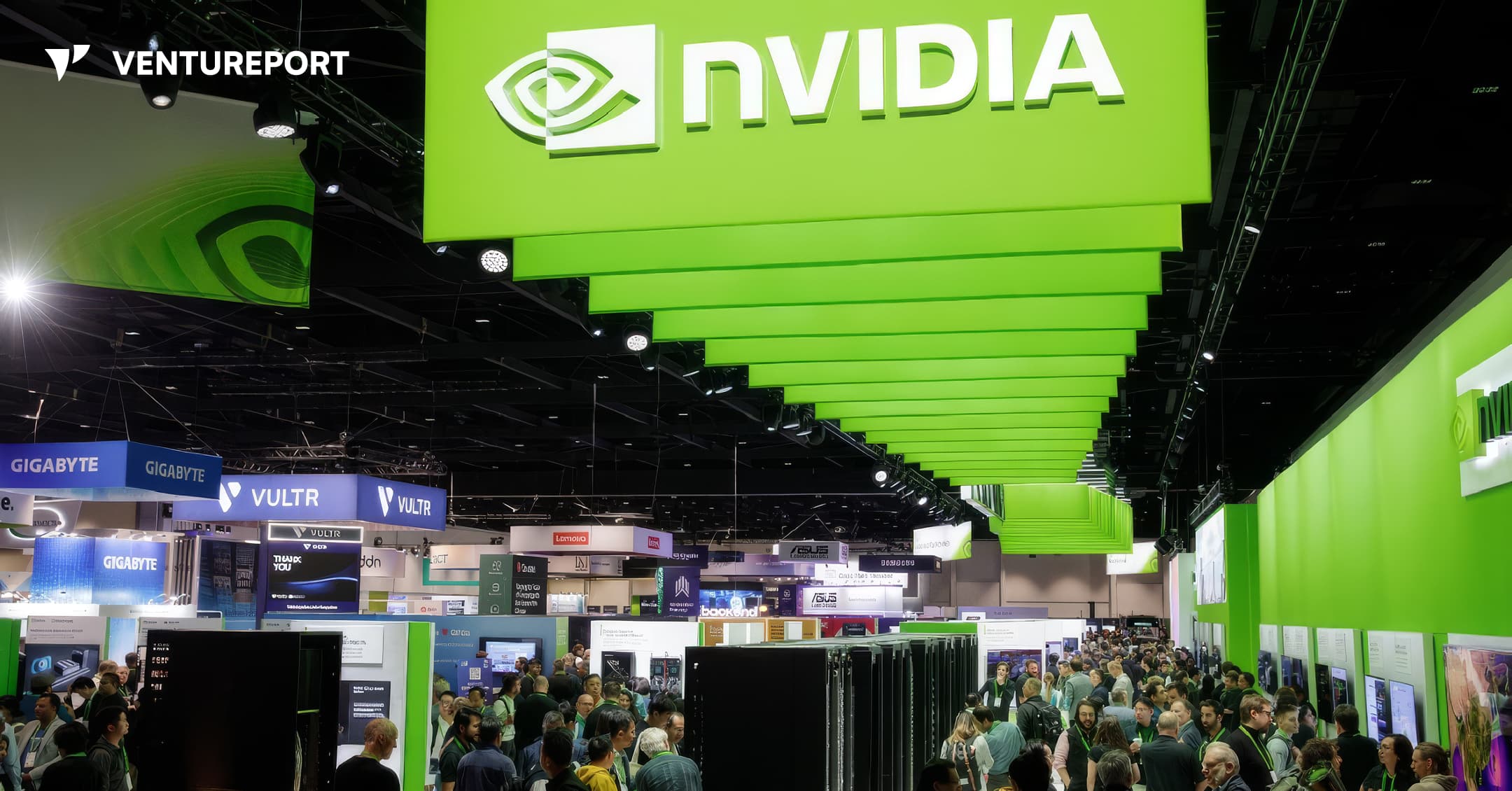
NVIDIA GTC 2026. PHOTO: NVIDIA
At NVIDIA GTC 2026 in Palo Alto, a group of 16 Taiwanese startups used the global AI stage to do more than showcase products—they tested how far their technologies could travel beyond domestic markets. The delegation, led by Startup Island TAIWAN Silicon Valley Hub with support from Taiwan’s National Development Council, reflected a broader shift in the country’s role within the AI ecosystem.
The startups represented a mix of emerging areas including digital twins, robotics, AI agents and healthcare, aligning closely with enterprise AI adoption trends. Some gained formal visibility within NVIDIA’s ecosystem, with companies such as MetAI and Spingence featured in the Inception Program, while six others presented their work in the conference’s poster gallery. These formats allowed them to engage directly with developers, enterprise users and potential partners rather than simply exhibiting technology.
A defining feature of Taiwan’s presence this year was how closely startups operated alongside established hardware companies such as ASUS, AAEON and Compal. This setup reflected a vertically integrated model where infrastructure and applications are developed together, offering a clearer path from product development to deployment. It also underscored Taiwan’s gradual shift from being primarily a hardware supplier to participating more actively across the full AI stack.
Activity around the conference extended well beyond the exhibition floor. A Taiwan Demo Day held during the week drew more than 1,000 registrations and nearly 600 in-person attendees, bringing startups into contact with close to 200 international investors. The event focused on structured introductions and deal flow, positioning startups in front of venture firms and corporate innovation teams looking for AI applications.
Alongside these formal sessions, Taiwan Startup Night provided a more informal but equally strategic setting. With over 100 curated participants, including founders, investors and corporate representatives, the gathering created space for early-stage conversations that could evolve into partnerships or market entry opportunities. These interactions, while less visible than on-stage presentations, are often where initial collaboration takes shape.
Taken together, the events around GTC point to a more coordinated approach to international expansion. Through platforms like Startup Island TAIWAN, the emphasis is not just on visibility but on building continuity—connecting startups with investors, partners and customers across multiple touchpoints in a single week. As AI development increasingly spans chips, systems and applications, Taiwan’s presence at GTC suggests a more integrated role, where the focus is as much on enabling global deployment as it is on developing the technology itself.