
A rare policy consensus emerges as AI’s impact moves beyond innovation into governance and societal risk
Updated
August 10, 2026 5:56 PM
A mechanical hand reaching for the hand of flesh. PHOTO: UNSPLASH
A new survey from Povaddo, a policy research firm, suggests that concern about artificial intelligence is no longer limited to industry or academia. It is now firmly present within the policy community.
The survey draws on responses from 301 public policy professionals across the United States and Europe, including lawmakers, staffers and analysts involved in shaping and evaluating public policy. A majority of respondents—61%—say governments are falling short in addressing the negative impacts of AI.
There is also broad agreement that regulation needs to increase. In the United States, 92% of respondents support stronger AI regulation, compared to 70% in Europe. At a time when consensus is often difficult, the findings point to a shared view across policy circles that current frameworks are not keeping pace with technological development.
Differences emerge when looking at how AI is affecting national contexts. In the U.S., 57% of policy experts believe AI is already harming the labor market. In Europe, 34% say the same. U.S. respondents are also more likely to see AI as a greater threat to jobs than immigration, with 63% holding that view compared to 47% in Europe.
On misinformation, responses are closely aligned. A large majority of policy experts in both regions expect an AI-driven misinformation crisis within the next one to two years—87% in the U.S. and 82% in Europe. Many also believe that AI-generated or AI-amplified misinformation could affect elections and public health information.
Some respondents frame the risks in more fundamental terms. In the United States, 41% of policy experts say AI poses an existential threat to humanity. In Europe, 29% share that view. U.S. respondents are also more likely to believe that advances in AI could harm global security and stability.
The findings come as policymakers begin to respond more actively. In the U.S., Senators Josh Hawley, Richard Blumenthal and Mark Warner have introduced bipartisan legislation focused on AI accountability, including measures aimed at protecting workers and children.
In Europe, the introduction of the EU AI Act marks a more advanced regulatory approach. The framework sets out rules based on levels of risk and is widely seen as the first comprehensive attempt to govern AI at scale.
William Stewart, President and Founder of Povaddo, said: "What makes these findings so significant is who is saying it. These are the practitioners who work inside the policy process every day, spanning every corner of the policy world from defense to healthcare to finance, not activists or everyday citizens. These findings foreshadow real action. The current path of governments accelerating AI deployment while falling short on governance is not sustainable, and the people who know that best are the ones in this survey. You cannot have nine-in-ten policy insiders demanding more regulation and four-in-ten calling AI an existential threat without that eventually moving the needle in Washington and Brussels in terms of legislative or regulatory action".
Taken together, the survey reflects a shift in how AI is being discussed within policymaking circles. Concern is no longer limited to future risks. It is increasingly tied to current gaps in governance and the pace of deployment.
Keep Reading
As global financial landscapes shift, Noah outlines a new AI-first approach to helping families protect and grow their wealth.
Updated
January 8, 2026 6:31 PM
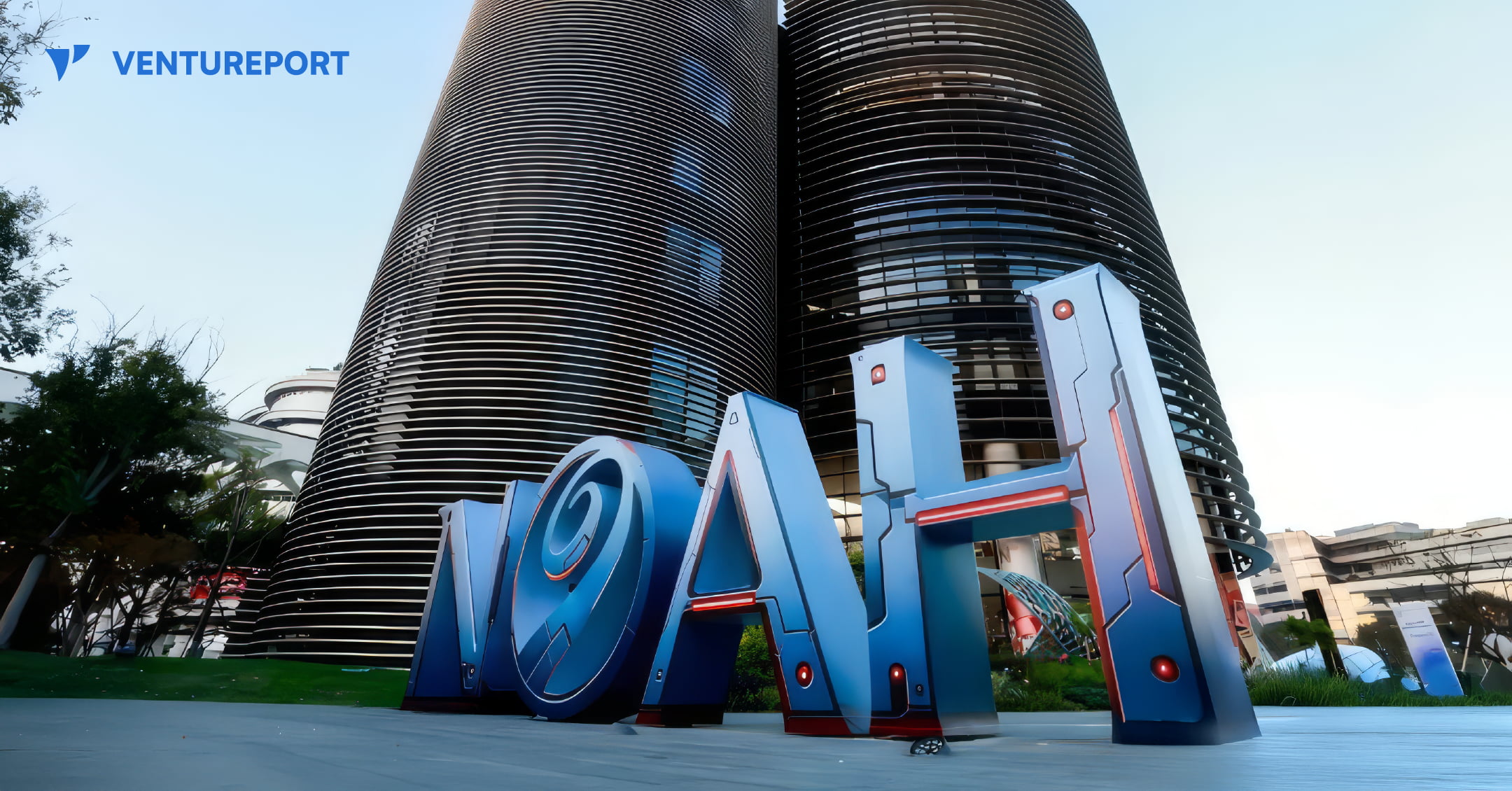
Noah’s Black Diamond Summit. PHOTO: ARK WEALTH
Noah Holdings, one of Asia’s leading wealth management firms serving global Chinese high-net-worth families, hosted its annual Black Diamond Summit in Macau from December 7–11. The city has become a significant gathering place for Noah’s community, where clients, partners, and experts converge each year to explore how global trends are transforming wealth and family life. This year’s theme, “AI Together, Co-Generating the Future”, set the tone for a conversation about how modern wealth management must adapt in an age defined by artificial intelligence.
More than 3,000 attendees joined discussions that connected technology, global mobility, and long-term family planning. The Summit built on earlier sessions held in Shanghai, creating a continuous dialogue around one central question: how can families prepare for a world that is becoming more digital, more complex and more interconnected?
A major moment came when Noah introduced “Noya”, its new AI Relationship Manager. Noya is now part of the upgraded iARK Hong Kong and Singapore apps. It is built to support licensed human advisors, not replace them. The goal is simple: combine human judgment with AI intelligence to help clients understand their wealth more clearly and manage it across borders. Noya offers real-time insights, deeper personalisation, cleaner access to global financial information, smoother coordination between regions, and end-to-end execution through Noah’s global booking centres.
The Summit’s tone shifted toward long-term thinking when Co-Founder and Chairwoman Norah Wang delivered her keynote, “From Chaos to Clarity: Building a Global Operating System for Wealth Management”. She reflected on twenty years of serving more than 400,000 clients and explained that families today face new pressures. As she put it, “The real pain point for Chinese families today is not investment performance, but navigating the growing complexities of a global lifestyle”. Her message was straightforward: wealth is no longer just about returns. It is about managing uncertainty in a world where technology, geopolitics, and mobility collide.
Wang described how two major shifts have shaped modern wealth—first the Internet Era, which changed how people built wealth, and now what she calls the AI Civilisation Era, which is changing how people must protect it. She outlined the forces that influence today’s decisions: geopolitical shifts, persistent inflation, the rising importance of security and supply-chain technologies, the spread of AI, and the need for stronger family governance across generations. Each of these factors adds complexity, and families need tools that help them see the bigger picture.
To respond to this reality, Noah presented its integrated global wealth infrastructure. It is built on three pillars:
Together, these pillars function as an AI-supported system designed to simplify global complexity and help families preserve long-term stability.
One of the most discussed conversations featured Noah’s CEO, Zander Yin, and Tony Shale, Co-Founder & Chairman of Asian Private Banker China. They spoke about how AI is transforming private banking in Asia. Their view was that wealth management is moving from a product-centred model to one led by insight, trust, and human-tech collaboration. AI may accelerate analysis, but human expertise will continue to guide judgment, relationships, and long-term strategy.
The closing message of the Summit centred on redefining what prosperity means in an AI-driven age. For Noah, wealth is no longer a destination. It is an ongoing journey through a world that is increasingly fast-moving and unpredictable. As Wang noted, “With AI reshaping the very foundations of civilisation, wealth and financial freedom represent not a static endpoint, but a continuous journey. Here, we find our purpose: to help global Chinese investors navigate an increasingly complex world and achieve true prosperity, supported by resilient wealth management infrastructure and deep human expertise”.
The Summit ended on that note—a reminder that the future of wealth is not only about financial assets, but about clarity, confidence and the ability to adapt as the world transforms.