
A rare policy consensus emerges as AI’s impact moves beyond innovation into governance and societal risk
Updated
August 10, 2026 5:56 PM

A mechanical hand reaching for the hand of flesh. PHOTO: UNSPLASH
A new survey from Povaddo, a policy research firm, suggests that concern about artificial intelligence is no longer limited to industry or academia. It is now firmly present within the policy community.
The survey draws on responses from 301 public policy professionals across the United States and Europe, including lawmakers, staffers and analysts involved in shaping and evaluating public policy. A majority of respondents—61%—say governments are falling short in addressing the negative impacts of AI.
There is also broad agreement that regulation needs to increase. In the United States, 92% of respondents support stronger AI regulation, compared to 70% in Europe. At a time when consensus is often difficult, the findings point to a shared view across policy circles that current frameworks are not keeping pace with technological development.
Differences emerge when looking at how AI is affecting national contexts. In the U.S., 57% of policy experts believe AI is already harming the labor market. In Europe, 34% say the same. U.S. respondents are also more likely to see AI as a greater threat to jobs than immigration, with 63% holding that view compared to 47% in Europe.
On misinformation, responses are closely aligned. A large majority of policy experts in both regions expect an AI-driven misinformation crisis within the next one to two years—87% in the U.S. and 82% in Europe. Many also believe that AI-generated or AI-amplified misinformation could affect elections and public health information.
Some respondents frame the risks in more fundamental terms. In the United States, 41% of policy experts say AI poses an existential threat to humanity. In Europe, 29% share that view. U.S. respondents are also more likely to believe that advances in AI could harm global security and stability.
The findings come as policymakers begin to respond more actively. In the U.S., Senators Josh Hawley, Richard Blumenthal and Mark Warner have introduced bipartisan legislation focused on AI accountability, including measures aimed at protecting workers and children.
In Europe, the introduction of the EU AI Act marks a more advanced regulatory approach. The framework sets out rules based on levels of risk and is widely seen as the first comprehensive attempt to govern AI at scale.
William Stewart, President and Founder of Povaddo, said: "What makes these findings so significant is who is saying it. These are the practitioners who work inside the policy process every day, spanning every corner of the policy world from defense to healthcare to finance, not activists or everyday citizens. These findings foreshadow real action. The current path of governments accelerating AI deployment while falling short on governance is not sustainable, and the people who know that best are the ones in this survey. You cannot have nine-in-ten policy insiders demanding more regulation and four-in-ten calling AI an existential threat without that eventually moving the needle in Washington and Brussels in terms of legislative or regulatory action".
Taken together, the survey reflects a shift in how AI is being discussed within policymaking circles. Concern is no longer limited to future risks. It is increasingly tied to current gaps in governance and the pace of deployment.
Keep Reading
How a Korean biotech startup is using AI to move drug discovery from trial-and-error to precision design
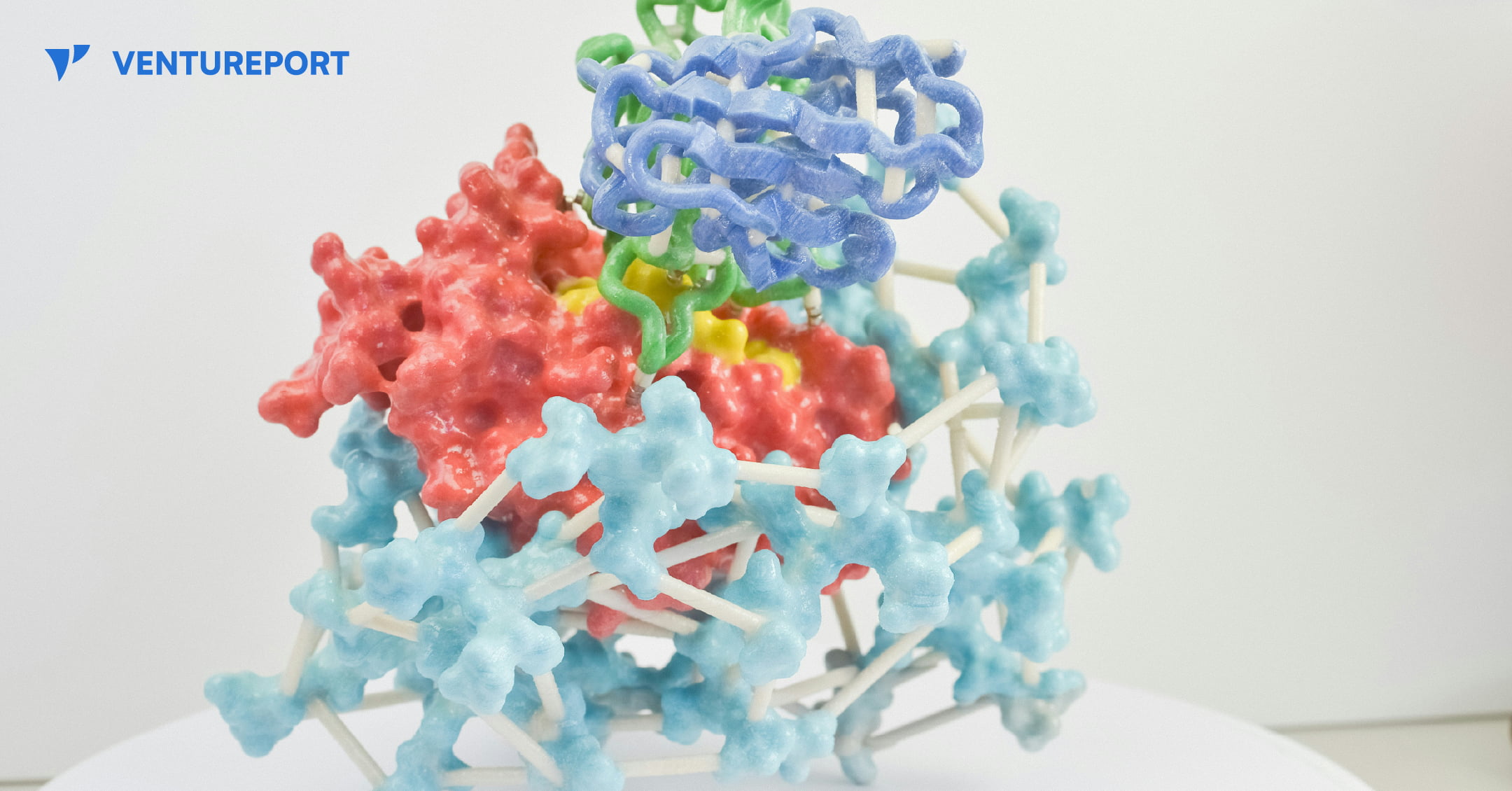
A close up of a protein structure model. PHOTO: UNSPLASH
For decades, drug discovery has relied on trial and error, with scientists testing thousands of molecules to find one that works. Galux, a South Korean biotech startup, is changing that by using AI to design proteins from scratch. This method, called “de novo” design, makes it possible to build precise new therapies instead of searching through existing ones.
The company recently announced a US$29 million Series B funding round, bringing its total capital to US$47 million.This significant investment attracted a substantial roster of institutional backers, including the Korea Development Bank (KDB), Yuanta Investment, SL Investment and NCORE Ventures. These firms joined existing investors such as InterVest, DAYLI Partners and PATHWAY Investment, as well as new participants including SneakPeek Investments, Korea Investment & Securities and Mirae Asset Securities.
At the core of the company’s work is a platform called GaluxDesign. Unlike many AI tools that only predict how existing proteins fold, this system uses deep learning and physics to create entirely new therapeutic antibodies. This “from scratch” approach lets the team go after so-called “undruggable” proteins. These are targets that traditional small-molecule drugs can’t reach because they lack clear binding pockets. By designing proteins to fit these complex shapes, Galux aims to unlock treatments that have stayed out of reach for decades. And that’s exactly why investors are paying attention.
The pharmaceutical industry is actively looking for faster and more efficient ways to develop new drugs, and Galux is built for exactly that. The company connects its AI platform directly to its own wet lab, where designs can be tested in real time. Each result feeds straight back into the system, sharpening the next round of models. This continuous loop speeds up discovery and improves precision at every step. It’s also why partners like Celltrion, LG Chem and Boehringer Ingelheim are already working with Galux.
Galux is no longer just trying to make drugs that stick to a target. The company now wants its AI to design medicines that actually work in the body and can be made at scale. In simple terms, a drug has to do more than bind to a disease—it must be stable, safe and strong enough to change how the illness behaves. Galux is moving into tougher targets such as ion channels and GPCRs. These play key roles in heart function and sensory signals. Ultimately, the goal is to show that AI-driven design can turn complex biology into real treatments. And instead of hunting blindly for a solution, the team is building exactly what they need.