
A Hong Kong pilot explores how creator-led distribution could reshape livestreaming for global competitions
Updated
May 1, 2026 2:25 PM

A dance crew performs in sync on stage at World of Dance under spotlights. PHOTO: WORLD OF DANCE HONG KONG
On January 22, 2026, World of Dance Hong Kong became the first global event to pilot Mitico’s community-based livestreaming model. The idea is simple: rethink how live competitions are shared in a digital-first world.
Instead of relying on a single official broadcast, the event was produced as one centralised live feed. It was then distributed across multiple creators and influencers, each hosting the stream for their own audience.
This gave creators room to add their own commentary, adapt the language and bring in cultural context that suited their communities, while the production remained consistent behind the scenes.
“Dance is a universal language”, said David Gonzalez, President of World of Dance. “Our collaboration with Mitico to produce an international, creator-led livestream in Hong Kong allowed a regional competition to reach a global audience. With personalised commentary from hosts in different languages, we can begin to see how regional events may connect through global communities”. This approach points to a shift away from traditional broadcaster-led distribution and toward creator-led amplification.
.jpg)
Mitico’s approach begins with a familiar industry challenge: the high cost of production and licensing, which often makes it difficult to livestream cultural and sports events at scale.
“Many cultural and sports competitions are never livestreamed because traditional broadcasting is too costly and complex”, said Chengcheng Li, Founder of Mitico. “By distributing a centralised production feed through creators and community hosts, regional events can reach global audiences while maintaining a unified production workflow”.
World of Dance (WOD) offered a natural test environment. It started as a global dance competition platform before entering a television partnership with NBC, which later produced four seasons of the World of Dance reality series. While the television programme concluded in 2021, the competition business has continued to expand through an international network of partners. Today, World of Dance competitions are represented in more than 72 countries, producing nearly 100 events each year, with a digital audience of more than 34 million followers across platforms
Despite that scale, many competitions are not livestreamed due to the high production costs and technical demands associated with traditional broadcasting. The Hong Kong event was selected to assess whether a community-led distribution model could offer a more scalable alternative for live coverage.
While no changes to World of Dance’s broader distribution strategy have been announced, the Hong Kong pilot offers an early indication of how global competitions may rethink livestreaming in an increasingly creator-driven media environment.
Keep Reading
How a Korean biotech startup is using AI to move drug discovery from trial-and-error to precision design
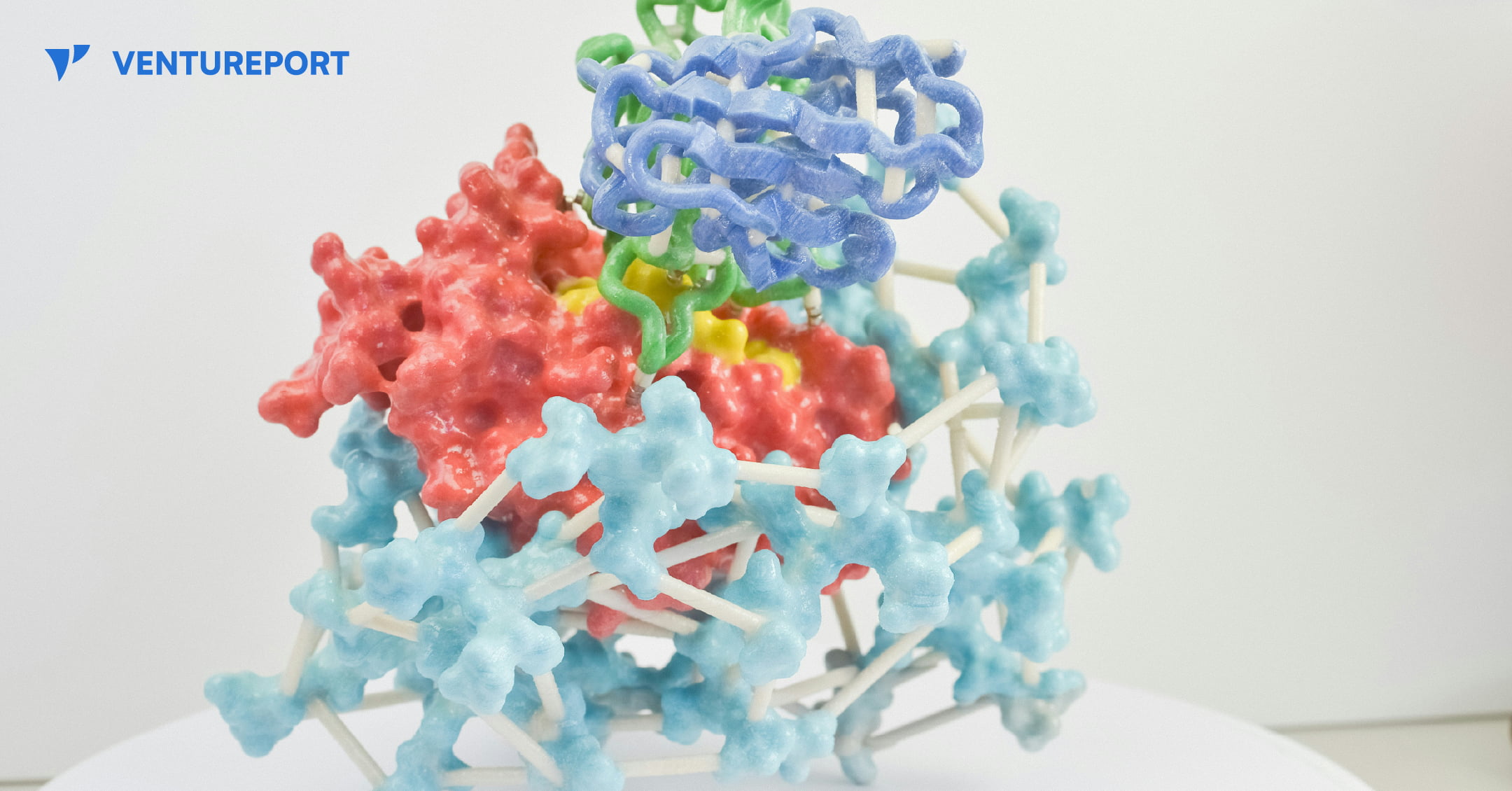
A close up of a protein structure model. PHOTO: UNSPLASH
For decades, drug discovery has relied on trial and error, with scientists testing thousands of molecules to find one that works. Galux, a South Korean biotech startup, is changing that by using AI to design proteins from scratch. This method, called “de novo” design, makes it possible to build precise new therapies instead of searching through existing ones.
The company recently announced a US$29 million Series B funding round, bringing its total capital to US$47 million.This significant investment attracted a substantial roster of institutional backers, including the Korea Development Bank (KDB), Yuanta Investment, SL Investment and NCORE Ventures. These firms joined existing investors such as InterVest, DAYLI Partners and PATHWAY Investment, as well as new participants including SneakPeek Investments, Korea Investment & Securities and Mirae Asset Securities.
At the core of the company’s work is a platform called GaluxDesign. Unlike many AI tools that only predict how existing proteins fold, this system uses deep learning and physics to create entirely new therapeutic antibodies. This “from scratch” approach lets the team go after so-called “undruggable” proteins. These are targets that traditional small-molecule drugs can’t reach because they lack clear binding pockets. By designing proteins to fit these complex shapes, Galux aims to unlock treatments that have stayed out of reach for decades. And that’s exactly why investors are paying attention.
The pharmaceutical industry is actively looking for faster and more efficient ways to develop new drugs, and Galux is built for exactly that. The company connects its AI platform directly to its own wet lab, where designs can be tested in real time. Each result feeds straight back into the system, sharpening the next round of models. This continuous loop speeds up discovery and improves precision at every step. It’s also why partners like Celltrion, LG Chem and Boehringer Ingelheim are already working with Galux.
Galux is no longer just trying to make drugs that stick to a target. The company now wants its AI to design medicines that actually work in the body and can be made at scale. In simple terms, a drug has to do more than bind to a disease—it must be stable, safe and strong enough to change how the illness behaves. Galux is moving into tougher targets such as ion channels and GPCRs. These play key roles in heart function and sensory signals. Ultimately, the goal is to show that AI-driven design can turn complex biology into real treatments. And instead of hunting blindly for a solution, the team is building exactly what they need.