
A Hong Kong pilot explores how creator-led distribution could reshape livestreaming for global competitions
Updated
May 1, 2026 2:25 PM

A dance crew performs in sync on stage at World of Dance under spotlights. PHOTO: WORLD OF DANCE HONG KONG
On January 22, 2026, World of Dance Hong Kong became the first global event to pilot Mitico’s community-based livestreaming model. The idea is simple: rethink how live competitions are shared in a digital-first world.
Instead of relying on a single official broadcast, the event was produced as one centralised live feed. It was then distributed across multiple creators and influencers, each hosting the stream for their own audience.
This gave creators room to add their own commentary, adapt the language and bring in cultural context that suited their communities, while the production remained consistent behind the scenes.
“Dance is a universal language”, said David Gonzalez, President of World of Dance. “Our collaboration with Mitico to produce an international, creator-led livestream in Hong Kong allowed a regional competition to reach a global audience. With personalised commentary from hosts in different languages, we can begin to see how regional events may connect through global communities”. This approach points to a shift away from traditional broadcaster-led distribution and toward creator-led amplification.
.jpg)
Mitico’s approach begins with a familiar industry challenge: the high cost of production and licensing, which often makes it difficult to livestream cultural and sports events at scale.
“Many cultural and sports competitions are never livestreamed because traditional broadcasting is too costly and complex”, said Chengcheng Li, Founder of Mitico. “By distributing a centralised production feed through creators and community hosts, regional events can reach global audiences while maintaining a unified production workflow”.
World of Dance (WOD) offered a natural test environment. It started as a global dance competition platform before entering a television partnership with NBC, which later produced four seasons of the World of Dance reality series. While the television programme concluded in 2021, the competition business has continued to expand through an international network of partners. Today, World of Dance competitions are represented in more than 72 countries, producing nearly 100 events each year, with a digital audience of more than 34 million followers across platforms
Despite that scale, many competitions are not livestreamed due to the high production costs and technical demands associated with traditional broadcasting. The Hong Kong event was selected to assess whether a community-led distribution model could offer a more scalable alternative for live coverage.
While no changes to World of Dance’s broader distribution strategy have been announced, the Hong Kong pilot offers an early indication of how global competitions may rethink livestreaming in an increasingly creator-driven media environment.
Keep Reading
The IT services firm strengthens its collaboration with Google Cloud to help enterprises move AI from pilot projects to production systems
Updated
March 17, 2026 1:02 AM
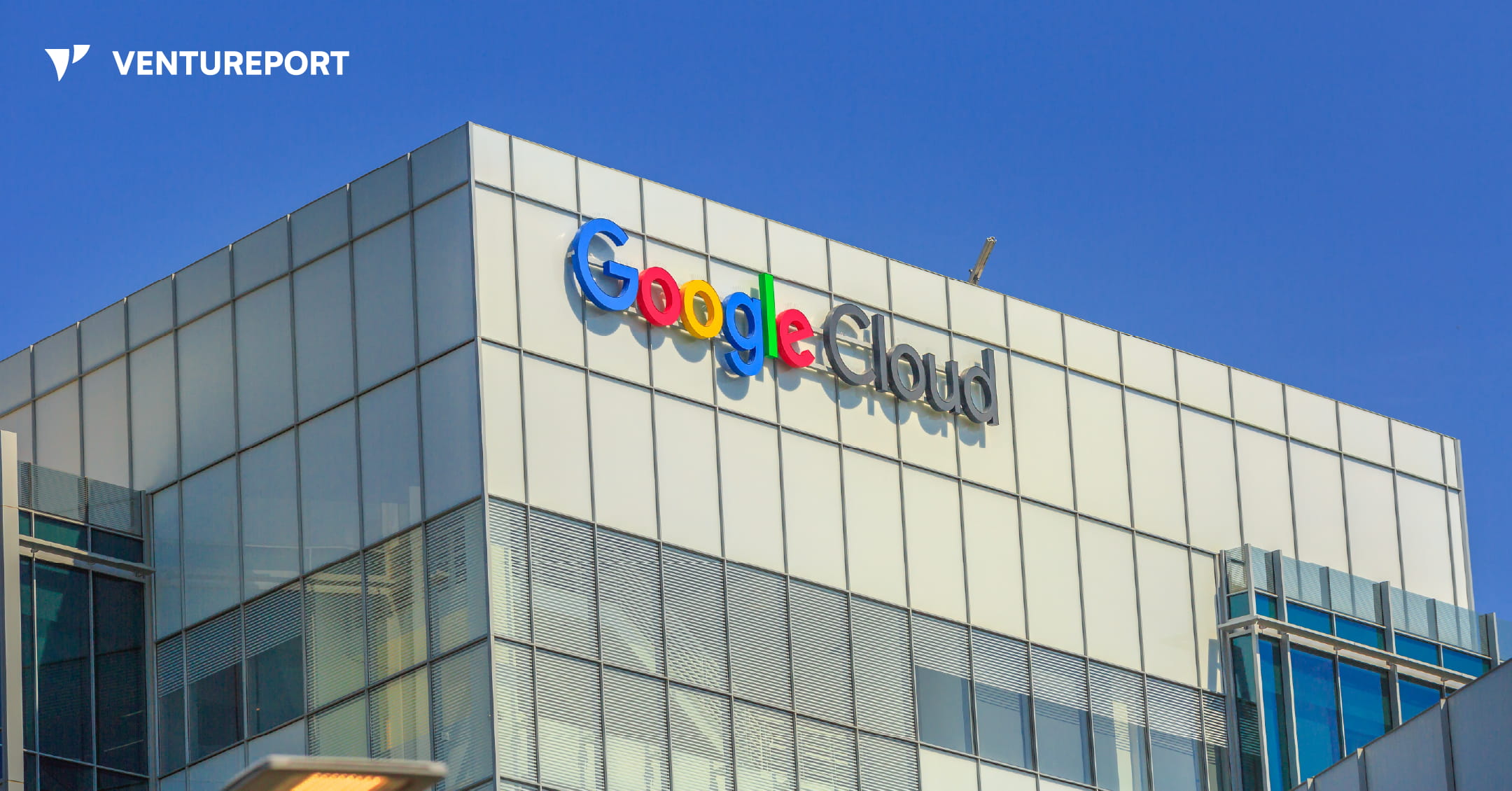
Google Cloud building. PHOTO: ADOBE STOCK
Enterprise interest in AI has moved quickly from experimentation to execution. Many organizations have tested generative tools, but turning those tools into systems that can run inside daily operations remains a separate challenge. Cognizant, an IT services firm, is expanding its partnership with Google Cloud to help enterprises move from AI pilots to fully deployed, production-ready systems.
Cognizant and Google Cloud are deepening their collaboration around Google’s Gemini Enterprise and Google Workspace. Cognizant is deploying these tools across its own workforce first, using them to support internal productivity and collaboration. The idea is simple: test and refine the systems internally, then package similar capabilities for clients.
The focus of the partnership is what Cognizant calls “agentic AI.” In practical terms, this refers to AI systems that can plan, act and complete tasks with limited human input. Instead of generating isolated outputs, these systems are designed to fit into business workflows and carry out structured tasks.
To make that workable at scale, Cognizant is building delivery infrastructure around the technology. The company is setting up a dedicated Gemini Enterprise Center of Excellence and formalizing an Agent Development Lifecycle. This framework covers the full process, from early design and blueprinting to validation and production rollout. The aim is to give enterprises a clearer path from the AI concept to a deployed system.
Cognizant also plans to introduce a bundled productivity offering that combines Gemini Enterprise with Google Workspace. The targeted use cases are operational rather than experimental. These include collaborative content creation, supplier communications and other workflow-heavy processes that can be standardized and automated.
Beyond productivity tools, Cognizant is integrating Gemini into its broader service platforms. Through Cognizant Ignition, enabled by Gemini, the company supports early-stage discovery and prototyping while helping clients strengthen their data foundations. Its Agent Foundry platform provides pre-configured and no-code capabilities for specific use cases such as AI-powered contact centers and intelligent order management. These tools are designed to reduce the amount of custom development required for each deployment.
Scaling is another element of the strategy. Cognizant, a multi-year Google Cloud Data Partner of the Year award winner, says it will rely on a global network of Gemini-trained specialists to deliver these systems. The company is also expanding work tied to Google Distributed Cloud and showcasing capabilities through its Google Experience Zones and Gen AI Studios.
For Google Cloud, the partnership reinforces its enterprise AI ecosystem. Cloud providers can offer models and infrastructure, but enterprise adoption often depends on service partners that can integrate tools into existing systems and manage ongoing operations. By aligning closely with Cognizant, Google strengthens its ability to move Gemini from platform capability to production deployment.
The announcement does not introduce a new AI model. Instead, it reflects a shift in emphasis. The core question is no longer whether AI tools exist, but how they are implemented, governed and scaled across large organizations. Cognizant’s expanded role suggests that execution frameworks, internal deployment and structured delivery models are becoming central to how enterprises approach AI.
In that sense, the partnership is less about new technology and more about operational maturity. It highlights how AI is moving from isolated pilots to managed systems embedded in business processes — a transition that will likely define the next phase of enterprise adoption.