
Overview Energy plans to collect sunlight in orbit and send it to Earth, giving Meta early access to a new source of round-the-clock power
Updated
August 10, 2026 5:56 PM

A corona mass ejection erupts from our sun. PHOTO: UNSPLASH
Overview Energy, a startup focused on space-based power systems, has announced a new agreement with Meta to develop a new source of electricity for data centers. The partnership centres on space solar energy, with an orbital demonstration planned for 2028 and commercial power delivery targeted for 2030.
The deal gives Meta early access to as much as 1 gigawatt of future capacity from Overview’s system. That matters because large technology companies are searching for reliable power sources as demand rises from AI computing and data center expansion.
Overview’s idea is straightforward, though the engineering is ambitious. The company plans to place satellites in orbit that collect sunlight continuously in space. That energy would then be sent to existing solar sites on Earth, where it would be converted into electricity.
Unlike ground-based solar farms, which only generate power when the sun is shining locally, a space-based system is designed to extend power generation beyond daylight hours. In theory, this could help solar facilities produce electricity around the clock without using extra land.
"Space solar technology represents a transformative step forward by leveraging existing terrestrial infrastructure to deliver new, uninterrupted energy from orbit. We're excited to partner with Overview Energy to pioneer innovative energy solutions to advance our AI ambitions and infrastructure", said Nat Sahlstrom, VP of Energy and Sustainability, Meta. "This collaboration demonstrates our commitment to innovation – leveraging cutting-edge technology to strengthen America's energy leadership".
For Meta, the agreement is less about a near-term energy fix and more about securing future options. Major data center operators are increasingly competing for electricity as AI systems require more computing power and more cooling capacity. Traditional energy projects can take years to build, making alternative supply models more attractive.
Overview says its system is designed to work with solar projects that already exist. Instead of building entirely new power plants, the company aims to increase output from current sites by adding energy received from orbit.
"Space is becoming part of America's energy infrastructure", said Marc Berte, CEO of Overview Energy. "Our approach to space solar energy enables hyperscalers and technology providers to secure clean power with reliable siting, and speed to power.” "Together with Meta, we're looking beyond traditional constraints on where and when power can be delivered to meet the growing demand for electricity".
The larger significance of the partnership is what it signals about the energy market. As AI infrastructure expands, companies are beginning to look beyond conventional grids, gas plants and land-based renewables. Technologies once considered experimental are now being explored as part of long-term infrastructure planning.
There is still a long road ahead. Space solar power has been discussed for decades, but commercial deployment remains unproven. Launch costs, regulation and system reliability will all matter.
Even so, the Meta-Overview agreement shows how rising demand for constant power is reshaping where the technology sector looks for its next energy source.
Keep Reading
Humanoids are moving from research labs into real industries — and capital is finally catching up.
Updated
January 8, 2026 6:31 PM
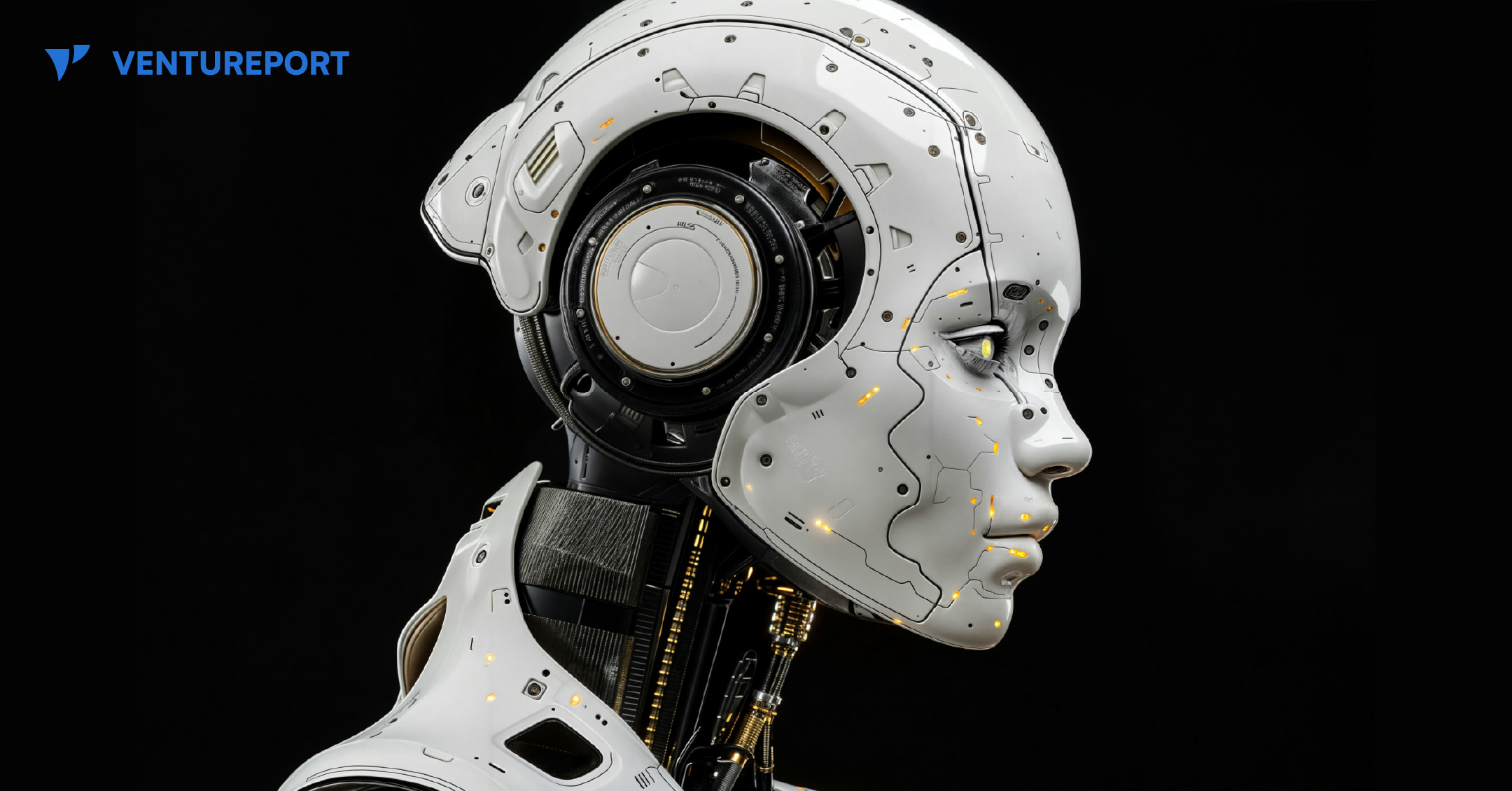
A face of a humanoid robot, side view on black background. PHOTO: UNSPLASH
Humanoid robots are shifting from sci-fi speculation to engineering reality, and the pace of progress is prompting investors to reassess how the next decade of physical automation will unfold. ALM Ventures has launched a new US$100 million early-stage fund aimed squarely at this moment—one where advances in robot control, embodied AI and spatial intelligence are beginning to converge into something commercially meaningful.
ALM Ventures Fund I, is designed for the earliest stages of company formation, targeting seed and pre-seed teams building the foundations of humanoid deployment. It’s a concentrated fund that seeks to take early ownership in a sector that many now consider the next major technological frontier.
For Founder and General Partner Modar Alaoui, the timing is not accidental. “After years of research, humanoids are finally entering a phase where performance, reliability and cost are converging toward commercial viability”, he said. “What the category needs now is focused capital and deep technical diligence to turn prototypes into scalable, enduring companies”.
That framing captures a shift happening across robotics: the field is moving out of the lab and into early commercial readiness. Improvements in perception systems, model-based reasoning and motion control are accelerating the transition. Advances in simulation are also lowering the complexity and cost of integrating humanoid platforms into real environments. As these systems become more capable, the gap between research prototypes and market-ready products is narrowing.
ALM Ventures is positioning itself at this inflection point. Fund I’s thesis centers on the core technologies required to scale humanoids safely and economically. This includes next-generation robot platforms, spatial reasoning engines, embodied intelligence models, world-modeling systems and the infrastructure needed for early deployment. Rather than chasing every robotics trend, the fund is concentrating on the essential layers that will determine whether humanoids can work reliably outside controlled settings.
The firm isn’t starting from zero. During the fund’s formation, ALM Ventures made ten early investments that directly align with its investment focus. The portfolio includes companies building at different layers of the humanoid stack, such as Sanctuary AI, Weave Robotics, Emancro, High Torque Robotics, MicroFactory, Mbodi, Adamo, Haptica Robotics, UMA and O-ID. The list reflects a broad but intentional spread, from hardware to intelligence to manufacturing approaches, all oriented toward enabling scalable physical AI.
Beyond capital, ALM Ventures has been shaping the ecosystem through its global Humanoids Summit series in Silicon Valley, London and Tokyo. The series gives the firm early visibility into emerging technologies, pre-incorporation teams and the senior leaders steering the global robotics landscape. That vantage point has helped the firm identify where commercialization is truly taking root and where bottlenecks still exist.
The rise of humanoids is often compared to the early days of self-driving cars: a long arc of research suddenly meeting an acceleration point. What separates this moment is that advances in embodied AI and spatial intelligence are giving robots a more intuitive understanding of the physical world, making them easier to deploy, teach and scale. ALM Ventures’ Fund I is an attempt to capture that transition while shaping the companies that could define the next technological era.
With US$100 million dedicated to the earliest builders in the space, ALM Ventures is signaling its belief that humanoids are not just another robotics cycle—they may be the next major platform shift in AI.