
Overview Energy plans to collect sunlight in orbit and send it to Earth, giving Meta early access to a new source of round-the-clock power
Updated
August 10, 2026 5:56 PM

A corona mass ejection erupts from our sun. PHOTO: UNSPLASH
Overview Energy, a startup focused on space-based power systems, has announced a new agreement with Meta to develop a new source of electricity for data centers. The partnership centres on space solar energy, with an orbital demonstration planned for 2028 and commercial power delivery targeted for 2030.
The deal gives Meta early access to as much as 1 gigawatt of future capacity from Overview’s system. That matters because large technology companies are searching for reliable power sources as demand rises from AI computing and data center expansion.
Overview’s idea is straightforward, though the engineering is ambitious. The company plans to place satellites in orbit that collect sunlight continuously in space. That energy would then be sent to existing solar sites on Earth, where it would be converted into electricity.
Unlike ground-based solar farms, which only generate power when the sun is shining locally, a space-based system is designed to extend power generation beyond daylight hours. In theory, this could help solar facilities produce electricity around the clock without using extra land.
"Space solar technology represents a transformative step forward by leveraging existing terrestrial infrastructure to deliver new, uninterrupted energy from orbit. We're excited to partner with Overview Energy to pioneer innovative energy solutions to advance our AI ambitions and infrastructure", said Nat Sahlstrom, VP of Energy and Sustainability, Meta. "This collaboration demonstrates our commitment to innovation – leveraging cutting-edge technology to strengthen America's energy leadership".
For Meta, the agreement is less about a near-term energy fix and more about securing future options. Major data center operators are increasingly competing for electricity as AI systems require more computing power and more cooling capacity. Traditional energy projects can take years to build, making alternative supply models more attractive.
Overview says its system is designed to work with solar projects that already exist. Instead of building entirely new power plants, the company aims to increase output from current sites by adding energy received from orbit.
"Space is becoming part of America's energy infrastructure", said Marc Berte, CEO of Overview Energy. "Our approach to space solar energy enables hyperscalers and technology providers to secure clean power with reliable siting, and speed to power.” "Together with Meta, we're looking beyond traditional constraints on where and when power can be delivered to meet the growing demand for electricity".
The larger significance of the partnership is what it signals about the energy market. As AI infrastructure expands, companies are beginning to look beyond conventional grids, gas plants and land-based renewables. Technologies once considered experimental are now being explored as part of long-term infrastructure planning.
There is still a long road ahead. Space solar power has been discussed for decades, but commercial deployment remains unproven. Launch costs, regulation and system reliability will all matter.
Even so, the Meta-Overview agreement shows how rising demand for constant power is reshaping where the technology sector looks for its next energy source.
Keep Reading
How Korea is trying to take control of its AI future.
Updated
January 13, 2026 10:56 AM
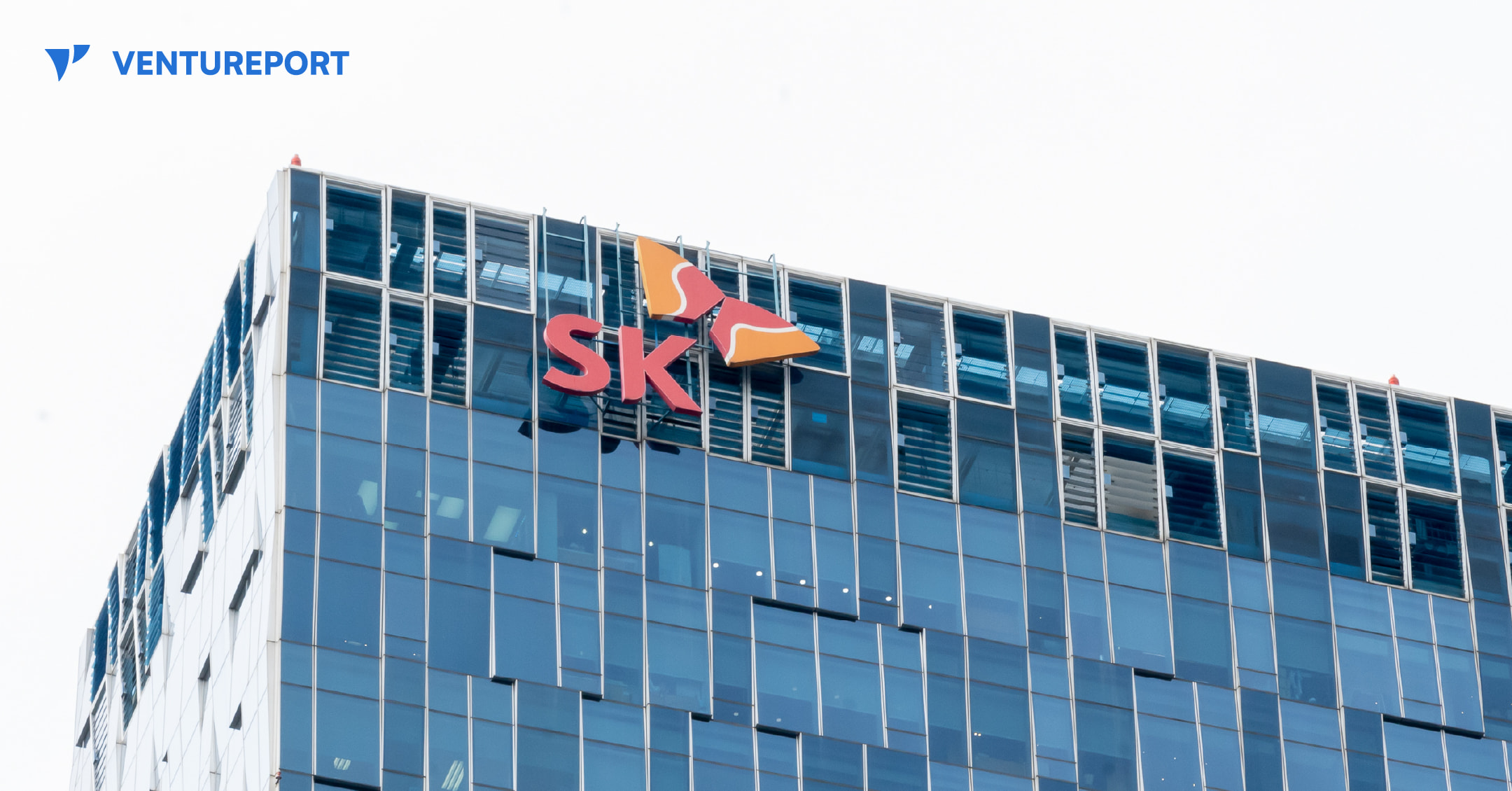
SK Telecom Headquarters in Seoul, South Korea. PHOTO: ADOBE STOCK
SK Telecom, South Korea’s largest mobile operator, has unveiled A.X K1, a hyperscale artificial intelligence model with 519 billion parameters. The model sits at the center of a government-backed effort to build advanced AI systems and domestic AI infrastructure within Korea. This comes at a time when companies in the United States and China largely dominate the development of the most powerful large language models.
Rather than framing A.X K1 as just another large language model, SK Telecom is positioning it as part of a broader push to build sovereign AI capacity from the ground up. The model is being developed as part of the Korean government’s Sovereign AI Foundation Model project, which aims to ensure that core AI systems are built, trained and operated within the country. In simple terms, the initiative focuses on reducing reliance on foreign AI platforms and cloud-based AI infrastructure, while giving Korea more control over how artificial intelligence is developed and deployed at scale.
One of the gaps this approach is trying to address is how AI knowledge flows across a national ecosystem. Today, the most powerful AI foundation models are often closed, expensive and concentrated within a small number of global technology companies. A.X K1 is designed to function as a “teacher model,” meaning it can transfer its capabilities to smaller, more specialized AI systems. This allows developers, enterprises and public institutions to build tailored AI tools without starting from scratch or depending entirely on overseas AI providers.
That distinction matters because most real-world applications of artificial intelligence do not require massive models operating independently. They require focused, reliable AI systems designed for specific use cases such as customer service, enterprise search, manufacturing automation or mobility. By anchoring those systems to a large, domestically developed foundation model, SK Telecom and its partners are aiming to create a more resilient and self-sustaining AI ecosystem.
The effort also reflects a shift in how AI is being positioned for everyday use. SK Telecom plans to connect A.X K1 to services that already reach millions of users, including its AI assistant platform A., which operates across phone calls, messaging, web services and mobile applications. The broader goal is to make advanced AI feel less like a distant research asset and more like an embedded digital infrastructure that supports daily interactions.
This approach extends beyond consumer-facing services. Members of the SKT consortium are testing how the hyperscale AI model can support industrial and enterprise applications, including manufacturing systems, game development, robotics and autonomous technologies. The underlying logic is that national competitiveness in artificial intelligence now depends not only on model performance, but on whether those models can be deployed, adapted and validated in real-world environments.
There is also a hardware dimension to the project. Operating an AI model at the 500-billion-parameter scale places heavy demands on computing infrastructure, particularly memory performance and communication between processors. A.X K1 is being used to test and validate Korea’s semiconductor and AI chip capabilities under real workloads, linking large-scale AI software development directly to domestic semiconductor innovation.
The initiative brings together technology companies, universities and research institutions, including Krafton, KAIST and Seoul National University. Each contributes specialized expertise ranging from data validation and multimodal AI research to system scalability. More than 20 institutions have already expressed interest in testing and deploying the model, reinforcing the idea that A.X K1 is being treated as shared national AI infrastructure rather than a closed commercial product.
Looking ahead, SK Telecom plans to release A.X K1 as open-source AI software, alongside APIs and portions of the training data. If fully implemented, the move could lower barriers for developers, startups and researchers across Korea’s AI ecosystem, enabling them to build on top of a large-scale foundation model without incurring the cost and complexity of developing one independently.