
Merve Isler, Founder and CEO of Marvelous, sits down with Ventureport to discuss how AI can help revenue teams find the right rooms, guests and opportunities.
Updated
August 18, 2026 11:33 PM
.jpg)
Marvelous, an AI product company. PHOTO: MARVELOUS
Most B2B sales teams spend their days inside software. They track leads in a customer relationship management (CRM) tool, send emails, build outbound lists and measure every digital touchpoint. Still, many important business relationships move forward in person. A dinner after a conference, a small founder roundtable or a private customer event can do what dozens of cold emails cannot: build trust quickly.
That is the gap Marvelous wants to fill. The bootstrapped San Francisco-based AI startup is building what founder and CEO Merve Isler calls “Salesforce, but for real life”. Her idea is simple: if companies already use software to manage digital sales, they should also have software to manage the real-world moments that help close deals.
Marvelous brings data, automation and targeting into in-person go-to-market (GTM) work. It helps B2B sales, revenue, marketing and growth teams plan in-person events such as curated dinners, launch events, mixers, happy hours and conference side events. These formats are already familiar to companies selling to enterprise buyers. The problem is that they are often managed through spreadsheets, venue calls, scattered guest lists and manual follow-ups.
That creates two problems. First, the process is slow. Teams can spend weeks figuring out who to invite, where to host and how to manage responses. Second, the return is hard to measure. Companies spend heavily on conferences, dinners and private events, yet they often do not have a clear way to know whether an event will influence pipeline before they commit the budget.
Marvelous wants to pull those pieces into one AI-powered event management platform.
“Our main target customer is revenue and sales teams,” Isler said. “Because about 40% of deals close in person, but there's no infrastructure built for that—so that's what we do.”
For Isler, the idea comes from experience. Before starting Marvelous, she worked at Google from Istanbul, managing developer product launches and go-to-market programs across Turkey, Central Asia and the Caucasus. During that time, she helped build more than 100 communities around the world and coordinated thousands of events a year across eleven time zones. The work was fast, local and very manual.
That experience shaped the foundation for Marvelous. Isler saw that building products had become easier, while distribution remained difficult. A startup can now ship software faster than ever. Reaching the right people, in the right setting, is still a different challenge.
At Google, Isler had to understand how people gathered, communicated and built trust in different markets. A product launch might require developer meetups in dozens of cities, but the right approach could change from country to country. In Kazakhstan, she said, Telegram worked better than WhatsApp. In Afghanistan, Facebook mattered more. Each market had its own habits, and growth depended on understanding those details. Those details and adapt quickly.
Marvelous grew out of that playbook. Isler saw that offline distribution had patterns, even when it looked chaotic from the outside. The right guest list, the right room, the right timing and the right follow-up could change the outcome of a sales conversation. Most of that knowledge, however, lived in people’s heads. Marvelous is her attempt to turn it into software.
Inside the platform, a company can start by choosing the kind of satellite event it wants to host: a launch event, a mixer, a happy hour, a brunch, a lunch or a dinner. From there, users can connect their CRM. When Salesforce is connected, Marvelous analyzes contacts and creates relationship scores based on signals such as buying intent, past event activity and how warm a relationship appears to be. If a team also uses an event platform such as Luma or Eventbrite, Marvelous can bring that event data into the picture as well.

The product is built around Maven, Marvelous’ AI assistant. Maven can help plan an event through Slack, iMessage or the Marvelous platform itself. For instance, a user might ask Maven to plan an executive dinner for 18 people within a set budget. From there, Maven can find warm contacts, estimate who is likely to attend, build a guest list, recommend venues, send invitations and run follow-up sequences across email, LinkedIn and SMS. The goal is to let sales teams focus on conversations and closing deals instead of worrying about logistics. Put simply, Marvelous helps a company find the right guests, secure the right venue and understand which event format is likely to work. Instead of guessing whether a US$10,000 dinner will pay off, the company gets a clearer view of the potential return.
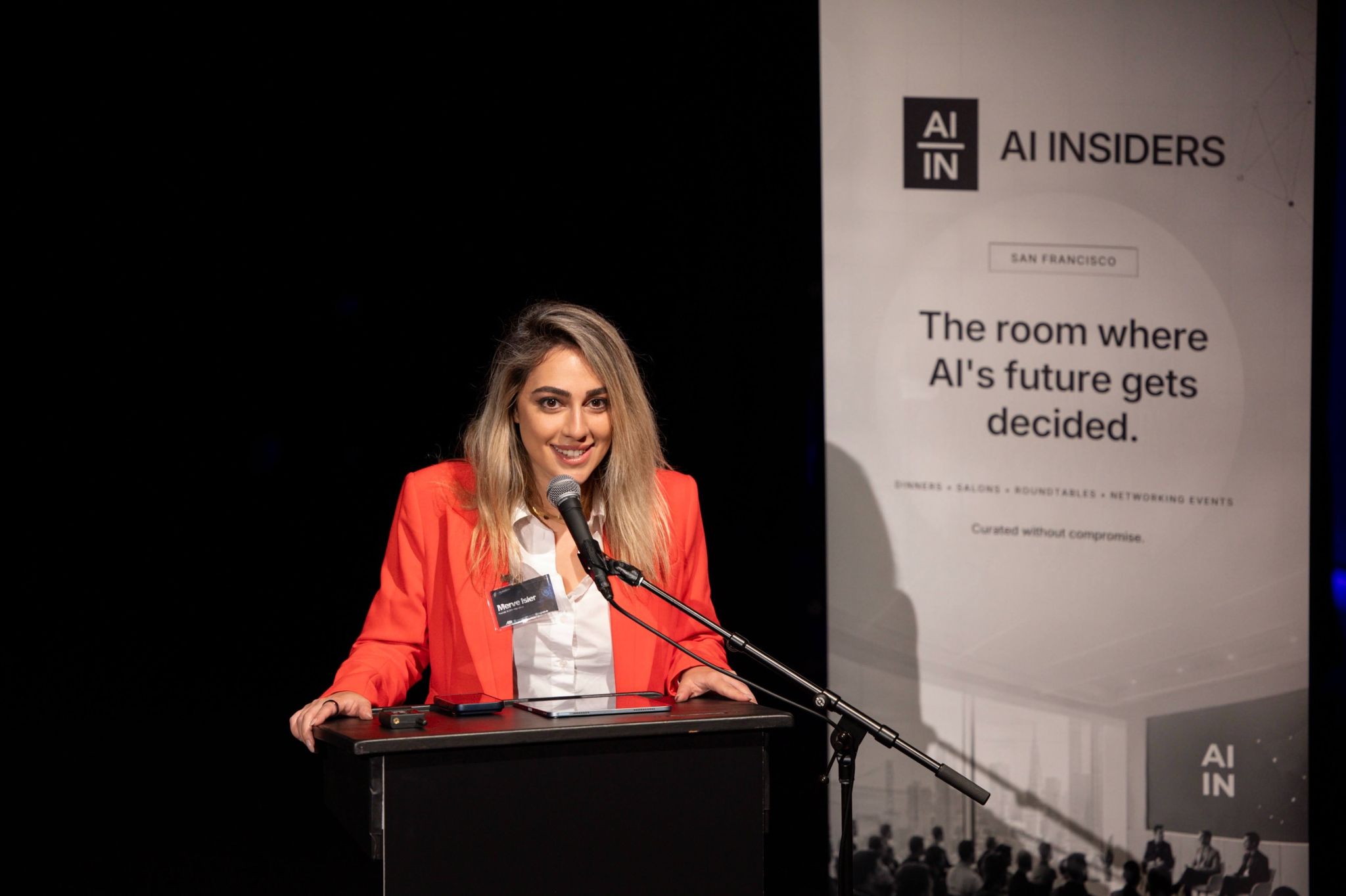
AI Insiders, Marvelous’ invite-only network of verified AI and enterprise leaders, is also part of the company’s go-to-market strategy. Rather than asking every customer to build an event from scratch, Marvelous can group several companies that want to reach the same audience into one curated event. Such a setting creates revenue, product feedback and fresh data about what works in different markets. The network spans verticals such as cybersecurity, fintech, robotics, healthcare AI and enterprise SaaS. It now includes members from more than 475 companies, with C-level executives making up nearly half of the community. So far, AI Insiders has facilitated more than 2,000 introductions and contributed to over US$560 million in deals. Isler describes it as one of Marvelous’ strongest go-to-market channels.
The first AI Insiders event took place at AWS GenAI Loft in San Francisco in March 2025. It brought together 150 curated guests, including AI founders, tier-one investors, enterprise executives and researchers for an evening focused on high-impact conversations and collaboration.
The timing may work in Marvelous’ favor: Digital outreach is getting louder, and AI will make it easier for companies to send more emails, messages and automated pitches. That may make high-trust in-person conversations more valuable, especially in enterprise sales where relationships take time. At the same time, event budgets need proof. Revenue leaders want to know whether a dinner, roadshow or customer event is worth the cost.
Marvelous is betting that offline sales will become a measurable category for software. If the company can prove that its relationship scores, event intelligence and AI agent help teams create a stronger pipeline, it could become an important tool for B2B go-to-market teams. The core message of Marvelous is easy to understand: the deals may happen in the room, but data can still power the room.
Keep Reading
From AI love affairs to cosmic survival, 2026 has it all.
Updated
January 8, 2026 6:28 PM

A man in a space suit looking upon a ringed marble. PHOTO: UNSPLASH
Grab your popcorn—the 2026 sci-fi movie slate is stacked. We’re getting everything from post-apocalyptic survival films to AI thrillers, plus a big-space adventure and a fresh DC superhero story. Some films launch new worlds, others expand familiar ones, but all of them aim to leave an impression, but all of them look like the kind of movies you’ll want to talk about after the credits.
Here are five upcoming sci-fi movies to mark on your calendar.

Release Date: January 9, 2026
Director: Kate Dolan
Stars: Lily Sullivan, David Rysdahl and Claudia Doumit
If you like your sci-fi with a creepy edge, Soulm8te is very much in that lane. A spin-off from the M3GAN universe, the film follows a man grieving the loss of his wife who turns to an AI android to ease the pain. At first, it seems to help. The connection feels real, even comforting. But before long, it becomes a little too real and slips into something far more dangerous. What makes Soulm8te unsettling is how close it feels to the present. AI companions are no longer science fiction, and the film plays with that reality in a way that feels intimate rather than futuristic. Directed by Kate Dolan, the story stays on quiet unease instead of spectacle, allowing tension to build as affection turns possessive and attachment becomes dangerous. The film is produced by Allison Williams and James Wan, both closely involved in the hit horror franchise M3GAN, and their experience with technology-driven horror is clearly felt here. Fans of grounded, psychological sci-fi should keep this one on their radar.

Release Date: January 9, 2026
Director: Ric Roman Waugh
Stars: Gerard Butler, Morena Baccarin, Amber Rose Revah, Sophie Thompson, Trond Fausa Aurvåg
Back in 2020, Greenland introduced audiences to John Garrity (Gerard Butler), a father racing against time to save his family as comet fragments threatened to wipe out life on Earth. The film ended with survivors heading into bunkers deep in Greenland, hanging on to the last thin thread of hope. This sequel follows the Garrity family as they leave the safety of underground shelters and face a world that no longer resembles home. The setting moves across a battered Europe, where every decision carries weight and every journey feels uncertain. Rather than repeating the ticking-clock chaos of the original, Migration leans into endurance, exhaustion and the question of whether rebuilding is even possible. It’s a post-apocalyptic movie about movement, loss and the cost of starting over.
Release Date: March 20, 2026
Director: Phil Lord & Chris Miller
Stars: Ryan Gosling, Milana Vayntrub, Sandra Hüller
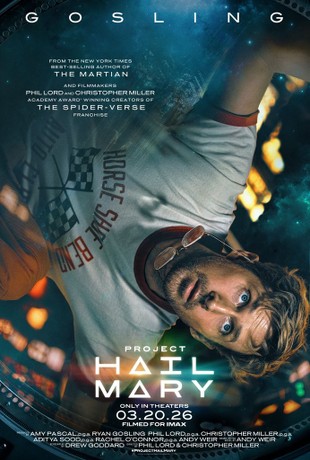
Based on Andy Weir’s best-selling novel, Project Hail Mary is shaping up to be one of the most talked-about space survival films of 2026. Ryan Gosling stars as Ryland Grace, an unlikely astronaut whose journey into space begins with confusion rather than heroics. Grace, a former junior high science teacher, wakes up alone on a spacecraft, cut off from Earth and missing key memories about how he got there. As pieces slowly fall into place, so does the scale of the problem he’s been sent to solve. The film blends real science with high-stakes isolation, balancing quiet moments with the pressure of a mission that affects the entire planet. Directed by Phil Lord and Chris Miller, Project Hail Mary promises tension, curiosity and a heavy dose of human vulnerability set against the vastness of space.
Release Date: March 27, 2026
Director: Ridley Scott
Stars: Jacob Elordi, Josh Brolin
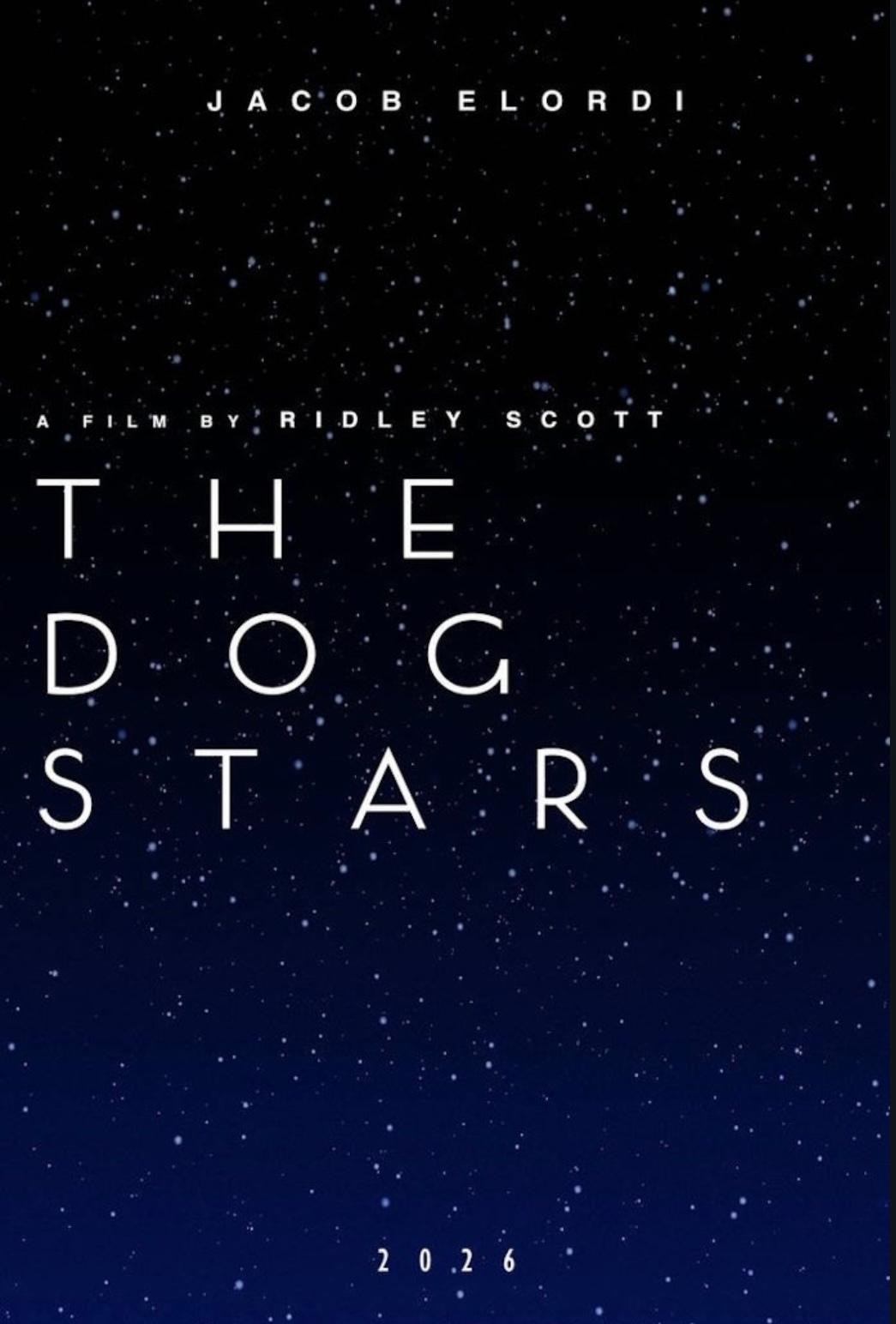
The Dog Stars strips the apocalypse down to its bare essentials. Based on Peter Heller’s novel of the same name, the film features a screenplay by Mark L. Smith and Christopher Wilkinson, known for The Revenant and Ali. The setup of The Dog Stars is simple and bleak: a virus has erased most of humanity. What’s left is silence, abandoned airfields and roaming scavengers known as the “Reapers” who prey on the few survivors left behind.
Jacob Elordi plays Hig, a pilot living in isolation with his dog and a heavily armed companion. His days follow a strict routine, broken only by short flights in his aging Cessna. That fragile balance shatters when a distant radio signal breaks through the quiet. It’s the first real sign of life he has heard in years, and it draws him toward a journey that could change everything. Directed by Ridley Scott, the film focuses less on large-scale destruction and more on loneliness, hope and the risk of reaching out in a broken world. The result is a post-apocalyptic thriller that feels intimate, reflective and quietly tense.

Release Date: June 26, 2026
Director: Craig Gillespie
Stars: Milly Alcock, Jason Momoa, Matthias Schoenaerts
Supergirl: Woman of Tomorrow offers a very different take on the DC universe. This is a cosmic sci-fi story first, superhero film second. Kara Zor-El is older, tougher and shaped by memories of a world she lost. Unlike her cousin Superman, she remembers the destruction of Krypton clearly, and that history weighs heavily on her. The film follows Kara as she crosses paths with a young alien seeking justice, pulling her into a dangerous journey across distant worlds. Rather than focusing on Earth-saving spectacle, the story explores identity, grief and what heroism looks like far from home. With Milly Alcock stepping into the role, Supergirl 2026 aims to expand DC’s sci-fi side while giving the character emotional depth rarely seen on screen.
One reason science fiction movies stick with us is that they ask big questions in a way that feels personal. What happens when tech starts filling emotional gaps? What does survival look like when the world doesn’t bounce back? And how far would you go to save everyone you’ve ever known? If you’re looking for 2026 sci-fi movies that range from gritty to hopeful to unsettling, this lineup has you covered.