
Merve Isler, Founder and CEO of Marvelous, sits down with Ventureport to discuss how AI can help revenue teams find the right rooms, guests and opportunities.
Updated
August 18, 2026 11:33 PM
.jpg)
Marvelous, an AI product company. PHOTO: MARVELOUS
Most B2B sales teams spend their days inside software. They track leads in a customer relationship management (CRM) tool, send emails, build outbound lists and measure every digital touchpoint. Still, many important business relationships move forward in person. A dinner after a conference, a small founder roundtable or a private customer event can do what dozens of cold emails cannot: build trust quickly.
That is the gap Marvelous wants to fill. The bootstrapped San Francisco-based AI startup is building what founder and CEO Merve Isler calls “Salesforce, but for real life”. Her idea is simple: if companies already use software to manage digital sales, they should also have software to manage the real-world moments that help close deals.
Marvelous brings data, automation and targeting into in-person go-to-market (GTM) work. It helps B2B sales, revenue, marketing and growth teams plan in-person events such as curated dinners, launch events, mixers, happy hours and conference side events. These formats are already familiar to companies selling to enterprise buyers. The problem is that they are often managed through spreadsheets, venue calls, scattered guest lists and manual follow-ups.
That creates two problems. First, the process is slow. Teams can spend weeks figuring out who to invite, where to host and how to manage responses. Second, the return is hard to measure. Companies spend heavily on conferences, dinners and private events, yet they often do not have a clear way to know whether an event will influence pipeline before they commit the budget.
Marvelous wants to pull those pieces into one AI-powered event management platform.
“Our main target customer is revenue and sales teams,” Isler said. “Because about 40% of deals close in person, but there's no infrastructure built for that—so that's what we do.”
For Isler, the idea comes from experience. Before starting Marvelous, she worked at Google from Istanbul, managing developer product launches and go-to-market programs across Turkey, Central Asia and the Caucasus. During that time, she helped build more than 100 communities around the world and coordinated thousands of events a year across eleven time zones. The work was fast, local and very manual.
That experience shaped the foundation for Marvelous. Isler saw that building products had become easier, while distribution remained difficult. A startup can now ship software faster than ever. Reaching the right people, in the right setting, is still a different challenge.
At Google, Isler had to understand how people gathered, communicated and built trust in different markets. A product launch might require developer meetups in dozens of cities, but the right approach could change from country to country. In Kazakhstan, she said, Telegram worked better than WhatsApp. In Afghanistan, Facebook mattered more. Each market had its own habits, and growth depended on understanding those details. Those details and adapt quickly.
Marvelous grew out of that playbook. Isler saw that offline distribution had patterns, even when it looked chaotic from the outside. The right guest list, the right room, the right timing and the right follow-up could change the outcome of a sales conversation. Most of that knowledge, however, lived in people’s heads. Marvelous is her attempt to turn it into software.
Inside the platform, a company can start by choosing the kind of satellite event it wants to host: a launch event, a mixer, a happy hour, a brunch, a lunch or a dinner. From there, users can connect their CRM. When Salesforce is connected, Marvelous analyzes contacts and creates relationship scores based on signals such as buying intent, past event activity and how warm a relationship appears to be. If a team also uses an event platform such as Luma or Eventbrite, Marvelous can bring that event data into the picture as well.

The product is built around Maven, Marvelous’ AI assistant. Maven can help plan an event through Slack, iMessage or the Marvelous platform itself. For instance, a user might ask Maven to plan an executive dinner for 18 people within a set budget. From there, Maven can find warm contacts, estimate who is likely to attend, build a guest list, recommend venues, send invitations and run follow-up sequences across email, LinkedIn and SMS. The goal is to let sales teams focus on conversations and closing deals instead of worrying about logistics. Put simply, Marvelous helps a company find the right guests, secure the right venue and understand which event format is likely to work. Instead of guessing whether a US$10,000 dinner will pay off, the company gets a clearer view of the potential return.
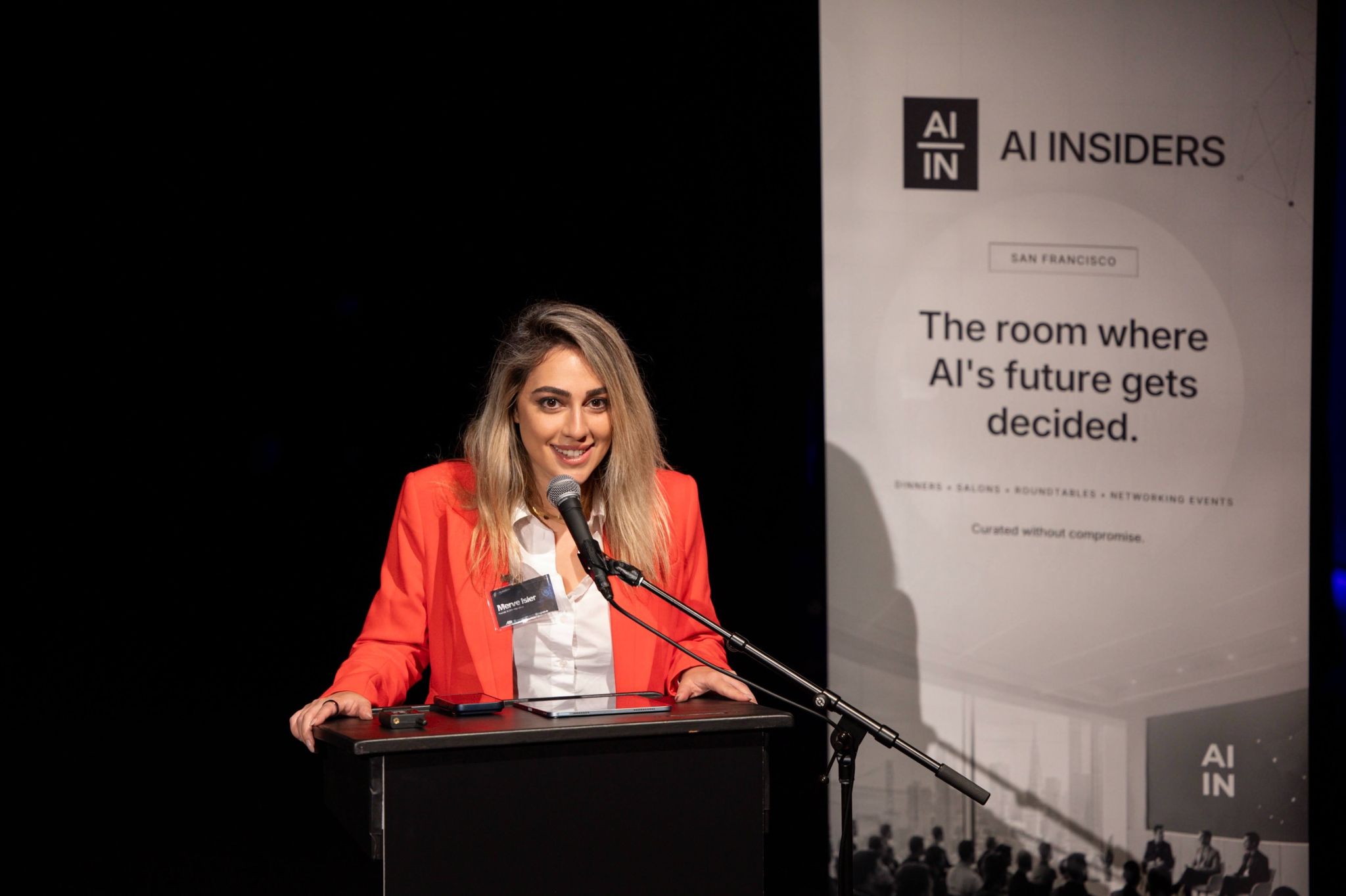
AI Insiders, Marvelous’ invite-only network of verified AI and enterprise leaders, is also part of the company’s go-to-market strategy. Rather than asking every customer to build an event from scratch, Marvelous can group several companies that want to reach the same audience into one curated event. Such a setting creates revenue, product feedback and fresh data about what works in different markets. The network spans verticals such as cybersecurity, fintech, robotics, healthcare AI and enterprise SaaS. It now includes members from more than 475 companies, with C-level executives making up nearly half of the community. So far, AI Insiders has facilitated more than 2,000 introductions and contributed to over US$560 million in deals. Isler describes it as one of Marvelous’ strongest go-to-market channels.
The first AI Insiders event took place at AWS GenAI Loft in San Francisco in March 2025. It brought together 150 curated guests, including AI founders, tier-one investors, enterprise executives and researchers for an evening focused on high-impact conversations and collaboration.
The timing may work in Marvelous’ favor: Digital outreach is getting louder, and AI will make it easier for companies to send more emails, messages and automated pitches. That may make high-trust in-person conversations more valuable, especially in enterprise sales where relationships take time. At the same time, event budgets need proof. Revenue leaders want to know whether a dinner, roadshow or customer event is worth the cost.
Marvelous is betting that offline sales will become a measurable category for software. If the company can prove that its relationship scores, event intelligence and AI agent help teams create a stronger pipeline, it could become an important tool for B2B go-to-market teams. The core message of Marvelous is easy to understand: the deals may happen in the room, but data can still power the room.
Keep Reading
From driving social change to making luxury affordable — Lessons from The Body Shop India
Updated
January 30, 2026 11:43 AM
.jpg)
The Body Shop's storefront. PHOTO: ADOBE STOCK
The Body Shop, known worldwide for its ethical values and cruelty-free beauty products, has had very different results in two of its major markets. In the United States, challenges such as shifting retail trends and tougher competition led to the closure of most physical stores in early 2024. Meanwhile, in India, The Body Shop has risen to become one of its top five global markets. After reaching customers in more than 1,500 Indian cities through its omnichannel network, the company now plans to double its 200-store footprint over the next three to five years.
So what did The Body Shop do in India that proved harder to pull off in the U.S.? Below, we break down why The Body Shop struggled in the U.S., what’s driving The Body Shop India’s growth and what startup founders can learn from the contrast.
In March 2024, The Body Shop’s U.S. unit filed for Chapter 7 bankruptcy and stopped operating its roughly 50 stores. That move effectively ended its brick-and-mortar presence in the country.
A big part of the story is that the U.S. beauty market moved faster than The Body Shop did. Prestige beauty kept growing, and shoppers increasingly gravitated to retailers and brands that feel current and have a strong online presence. Paul Dodd, Chief Innovation Officer at e-commerce fulfilment partner Huboo, have pointed to The Body Shop’s slow approach to digital growth as a major factor behind its decline. With U.S. prestige beauty sales reaching about US$33.9 billion in 2024 and growing at 7% year over year, the demand is clearly there. The brands that stand out and get rewarded were the ones that matched how people now discover products and buy them.
The company also leaned too heavily on stores at a time when stores were getting harder to run. When foot traffic drops and rents rise, the pressure shows up quickly. Shoppers also had more places to go, including Sephora, Ulta, Amazon and direct-to-consumer sites. A similar pattern played out in Canada, where restructuring included store closures and halted e-commerce. It was another sign that North America had become an operational headache, not just a marketing challenge.
Then there’s the branding issue: its “ethical pioneer” position simply stopped being a moat in the U.S. market. Today, cruelty-free and vegan claims are now table stakes across many newer brands, and “clean beauty” messaging is everywhere. “Initially, the purpose-driven brand was revolutionary, so much so that competitors like Drunk Elephant have adopted a similar ethos,” says Dan Hocking, Chief Operating Officer at advertising agency TroubleMaker. “It was a concept that rightly earned success in the 80s and 90s, but The Body Shop didn’t adapt to changing consumer habits and preferences”. Meanwhile, competitors like Lush have kept people talking through stronger creator/influencer marketing, faster product cycles and more immersive in-store experiences.
Internal disruption likely made the turnaround even harder. Reporting on the U.S. bankruptcy points to instability, including the U.S. unit saying it did not have advance notice of decisions tied to the U.K. parent’s restructuring. When leadership decisions land without warning, it becomes harder to plan inventory, fund marketing and commit to a clear digital roadmap.
1. Expansion into tier 2 and 3 cities
For years, India’s beauty industry focused mainly on metropolitan cities. Today, however, increasing internet penetration, rising disposable incomes, exposure to global beauty trends and an appetite for ethical, sustainable brands have fuelled demand in smaller towns. That tailwind matters because India’s beauty and personal care market is expected to reach a gross merchandise value (GMV) of US$30 billion by 2027 and is projected to grow at roughly an 10% CAGR. There’s plenty of room for both premium and “affordable luxury” players that can meet consumer where they are.
The Body Shop has leaned into this shift. Harmeet Singh, Chief Brand Officer of The Body Shop Asia South, has said the brand is expanding into Tier 2 and Tier 3 cities with a focus on central and Northeast India. Reports also point to a clear advantage here: more than 200 stores across dozens of cities, plus online reach into over 1,500 cities. That foundation makes non-metro expansion feel like the next move, not a risky leap.
2. Omni-channel retail strategy for beauty shoppers
Unlike its U.S. front, The Body Shop India has put effort into digital and distribution. Besides its own online store, customers can find the brand on big beauty and retail platforms like Nykaa, Amazon, Flipkart, Tatacliq and Myntra. It has also built more direct routes to purchase through WhatsApp, social commerce, expert chats and live video consultations. For even faster access, it’s on quick-commerce apps like Blinkit and Swiggy.
This strategy is already showing up in the numbers. Nearly 30% of The Body Shop India’s business came from digital channels as of June 2025. Rahul Shanker, Chief Executive of The Body Shop India, has said the brand wants to lift online revenue to 45–50% of total sales by 2030.
This approach lines up with what’s happening in the market. NielsenIQ data found beauty e-commerce and quick-commerce sales in India rose 39% in value between June and November 2024, with offline growth over the same period being just 3%. The logic is simple: if the market is moving online, you want to be easy to buy online.
3. Inclusivity, accessibility and social impact
The Body Shop’s people-first approach shows up not just in its marketing, but in how it runs the business day to day. Inside the company, it has pushed gender sensitivity across teams. Out of 600 employees, it has 10 staff members who are part of the LGBTQA+ spectrum.
In stores, the brand has worked on improving accessibility. In 2024, The Body Shop India launched a Braille initiative for visually impaired customers. The programme introduced Braille category callouts in select locations so shoppers can navigate more independently.
On the sustainability side, the brand ties its message to its supply chain. An example is its long-term partnership with Plastics for Change, a Bengaluru-based social enterprise, to source “Community Fair Trade” recycled plastic for packaging. The collaboration has resulted in more predictable income, safer work and better access to social services and housing and education projects for the waste picker communities, which often include marginalized groups and women.
The same intent can also be seen in its physical retail. The Body Shop India has been converting stores into its “Activist Workshop” format, where everything is made from recycled materials, including store fixtures and interiors. By mid-2024, it had around 20 Activist Workshop stores in India.
4. Pricing that fits the Indian beauty market
In April 2025, The Body Shop India launched its “More Love for Less” campaign to make products more accessible. Through the campaign, the company lowered the prices of more than 60 best-sellers by 28–30%. The goal was to remove a clear barrier for many shoppers while maintaining the same quality.
The company has also positioned this as a pricing reset, not a short-term discount push. It’s meant to widen the funnel, especially among younger consumers aged 18–25, where price has been a major hurdle. That matters even more as the brand expands deeper into Tier 2 and Tier 3 cities, where value is often front and centre.
5. Local marketing that feels made for India
The Body Shop India has leaned into localized marketing in a way that feels specific, not generic. In late 2024, it launched “The India Edit”, a collection inspired by native ingredients like lotus, hibiscus, pomegranate and black grape. The tagline, “Only in India, for You,” makes the intent clear: India is not a copy-paste market. This approach matters because India is one of the most competitive beauty battlegrounds right now, with ongoing entry from global beauty brands. When everyone is fighting for attention, local storytelling helps The Body Shop stand out and feel closer to the customer.
The Body Shop’s story in the U.S. and India shows how differently a global beauty brand can perform depending on local strategy. In the U.S., it ran into a tough mix of fast-changing consumer habits, heavy competition and a liquidation process that left little room to rebuild. In India, the brand is riding big tailwinds in beauty retail growth, plus the shift to e-commerce and quick commerce. It has also put real effort into localization, pricing and omnichannel distribution.
If you’re trying to scale a consumer brand, there’s a clear takeaway here. Understand how your market shops, build strong digital distribution and make the brand feel local. The Body Shop India’s playbook is a useful example of how to do it.