
Merve Isler, Founder and CEO of Marvelous, sits down with Ventureport to discuss how AI can help revenue teams find the right rooms, guests and opportunities.
Updated
August 18, 2026 11:33 PM
.jpg)
Marvelous, an AI product company. PHOTO: MARVELOUS
Most B2B sales teams spend their days inside software. They track leads in a customer relationship management (CRM) tool, send emails, build outbound lists and measure every digital touchpoint. Still, many important business relationships move forward in person. A dinner after a conference, a small founder roundtable or a private customer event can do what dozens of cold emails cannot: build trust quickly.
That is the gap Marvelous wants to fill. The bootstrapped San Francisco-based AI startup is building what founder and CEO Merve Isler calls “Salesforce, but for real life”. Her idea is simple: if companies already use software to manage digital sales, they should also have software to manage the real-world moments that help close deals.
Marvelous brings data, automation and targeting into in-person go-to-market (GTM) work. It helps B2B sales, revenue, marketing and growth teams plan in-person events such as curated dinners, launch events, mixers, happy hours and conference side events. These formats are already familiar to companies selling to enterprise buyers. The problem is that they are often managed through spreadsheets, venue calls, scattered guest lists and manual follow-ups.
That creates two problems. First, the process is slow. Teams can spend weeks figuring out who to invite, where to host and how to manage responses. Second, the return is hard to measure. Companies spend heavily on conferences, dinners and private events, yet they often do not have a clear way to know whether an event will influence pipeline before they commit the budget.
Marvelous wants to pull those pieces into one AI-powered event management platform.
“Our main target customer is revenue and sales teams,” Isler said. “Because about 40% of deals close in person, but there's no infrastructure built for that—so that's what we do.”
For Isler, the idea comes from experience. Before starting Marvelous, she worked at Google from Istanbul, managing developer product launches and go-to-market programs across Turkey, Central Asia and the Caucasus. During that time, she helped build more than 100 communities around the world and coordinated thousands of events a year across eleven time zones. The work was fast, local and very manual.
That experience shaped the foundation for Marvelous. Isler saw that building products had become easier, while distribution remained difficult. A startup can now ship software faster than ever. Reaching the right people, in the right setting, is still a different challenge.
At Google, Isler had to understand how people gathered, communicated and built trust in different markets. A product launch might require developer meetups in dozens of cities, but the right approach could change from country to country. In Kazakhstan, she said, Telegram worked better than WhatsApp. In Afghanistan, Facebook mattered more. Each market had its own habits, and growth depended on understanding those details. Those details and adapt quickly.
Marvelous grew out of that playbook. Isler saw that offline distribution had patterns, even when it looked chaotic from the outside. The right guest list, the right room, the right timing and the right follow-up could change the outcome of a sales conversation. Most of that knowledge, however, lived in people’s heads. Marvelous is her attempt to turn it into software.
Inside the platform, a company can start by choosing the kind of satellite event it wants to host: a launch event, a mixer, a happy hour, a brunch, a lunch or a dinner. From there, users can connect their CRM. When Salesforce is connected, Marvelous analyzes contacts and creates relationship scores based on signals such as buying intent, past event activity and how warm a relationship appears to be. If a team also uses an event platform such as Luma or Eventbrite, Marvelous can bring that event data into the picture as well.

The product is built around Maven, Marvelous’ AI assistant. Maven can help plan an event through Slack, iMessage or the Marvelous platform itself. For instance, a user might ask Maven to plan an executive dinner for 18 people within a set budget. From there, Maven can find warm contacts, estimate who is likely to attend, build a guest list, recommend venues, send invitations and run follow-up sequences across email, LinkedIn and SMS. The goal is to let sales teams focus on conversations and closing deals instead of worrying about logistics. Put simply, Marvelous helps a company find the right guests, secure the right venue and understand which event format is likely to work. Instead of guessing whether a US$10,000 dinner will pay off, the company gets a clearer view of the potential return.
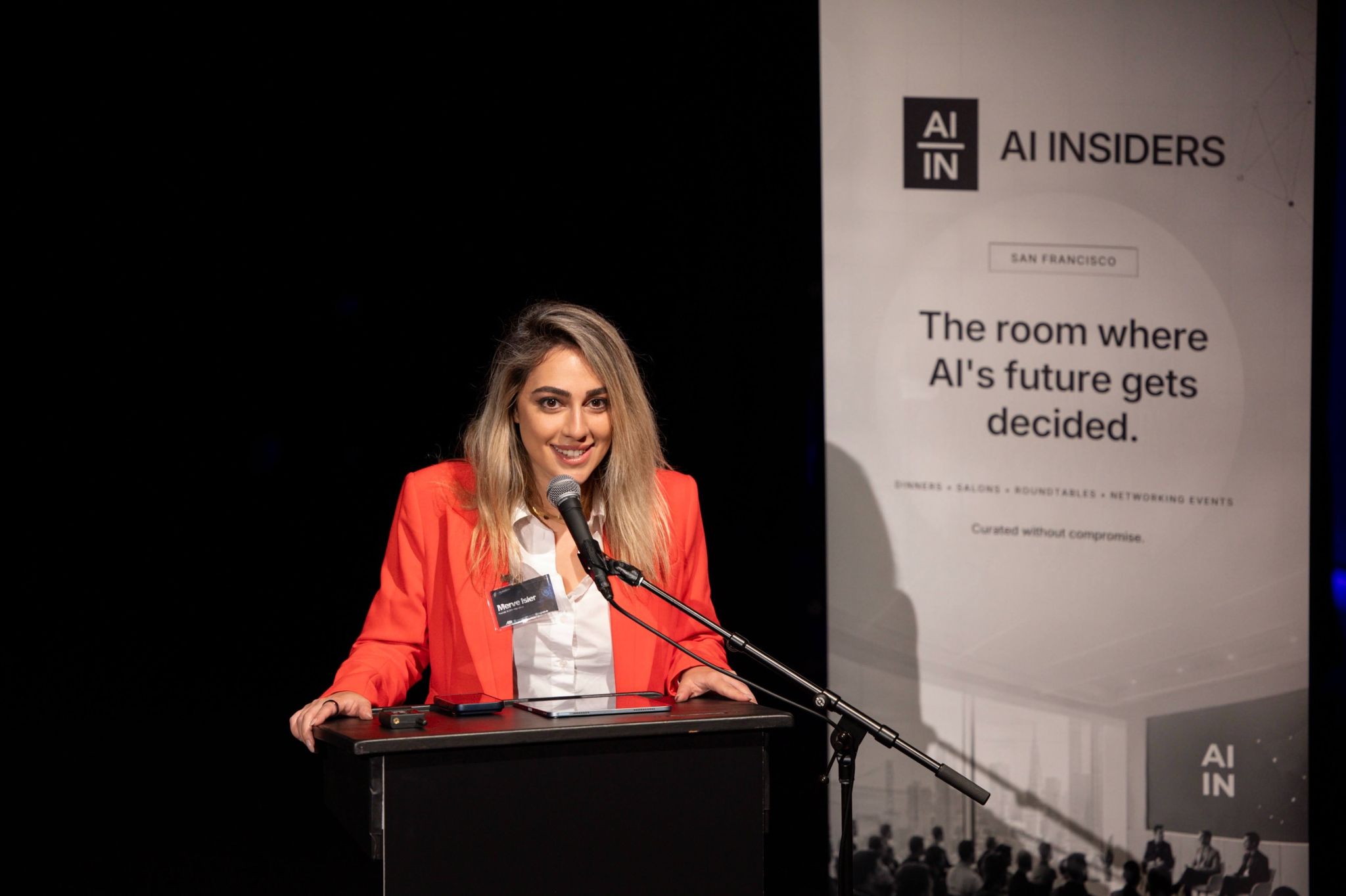
AI Insiders, Marvelous’ invite-only network of verified AI and enterprise leaders, is also part of the company’s go-to-market strategy. Rather than asking every customer to build an event from scratch, Marvelous can group several companies that want to reach the same audience into one curated event. Such a setting creates revenue, product feedback and fresh data about what works in different markets. The network spans verticals such as cybersecurity, fintech, robotics, healthcare AI and enterprise SaaS. It now includes members from more than 475 companies, with C-level executives making up nearly half of the community. So far, AI Insiders has facilitated more than 2,000 introductions and contributed to over US$560 million in deals. Isler describes it as one of Marvelous’ strongest go-to-market channels.
The first AI Insiders event took place at AWS GenAI Loft in San Francisco in March 2025. It brought together 150 curated guests, including AI founders, tier-one investors, enterprise executives and researchers for an evening focused on high-impact conversations and collaboration.
The timing may work in Marvelous’ favor: Digital outreach is getting louder, and AI will make it easier for companies to send more emails, messages and automated pitches. That may make high-trust in-person conversations more valuable, especially in enterprise sales where relationships take time. At the same time, event budgets need proof. Revenue leaders want to know whether a dinner, roadshow or customer event is worth the cost.
Marvelous is betting that offline sales will become a measurable category for software. If the company can prove that its relationship scores, event intelligence and AI agent help teams create a stronger pipeline, it could become an important tool for B2B go-to-market teams. The core message of Marvelous is easy to understand: the deals may happen in the room, but data can still power the room.
Keep Reading
With Phia’s AI, the new luxury is knowing what’s worth buying
Updated
February 10, 2026 12:56 PM

Phoebe Gates and Sophia Kianni, founders of Phia. PHOTO: PHIA
AI has transformed how we shop—predicting trends, powering virtual try-ons and streamlining fashion logistics. Yet some of the biggest pain points remain: endless scrolling, too many tabs and never knowing if you’ve overpaid. That’s the gap Phia aims to close.
Co-founded by Phoebe Gates, daughter of Bill Gates, and climate activist Sophia Kianni, Phia was born in a Stanford dorm room and launched in April 2025. The app, available on mobile and as a browser extension, compares prices across over 40,000 retailers and thrift platforms to show what an item really costs. Its hallmark feature, “Should I Buy This?”, instantly flags whether something is overpriced, fair or a genuine deal.
The mission is simple: make shopping smarter, fairer and more sustainable. In just five months, Phia has attracted more than 500,000 users, indexed billions of products and built over 5,000 brand partnerships. It also secured a US$8 million seed round led by Kleiner Perkins, joined by Hailey Bieber, Kris Jenner, Sara Blakely and Sheryl Sandberg—investors who bridge tech, retail and culture. “Phia is redefining how people make purchase decisions,” said Annie Case, partner at Kleiner Perkins.
Phia’s AI engine scans real-time data from more than 250 million products across its network, including Vestiaire Collective, StockX, eBay and Poshmark. Beyond comparing prices, the app helps users discover cheaper or more sustainable options by displaying pre-owned items next to new ones—helping users see the full spectrum of choices before they buy. It also evaluates how different brands perform over time, analysing how well their products hold resale value. This insight helps shoppers judge whether a purchase is likely to last in value or if opting for a second-hand version makes more sense. The result is a platform that naturally encourages circular shopping—keeping items in use longer through resale, repair or recycling—and resonates strongly with Gen Z and millennial values of sustainability and mindful spending.
By encouraging transparency and smarter choices, Phia signals a broader shift in consumer technology: one where AI doesn’t just automate decisions but empowers users to understand them. Instead of merely digitizing the act of shopping, Phia embodies data-driven accountability—using intelligent search to help consumers make informed and ethical choices in markets long clouded by complexity. Retail analysts believe this level of visibility could push brands to maintain accurate and competitive pricing. Skeptics, however, argue that Phia must evolve beyond comparison to create emotional connection and loyalty. Still, one fact stands out: algorithms are no longer just recommending what we buy—they’re rewriting how we decide.
With new funding powering GPU expansion and advanced personalization tools, Phia’s next step is to build a true AI shopping agent—one that helps people buy better, live smarter and rethink what it means to shop with purpose.