
Technology, policy and risk are redefining global investment flows
Updated
May 1, 2026 2:25 PM

A stock market graph shows fluctuating trends. PHOTO: UNSPLASH
A newly built district in northern China is being used to test how cities function when infrastructure, data and automation are integrated from the ground up. In Xiong'an New Area, traffic systems, public monitoring and urban services are designed to respond in real time rather than operate on fixed rules.
At the centre of this is a traffic management system powered by more than 20,000 roadside sensors. These track traffic flow, vehicle types and congestion levels, feeding data into an AI system that adjusts signals in milliseconds. Official figures show this has reduced the average number of stops per vehicle by half. The system also detects equipment faults, sends alerts and generates maintenance requests without manual input.
Automation extends beyond roads. Drones are deployed across the city for routine monitoring. In the Rongdong district, roadside units release drones that follow fixed patrol routes of around 1.27 kilometres, completing each run in about five minutes. They are used to monitor traffic, detect illegal parking and inspect public spaces. Similar systems operate in parks to track water levels and issue flood alerts, while in some work zones, drones transport packages of up to five kilograms between buildings.
These applications reflect a broader approach: integrating multiple systems into a single, connected urban framework. Unlike older cities where infrastructure evolves in layers, Xiong’an has been built with coordinated digital systems from the outset. This allows transport, maintenance and public services to operate through shared data systems rather than in isolation.
Alongside this, the area is being developed as a technology and innovation hub. Since its establishment in 2017, it has attracted more than 400 branches of state-owned enterprises and over 200 companies working in sectors such as artificial intelligence, aerospace information and digital technology.
This ecosystem supports projects like the “Xiong’an-1” satellite, which completed research, design, production and testing within eight months of regulatory approval in 2025. The satellite is currently undergoing testing, with a planned launch expected in the second quarter of 2026. It forms part of a broader push to build an aerospace information industry in the region.
The area is also structured to bring companies, research and production closer together. At the Zhongguancun Science Park in Xiong’an, which spans 207,000 square metres, 269 technology companies operate across sectors including AI, robotics and biotechnology. The park hosts more than 2,700 researchers and industry professionals, with companies organised into sector-specific clusters.
Policy support continues to shape this development. In early 2026, the State Council approved the upgrade of Xiong’an’s high-tech industrial development zone to national level status, with a focus on attracting high-end research and strengthening links between scientific development and industrial output.
Xiong’an is positioned as a testing ground for how smart city systems can be deployed at scale. The model depends on coordinated planning, integrated infrastructure and sustained policy support. Whether these systems can be adapted to existing cities, where infrastructure and governance are more fragmented, remains an open question.
Keep Reading
From generative AI to green energy, 15 finalist teams will take the stage after a record 390 teams entered this year's competition.
Updated
October 2, 2026 9:13 AM
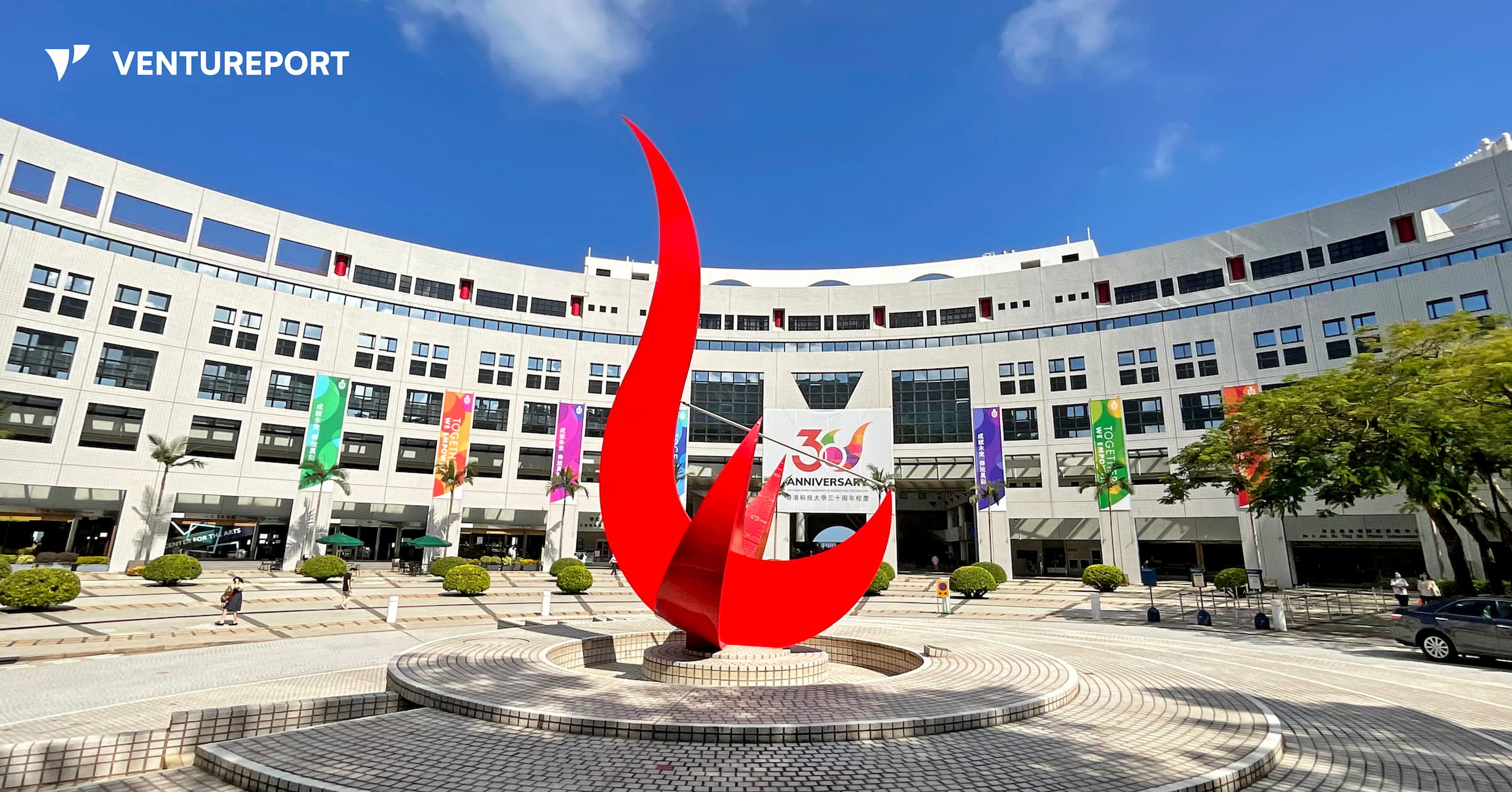
Entrance Piazza, Hong Kong University of Science and Technology. PHOTO: HKUST
The HKUST-Sino Million Dollar Entrepreneurship Competition 2026 will hold its finals on October 12, following a record 390 teams from 24 countries and regions taking part in this year's competition.
Jointly organised by the Hong Kong University of Science and Technology (HKUST) and Sino Group, the competition aims to give young entrepreneurs a platform to develop and present their ideas. Sino Group Deputy Chief Executive Officer Wong Wing-lung said the Group has partnered with HKUST for many years to support young talent and the development of innovation and technology in Hong Kong.
He said the competition gives young entrepreneurs a platform to showcase their creativity, exchange ideas and put their concepts into practice.
The international participation is reflected in the universities and regions represented this year. Participants include students from the University of Oxford in the UK, the University of Pennsylvania in the US and the National University of Singapore. Teams have also joined from Australia and South Africa.
After multiple rounds of assessment, 15 teams have advanced to the finals. Their projects cover health technology, generative AI, smart buildings, and green energy management. At the finals, the teams will present their solutions to a judging panel comprising venture capital investors, industry leaders and academic experts. They will compete for more than HK$1 million in prizes and awards.
The 2026 competition has also expanded the areas it recognises. Three new awards have been introduced this year: the Transformative AI Award, the NextGen Biotech Award and the Societal Influential Award. The competition will also continue to offer the Sustainability Impact Award. Together, the awards focus on areas ranging from emerging technologies to social and sustainability challenges.
The organisers are also adding new activities to help teams develop their ideas further. This year's programme includes pitching skills training, AI workshops, investor matching sessions and mentorship opportunities. The AI workshops will cover areas including generative AI and AI agents, while representatives from venture capital firms such as Gobi Partners and InnoAngel Fund have been invited to share insights on fundraising, product positioning and market expansion.
These activities are intended to help young entrepreneurs strengthen their business plans and presentation skills. They also give teams opportunities to explore technology commercialisation and potential market applications.
The competition will also launch the InnoBay 1M PLUS Program during the Grand Final. The programme will focus initially on Smart City Development and aims to connect HKUST start-ups and competition alumni with industry partners. It will also support potential proof-of-concept opportunities and help promising innovations move towards commercial adoption.
The Grand Final will also include an audience voting segment. Members of the public will be able to vote for the team they believe has the greatest potential and impact, with those who correctly vote for an eventual winning team entering a lucky draw.
For Wong, the competition is part of a broader effort to develop Hong Kong's innovation and technology talent. He noted that Hong Kong's first Five-Year Plan and latest Policy Address both highlight innovation, technology and talent development.
Prof. Tim Cheng Kwang-Ting, HKUST's Vice-President for Research and Development, said the competition has also served as a platform for aspiring entrepreneurs to connect with investors, understand market needs, test their ideas and gain practical entrepreneurial experience. He added that the competition has strengthened its training, mentorship and networking activities this year.
The Group believes that closer cooperation between industry, academia and research institutions can help turn innovative ideas into practical applications. Through the competition and its wider support programmes, young entrepreneurs are given opportunities to develop their ideas, connect with potential partners and explore how they can be taken from early concepts towards real-world applications.