
Robots enter the World Cup, shifting how large-scale events are run and experienced
Updated
April 20, 2026 1:40 PM

Hyundai Motor Company Dealership, Alabama, US. PHOTO: ADOBE STOCK
As the FIFA World Cup 2026 approaches, attention is beginning to shift beyond the matches themselves to how an event of this scale is organised and run. Managing teams, coordinating venues and handling large crowds requires a system that works with precision. This time, robotics is set to become part of that system.
Hyundai Motor Company, a long-time FIFA partner, is expanding its role for the 2026 tournament. Alongside its traditional responsibility of providing vehicles for teams, officials and media, the company will introduce robotics in collaboration with Boston Dynamics. Robots including Atlas and Spot are expected to be deployed at selected venues.
According to the announcement, these systems will be used to support tournament operations while contributing to safety and efficiency. They will also play a role in shaping how fans experience the event, indicating a broader use of technology within the tournament environment. While specific use cases have not been detailed, the inclusion of robotics reflects a growing effort to integrate advanced systems into large-scale public events.
The direction was introduced through the company’s global campaign, “Next Starts Now,” unveiled at the 2026 New York International Auto Show. The campaign is positioned around its wider focus on innovation across mobility and robotics, aligning with its long-standing partnership with FIFA, which now spans more than two decades. As part of the 2026 tournament, the company will also deploy its largest mobility fleet to date, working alongside these newer systems across venues.
Beyond operations, the initiative extends into community engagement. Youth football camps are set to take place across four host cities in the United States—Atlanta, Miami, New Jersey and Los Angeles—targeting children between the ages of six and twelve. A global drawing programme will also invite young fans to submit artwork supporting their national teams, with selected designs to be featured on official team buses during the tournament.
Taken together, the introduction of robotics alongside existing infrastructure points to a gradual shift in how major events are supported. Rather than operating only behind the scenes, technology is becoming more visible within the event itself. How these systems perform in a live, large-scale setting will become clearer once the tournament begins.
Keep Reading
A new bet on early heart failure detection and why women’s health is at the center.
Updated
January 8, 2026 6:28 PM
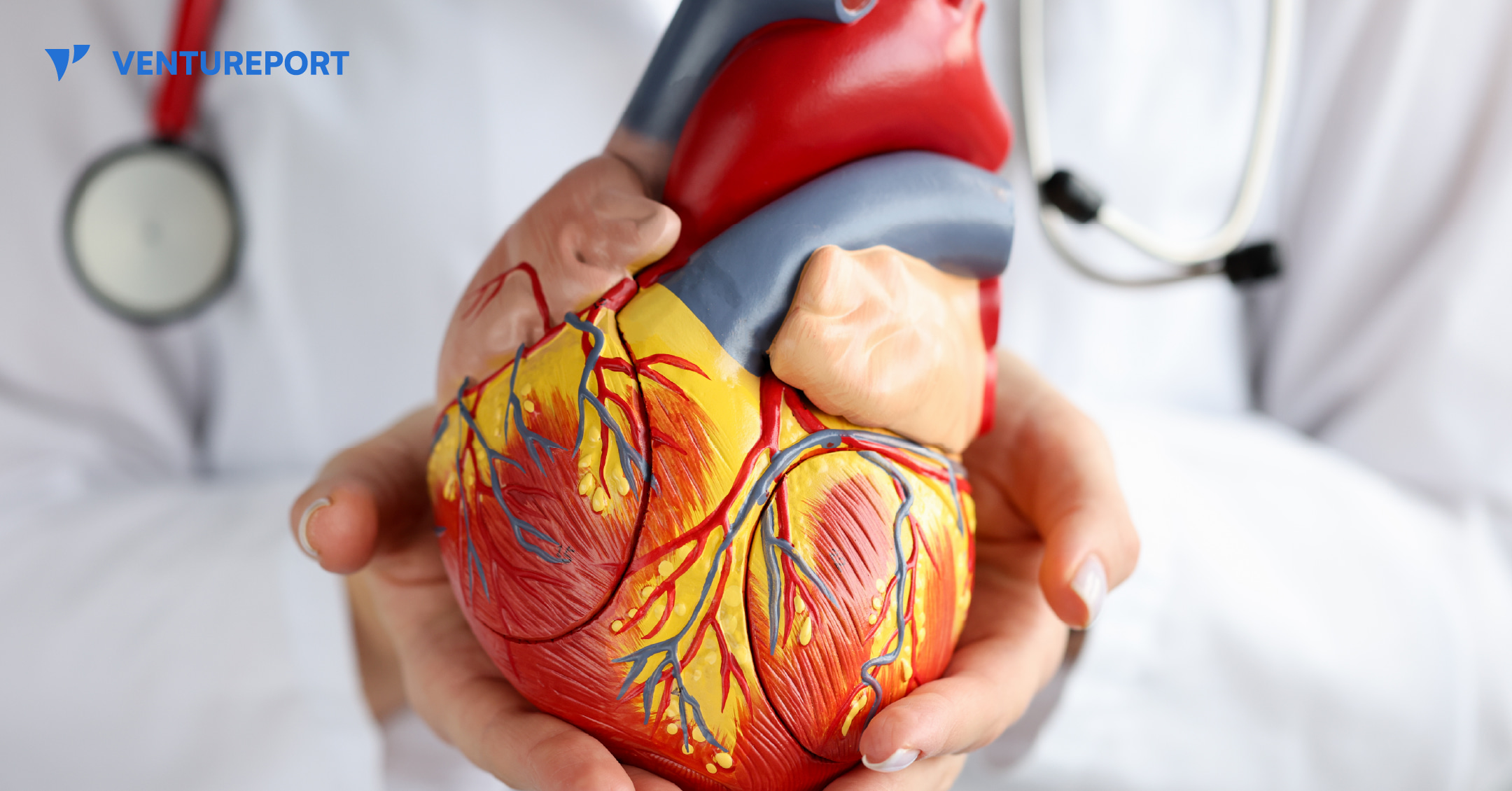
A doctor holding an artificial heart model. PHOTO: ADOBE STOCK
Heart disease does not always announce itself clearly, especially in women. Many of the symptoms are ordinary, including fatigue, shortness of breath and swelling. These signs are frequently dismissed or explained away. As a result, many women are diagnosed late, when treatment options are narrower and outcomes are worse. That diagnostic gap is the context behind a recent investment involving Ultromics and the American Heart Association’s Go Red for Women Venture Fund.
Ultromics is a health technology company that uses artificial intelligence to help doctors spot early signs of heart failure from routine heart scans. It has received a strategic investment from the American Heart Association’s Go Red for Women Venture Fund.
The focus of the investment is a long-standing blind spot in cardiac care. Heart failure with preserved ejection fraction, or HFpEF, affects millions of people worldwide, with women disproportionately impacted. It is one of the most common forms of heart failure, yet also one of the hardest to diagnose. Studies even show women are twice as likely as men to develop the condition and around 64% of cases go undiagnosed in routine clinical practice.
Ultromics works with a tool most patients already experience during heart care: the echocardiogram. There is no new scan and no added burden for patients. Its software analyzes standard heart ultrasound images and looks for subtle patterns that point to early heart failure. The goal is clarity. Give clinicians better signals earlier, before the disease advances.
“Heart failure with preserved ejection fraction is one of the most complex and overlooked diseases in cardiology. For too long, clinicians have been expected to diagnose it using tools that weren't built to detect it and as a result, many patients are identified too late,” said Ross Upton, PhD, CEO and Founder of Ultromics. “By augmenting physicians' decision making with EchoGo, we can help them recognize disease at an earlier stage and treat it more effectively.”
The stakes are high. Research suggests women are twice as likely as men to develop the condition and that a majority of cases are missed in routine clinical practice. That delay matters. New therapies can reduce hospitalizations and improve survival, but only if patients are diagnosed in time.
This is why early detection has become a priority for mission-driven investors. “Closing the diagnostic gap by recognizing disease before irreversible damage occurs is critical to improving health for women—and everyone,” said Tracy Warren, Senior Managing Director, Go Red for Women Venture Fund. “We are gratified to see technologies, such as this one, that are accepted by leading institutions as advances in the field of cardiovascular diagnostics. That's the kind of progress our fund was created to accelerate.”
Ultromics’ platform is already cleared by regulators for clinical use and is being deployed in hospitals across the US and UK. The company says its technology has analyzed hundreds of thousands of heart scans, helping clinicians reach clearer conclusions when traditional methods fall short.
Taken together, the investment reflects a broader shift in healthcare. Attention is shifting earlier—toward detection instead of reaction. Toward tools that fit into existing care rather than complicate it. In this case, the funding is not about introducing something new into the system. It is about seeing what has long been missed—and doing so in time.