Hong Kong

Startup Funding in Hong Kong: University Programmes for Student Founders and Early-Stage Startups

If you are building a startup in Hong Kong, your first source of support may be closer than you think.

Updated

May 7, 2026 1:16 PM

Main Building of the University of Hong Kong. PHOTO: ADOBE STOCK

Across Hong Kong’s public universities, entrepreneurship is now part of the campus ecosystem. Many universities offer startup funding, mentorship, training, workspace, investor access and pathways into larger incubation programmes such as Hong Kong Science and Technology Park (HKSTP) and Cyberport.

For student founders, researchers and alumni, this can be a useful place to begin. You may be able to test an idea, build a prototype, form a company or apply for early funding through your own university before looking for external investors.  

The challenge is knowing where to start. Each university has its own startup programmes, eligibility rules and funding structure. Some are designed for student ideas. Others are built for research commercialization, deep tech ventures or startups already preparing to raise investment. Below is a practical guide to startup support and university startup funding at five major publicly funded universities in Hong Kong.

The University of Hong Kong (HKU): Startup support for student founders, deep tech and research commercialization
The Centennial Campus of the University of Hong Kong. PHOTO: ADOBE STOCK

HKU offers a wide range of entrepreneurship support through HKU Techno-Entrepreneurship Core, also known as HKU TEC. Its programmes cover early ideas, deep tech projects, Greater Bay Area (GBA) expansion, research commercialization and investor matching.

HKU is especially relevant for founders working with university research, intellectual property or technology-led business ideas. It also has entry-level support for students and graduates who are still testing an idea.

HKU startup programme Who it is for Funding or investment Key eligibility points Main support
HKU SEED Programme Early-stage student and graduate startup ideas Opportunity to receive up to HK$100,000 through the HKSTP Ideation Programme The principal applicant must be an HKU member with at least 20% ownership. Open to individual, team or Hong Kong company applicants. Three-week entrepreneurship training, coaching, HKSTP Ideation pathway, iDendron membership for awardees, networking and competition nomination.
HKU DeepTech100+ Deep tech projects and research-backed startups Up to HK$1.39 million The person-in-charge must be an HKU member with at least 20% ownership, or the startup must be an HKU IP licensee. One-year HKU TEC and HKSTP co-incubation, training, HKSTP facilities, iDendron membership and fast-track route to HKSTP incubation.
Tech-Up GBA Innovators Programme HKU-linked startups expanding into the Greater Bay Area Up to HK$600,000, including grant and interest-free loan components The startup team must include HKU linkage or HKU IP. Young entrepreneur rules (e.g. the PIC and core team members must be between the ages of 18 and 39) also apply. Up to two years of mentorship, GBA training, workspace in Hong Kong and Shenzhen/Qianhai, professional services and market access support.
TSSSU@HKU (Technology Start-Up Support Scheme for Universities) HKU technology startups moving toward HK$400,000 to HK$1.5 million per year, for up to three years under each track The applying startup must have at least two members. The PIC must be an HKU student, staff member or alumnus. HKU members must hold at least 20% ownership in total. R&D funding, business setup support, iDendron membership, networking and possible Qianhai grant matching.
HKU Entrepreneurship Engine Fund (EEF) HKU-linked startups raising seed to Series A capital Investment partners may invest US$0.5 million to US$5 million At least 20% ownership must be held by HKU members, or the startup must license HKU IP. Connection to EEF investment partners for independent evaluation.
iDendron@HKU HKU founders needing workspace and community support Not applicable HKU-linked founders and eligible startups. Co-working space, hot desks (HK$900 for six months), meeting rooms, mentoring, events and startup community access.

Best fit: HKU works well for student founders, researchers and alumni who want a structured route from idea stage to technology commercialization.

City University of Hong Kong (CityUHK): HK Tech 300 and a clear startup pathway
City University of Hong Kong. PHOTO: ADOBE STOCK

CityUHK’s main startup platform is HK Tech 300. It is one of the clearest university startup pathways in Hong Kong because it is built in stages: training, seed funding, angel investment and access to external funding.

The programme is open to CityUHK students, alumni, research staff and members of the public using CityUHK intellectual property or technology.

CityUHK startup programme Who it is for Funding or investment Key eligibility points Main support
HK Tech 300 Training Teams learning startup basics Sponsored training worth more than HK$10,000 per project team Open to eligible CityUHK-linked teams and external founders using CityUHK IP or technology. Startup basics, business plan development, pitching and team formation.
HK Tech 300 Seed Fund Early teams turning ideas into startups HK$100,000 per successful team Person-in-charge must show association with CityUHK. 6 to 12 months of funding support, product development milestones and preparation for Angel Fund application.
HK Tech 300 Angel Fund Startups ready to validate a business model Up to HK$1 million angel investment Usually for eligible teams after Seed Fund progress or equivalent readiness. Business model validation, MVP development, investor exposure and incubation support.
HK Tech 300 Launching Stage Startups ready for larger support Access to external funds of up to HK$10 million For eligible startups after the incubation phase. Referrals to ITC, HKSTP, Cyberport and other partner programmes.
HK Tech 300 International and National Startup Competitions Startups entering CityUHK’s ecosystem through competitions Competition-linked opportunities, including access to HK Tech 300 support Competition-specific rules apply. Pitching, exposure, business matching and possible funding pathways.

Best fit: CityUHK is a strong choice for founders who want a step-by-step startup journey with clear funding stages.

Hong Kong University of Science and Technology (HKUST): Startup funding for tech founders and research teams
Hong Kong University of Science and Technology. PHOTO: ADOBE STOCK

HKUST has a broad startup ecosystem with support for students, alumni, researchers and faculty. Its entrepreneurship pathway covers idea exploration, prototyping, MVP testing, research commercialization and investment.

The university’s startup support is especially strong for technology companies, deep tech projects and teams commercialising HKUST research.

HKUST startup programme Who it is for Funding or investment Key eligibility points Main support
HHKUST IPIC Incubation - HKUST IPIC Incubation - Stage 1 Ideation (Through Entrepreneurship 101 Training or Entrepreneurship Bootcamp) Students, alumni, researchers and faculty across different startup stages Stage 1 includes HK$3,000 in-kind company registration support HKUST-linked founders. Structured pathway from ideation to prototyping, implementation and commercialization.
Stage 2 Prototyping (Through HKUST Dream Builder) Student-led teams building a proof of concept or MVP Up to HK$100,000 per startup team The main applicant must be a full-time current HKUST student. At least two full-time current HKUST students must play founder or co-founder roles. Funding, training, mentorship, workspace at theBASE and external outreach.
Stage 3 Implementation (Through HKUST x HKSTP Co-Ideation Programme) Early-stage HKUST-linked startups Up to HK$100,000 The team must include at least one HKUST member. HKUST members must hold at least 10% ownership if a company is formed. Six-month programme, three milestones, coaching, HKSTP training and preparation for HKSTP incubation.
Lo Kwee Seong Tech-Ship Fund Faculty-student teams commercializing HKUST research Extra support of up to HK$200,000 is listed through HKUST’s IPIC pathway Faculty research and student entrepreneurship collaboration. Commercialization support for faculty technologies and student startup teams.
Bridge Gap Fund HKUST researchers developing university IP for commercial use Typically up to HK$500,000 for 12 months Must use HKUST IP. PI must be full-time HKUST faculty. Prototype development, market research, customer discovery, IP development and DeepTech Incubation Programme access.
TSSSU@HKUST HKUST technology startups commercializing R&D Up to HK$1.5 million per year under TSSSU-O or TSSSU+ The applying company must be registered in Hong Kong. HKUST members must usually hold at least 10% ownership. Startup setup, R&D, manpower, equipment, promotion and marketing support
HKUST Entrepreneurship Fund(E-Fund) HKUST technology startups raising investment Initial investment up to HK$5 million per startup The applying startup must be at least 10% owned by HKUST faculty, staff, students or alumni and established for no more than seven years. Early-stage investment, co-investment model and long-term capital support.
HKUST Greater Bay Area Youth Entrepreneurship Fund Programme Young HKUST-linked founders building in Hong Kong or the GBA Up to HK$250,000 HKUST-linked founder requirements and youth entrepreneur rules apply. GBA startup funding, mentorship, product development and market expansion support
RAISe+ Scheme via HKUST Research teams with large-scale commercialization potential Scheme-level support can range from HK$10 million to HK$100 million per approved project Research commercialization teams with industry-matching requirements. Large-scale R&D transformation and commercialization support

Best fit: HKUST is especially useful for tech startups, deep tech teams and founders who need a route from prototype to commercialization.
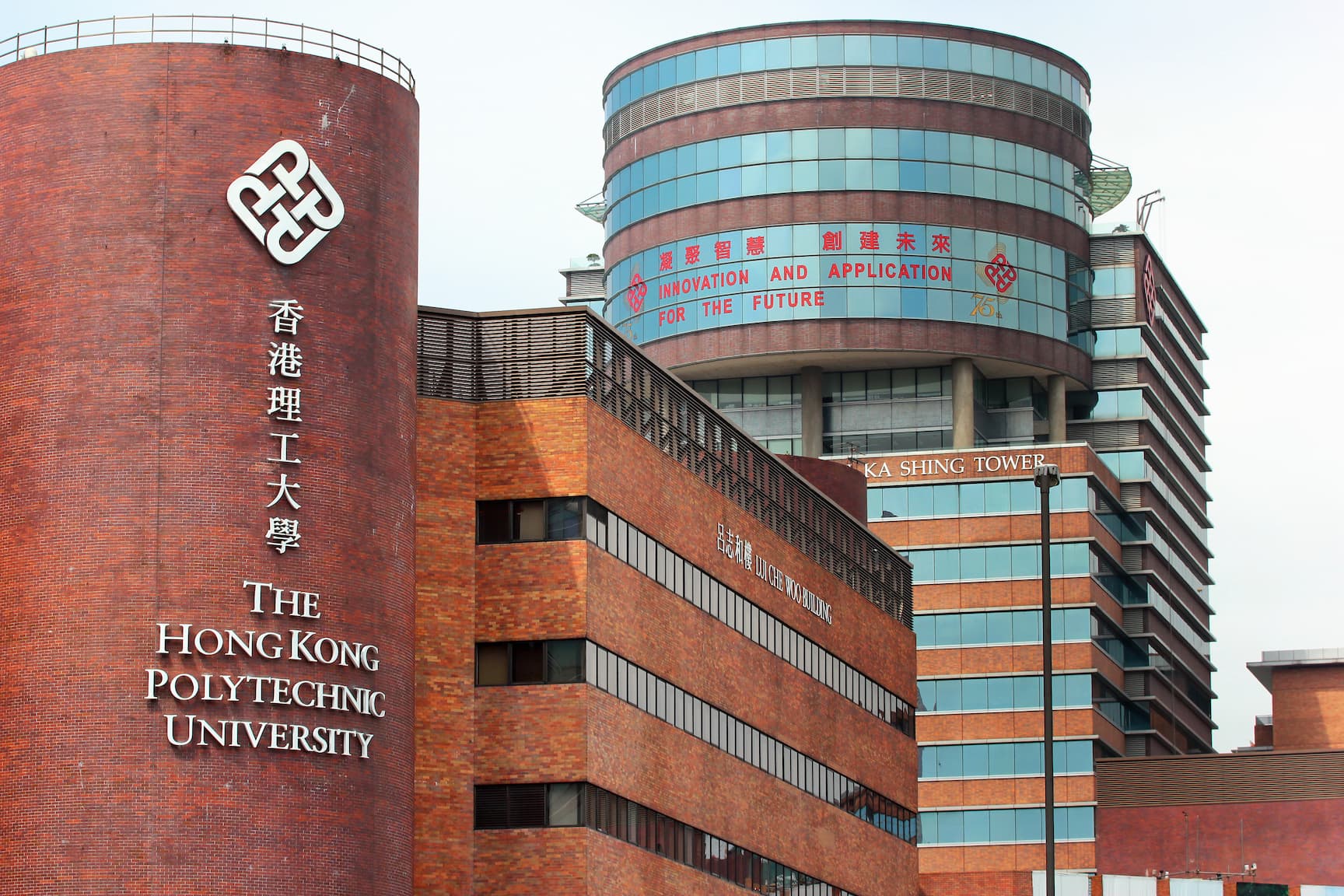
The Hong Kong Polytechnic University (PolyU): Startup funding for product, applied research and GBA expansion
Hong Kong Polytechnic University. PHOTO: ADOBE STOCK

PolyU’s startup support is practical and product-focused. Its programmes cover early ideas, seed-stage teams, Greater Bay Area expansion, translational research and investment.

This makes PolyU a good fit for founders working on engineering, hardware, applied technology, social impact or commercialization of university research.

PolyU Startup programme Who it is for Funding or investment Key eligibility points Main support
Ideation Funding Scheme Student teams with early ideas HK$5,000 basic prize, with possible nomination to other entrepreneurship programmes The team must be formed by PolyU students. The principal applicant must be a current student of the collaborating faculty or school. Early idea validation and entrepreneurship learning
PolyVentures Micro Fund Scheme Seed-stage teams preparing to form a startup or have incorporated companies within 24 months Up to HK$1.41 million in total support from PolyU and HKSTP Ideation or Incubation routes The principal applicant can be a current student, alumnus, staff member, translational startup postdoc or key owner-operator of a PolyU technology licensee. HK$20,000 cash prize for shortlisted teams, HK$100,000 PolyU Seed Fund for awardees, HKSTP pathway and mentorship
PolyU GBA Innovation and Entrepreneurship Incubation Programme Young entrepreneurs entering the Greater Bay Area market HK$600,000 seed funding Funding is granted to the successful applicant’s Hong Kong limited company and released by milestones. Two-year incubation, mentorship, training, expert advice, Hong Kong and mainland co-working spaces and GBA network access
Translational Startup Postdoc Programme Recent PhD graduates commercializing PolyU research Annual remuneration of up to HK$348,000 and project support, including prototyping (a maximum of HK$50,000 per year) and outreach funding (a maximum of HK$15,000 per year) Applicant needs a PolyU academic supervisor and a recent or near-completed doctoral degree. Free workspace at InnoHub, mentorship, KTEO support, investor access and pathways to Micro Fund, Angel Fund and EIF
PolyVentures Angel Fund Scheme / TSSSU route Technology startups needing larger commercialization support Up to HK$800,000 matching fund of up to three years The applying startup team must include PolyU linkage and meet the scheme requirements. Startup setup, R&D, manpower, equipment, marketing and commercialization support
PolyU Entrepreneurship Investment Fund (EIF) PolyU-linked startups raising early-stage investment Up to HK$4 million The applying startup must have at least one PolyU member holding at least 10% equity or must license PolyU IP. Equity, convertible note or SAFE investment, co-investment support, R&D facilities, mentoring and industry networks
RAISe+ Scheme via PolyU (EIF) Research teams commercializing major R&D outcomes Scheme-level support can reach HK$10 million to HK$100 million per approved project Research commercialization and industry matching requirements apply. Large-scale research transformation and commercialization support
ASCEND Tech for Good Programme (EIF) Youth-led tech-for-good startups Up to HK$3 million per successful applicant Hong Kong-registered startup or company with youth-led requirements. Two-year incubation and support for digital equity and social impact ventures

Best fit: PolyU is well suited for product-led startups, applied technology projects, GBA expansion and founders who want industry-facing support.

The Chinese University of Hong Kong (CUHK): Startup support from idea stage to technology commercialization
Chung Chi College, Chinese University of Hong Kong. PHOTO: ADOBE STOCK

CUHK offers support for student founders, researchers and alumni through the Pi Centre and the Knowledge Transfer Office. Its ecosystem covers pre-incubation, TSSSU funding, early translational research, social impact projects and Greater Bay Area entrepreneurship.

CUHK is especially useful for students who want to start with an idea and later move into funding, mentorship or external incubation.

CUHK Startup programme Who it is for Funding or investment Key eligibility points Main support
PILOTS Lite x HKSTP Co-Ideation / Pi Centre CUHK students at the idea or pre-incubation stage Up to HK$130,000 Open to CUHK undergraduate and postgraduate students, full-time or part-time. The principal applicant must be a current CUHK student. Applicants must not already have registered a business for the project. One-year programme, seed funding, workshops, mentoring, networking, free co-working space and fast-track preparation for incubators
TSSSU@CUHK CUHK technology startups commercializing R&D TSSSU-O: up to HK$600,000 per year. TSSSU+: up to HK$1 million per year in matching funds. Both can run for up to three years The PIC must be a current full-time student, current full-time professor or alumnus who graduated within the last 36 months. Technology readiness requirements apply. Financial support, potential HKSTP incubation, investor access, industry partner access and mentorship
IdeaBooster Fund @CUHK CUHK researchers developing early translational projects HKD 100,000 – HKD 200,000 per project Mainly for full-time CUHK academic staff, eligible teaching or research staff and selected postgraduate research students case by case. Early project development, impact-focused research translation and fast-track interview opportunity with HKSTP Co-Ideation
Knowledge Transfer Venture Impact Fund Knowledge Transfer Venture Impact Fund (KT-VIF) @CUHK CUHK academic-led ventures with scalable social impact Up to HK$300,000 for two years Mainly for CUHK professoriate or research academic staff-led teams. Business development consultancy, publicity support and partnership liaison
Knowledge Transfer Impact Project Fund (KT-IPF) @CUHK Late-prototype research projects with social innovation potential Up to HK$200,000 Mainly for full-time CUHK staff on professoriate or research academic ranks. The venture must be CUHK-affiliated and have been incorporated for more than three years. Support for turning research-based prototypes into real-world social-impact solutions
Greater Bay Area Entrepreneurship Scheme / BESGO FoundRise CUHK students and young alumni building GBA-focused ventures Up to HK$600,000 per selected team Students and young alumni, with scheme-specific selection. Two-year funding and incubation, mentorship, expert guidance and GBA venture-building support
RAISe+ via CUHK Research teams with large-scale commercialization potential Scheme-level support can reach HK$10 million to HK$100 million per approved project University research commercialization teams. Large-scale R&D commercialization and industry matching
ASCEND Tech for Good Programme (EIF) Youth-led tech-for-good startups Up to HK$3 million per successful applicant Hong Kong-registered startup or company with youth-led requirements. Two-year incubation and support for digital equity and social impact ventures

Best fit: CUHK is a good starting point for student founders who need pre-incubation support, and for researchers moving early-stage ideas toward commercial use.

Which Hong Kong university startup programme should you choose?

There is no single best programme for every founder. The right choice depends on your stage, your university connection and the type of startup you are building.

Founder stage Good starting points
You have an idea but no company yet HKU SEED, CityUHK HK Tech 300 Training, HKUST Dream Builder, PolyU Ideation Funding Scheme, CUHK Pi Centre
You are building a prototype or MVP HKUST Dream Builder, HKUST x HKSTP Co-Ideation, CityUHK Seed Fund, PolyU Micro Fund, CUHK PILOTS Lite
You are commercializing university research or IP HKU DeepTech100+, HKU TSSSU, HKUST Bridge Gap Fund, HKUST TSSSU, PolyU EIF, CUHK TSSSU
You want Greater Bay Area startup support HKU Tech-Up GBA, PolyU GBA Innovation and Entrepreneurship Incubation Programme, HKUST GBA Youth Entrepreneurship Fund, CUHK GBA Entrepreneurship Scheme
You are ready for investment You are commercializing university research or IP HKU EEF, CityUHK Angel Fund, HKUST E-Fund, PolyU EIF

The bottom line

Hong Kong’s university startup ecosystem is bigger than many founders realize. If you are a student, alumnus, researcher or university-linked founder, your campus may already offer a route into funding, mentorship, workspace and incubation.

The key is to choose a programme that matches your current stage. Some founders should start with idea validation. Others may be ready for seed funding, TSSSU support or investment.

Before applying, check the latest deadline and eligibility rules on the official university page. These programmes change often, and some funding rounds open only once or twice a year.

Keep Reading

Strategy & Leadership

Why Labubu Sells: Viral Marketing Secrets for Startups

Here’s the story of how a quirky toy transformed into a worldwide phenomenon.

Updated

January 8, 2026 6:35 PM

Labubu vinyl figure displayed with surprise blind boxes in a store in Guayaquil, Ecuador. PHOTO: ADOBE STOCK

Trends move fast. One moment it's Dubai’s viral “Kunafa” chocolate bar, the next it’s Labubu—a mischievous-looking doll—racks up US$670 million in revenue this year, even outpacing Barbie and Hot Wheels. Celebrities like BLACKPINK’s Lisa and Dua Lipa have been spotted with Labubu dolls—whether as bag charms or in playful social posts.  

For those unfamiliar, Labubu is the breakout character from the book series“The Monster” by Hong Kong-born, Belgium-based artist Kasing Lung. Alongside Labubu, the series features other quirky monsters like Zimomo, Mokoko and Tycoco—often grouped together as “Labubus”. These vinyl Labubu figures first entered the collectible scene in 2011 as “Monsters”, produced by Hong Kong-based production house How2Work. In 2019, Lung signed an exclusive licensing deal with Pop Mart, a Beijing-based toy collectible company, which further boosted the recognition and popularity of the franchise.

At first glance, Labubu might seem like just another fad. But the craze shows something deeper: in digital marketing, virality doesn’t happen by accident. It’s the result of timing, relatability and the rway global communities amplify trends.  

So, what can marketers learn from the Labubu phenomenon? Let’s take a closer look.  

1. Unconventional aesthetic

Labubu’s unconventional aesthetics—a notorious grin, sharp teeth and wide eyes—break the traditional mold of “cute” toys. The social listening report from Meltwater, a media intelligence company reveals that from January to May 2025, mentions of “cute” outnumbered “ugly” nearly five to one. This “ugly-cute” look gave Labubu its identity and helped it stand out in a crowded market.

Marketing lesson: In a world of where everything blends together on endless feeds, uniqueness wins. Standing out with bold, even unconventional design choices can spark curiosity and desire. By leaning into what makes a product different, brands create instant recognition and give people something worth talking about.  

2. Building authentic connections

Labubu’s surge in popularity is deeply rooted in Pop Mart’s focus on building genuine relationships with its fans. The company encourages user-generated content— unboxings, fan art, influencer stories—that fueled Labubu’s spread online and build brand engagement. Fans weren’t just buying toys; they were becoming part of a community that celebrated each new design.

Marketing lesson: Customers don’t want to feel like faceless buyers. They want to feel seen, heard and part of something bigger. By encouraging engagement and valuing contributions, brands can turn casual customers into loyal advocates who spread the word on their behalf.

3. Relatability fuels sharing

While Pop Mart notes Labubu is most popular among women aged 18–30, its audience has broadened beyond that group. The design draws on influences from Nordic mythology and East Asian “kawaii” culture, making it feel both familiar and new to global audiences.    

For Millennials and Gen Xers, Labubu also sparks nostalgia for toy crazes like Tickle Me Elmo and Beanie Babies that once lit up childhoods before fading away. Together, these layers of cultural resonance and cross-generational charm give Labubu an unusually broad reach.  

Marketing lessons: Relatability is a powerful driver of virality. When a product can connect across generations and cultures, it expands far beyond a niche fan base. Brands that blend familiarity with novelty can build bridges to much larger audiences.  

4. The power of surprises

Labubu’s blind box model makes buying feel like a game. The thrill of not knowing which design you’d unwrap made collecting Labubus fun. It also turns buying into an emotional experience rather than a rational choice, fueling the urge to complete entire collections.  

Besides, the suspense itself became content—millions watched unboxing videos to share in the excitement. Even BLACKPINK’s Lisa admitted she began with “only three to four” Labubus but soon wanted “a whole box” of the latest collection.  

Marketing lesson:  Mystery creates excitement, and excitement drives repeat purchases. By adding an element of surprise, brands can make the buying experience feels less like a transaction and more like a story unfolding. That thrill keeps customers coming back and makes the product easy to share online.

5. Scarcity creates demand

Pop Mart releases Labubus in limited drops, often tied to holidays or cultural events. Some editions include ultra-rare “chase” figures—appearing only once in every 144 boxes—creating a strong sense of urgency and fear-of-missing out (FOMO) among buyers. This strategy fuels a booming resale market, where regular figures retailing at US$25 can sell for US$200–US$300, and rare editions have even fetched prices up to US$150,000.  

Marketing lessons: Scarcity isn’t just about limiting supply—it’s about building anticipation. By tying releases to events and sprinkling in rare editions, brands keep fans watching for the next drop. This combination of urgency and exclusivity transforms ordinary products into must-have collectibles.

6. Smart collaboration

Labubu has expanded its reach through creative brand collaborations. For instance, the Labubu x Coca-Cola series features figures in iconic red-and-white themes, while a Vans Old Skool drop merged streetwear in the clothing brand’s notable checkerboard pattern with collectibles. The One Piece collaboration blended Labubu’s quirky style with beloved anime heroes, appealing to fans of both worlds.    

Marketing takeaway: Collaborations breathe fresh life into a brand and open doors to new audiences. Partnering with well-known names adds cultural weight and collectible value, while keeping the brand relevant in different communities. Done right, collaborations turn niche products into mainstream sensations.  

Summing up: Lasting lessons from Labubu

Labubu’s phenomenal success is more than a passing craze. It’s proof that bold design, authentic community building, clever scarcity and cultural collaborations can transform a quirky idea into a global movement.  

For marketers, the takeaway is simple: don’t just chase trends—create something real and let your community shape the story with you. Be bold, stay authentic and bring your fans along for the ride. That’s how brands move from fleeting hype to lasting cultural icons.