
A new AI model replaces months of simulation with near-instant predictions, changing how spacecraft operations are prepared
Updated
August 10, 2026 5:56 PM

Northrop Grumman Stargaze serves as the mother ship for the Pegasus, an air-launched orbital rocket. PHOTO: UNSPLASH
Flexcompute, a startup that builds software to simulate real-world physics, is working with Northrop Grumman to change how space missions are prepared. Together, they have developed an AI-based system that can predict how spacecraft respond during critical manoeuvres such as docking—when one spacecraft moves in and connects with another in orbit. These steps have traditionally taken months of preparation.
At the centre of this work is a long-standing problem in space operations. When a spacecraft fires its thrusters, the exhaust plume interacts with nearby surfaces. These interactions can affect movement, temperature and stability. Because these effects are difficult to test in real conditions, engineers have relied on large volumes of computer simulations to estimate outcomes before a mission. That process is slow and resource-intensive.
The new system replaces much of that workflow with a trained AI model. Instead of running millions of simulations, the model learns patterns from physics-based data and can make predictions in seconds. It also provides a measure of uncertainty, which helps engineers understand how reliable those predictions are when making decisions.
"At Northrop Grumman, we're pioneering physics AI to accelerate design and solve complex simulation and modelling problems like plume impingement—critical for station keeping, rendezvous and space robotics. Simply put: we're pushing the boundaries of advanced space operations", said Fahad Khan, Director of AI Foundations at Northrop Grumman. "Partnering with Flexcompute and NVIDIA, we're accelerating innovation and mission timelines to deliver superior space capabilities for customers at the speed they need".
The system is built using technology from NVIDIA, which provides the computing framework behind the model. Flexcompute has adapted it to handle the specific challenges of spaceflight, including how gases expand and interact in a vacuum. The result is a tool that can simulate complex scenarios much faster while maintaining the level of accuracy needed for mission planning.
By shortening preparation time, the model changes how engineers approach spacecraft design and operations. Faster predictions mean teams can test more scenarios and adjust plans more quickly. It also helps improve fuel use and extend the lifespan of spacecraft.
"Northrop Grumman's confidence reflects what sets Flexcompute apart", said Vera Yang, President and Co-Founder of Flexcompute. "We are able to take the most accurate and scalable physics foundations and evolve them into highly trained, customized Physics AI solutions that engineers can rely on. This work shows how we are transforming the role of simulation, not just speeding it up, but expanding what engineers can confidently solve and how quickly they can act".
The collaboration points to a broader shift in how engineering problems are being handled. Instead of relying only on detailed simulations that take time to run, companies are beginning to use AI systems that can approximate those results quickly while still reflecting the underlying physics.
"The industry's most ambitious space missions now demand a level of speed and precision that traditional engineering cycles can no longer sustain", said Tim Costa, vice president and general manager of computational engineering at NVIDIA. "By integrating NVIDIA PhysicsNeMo, Northrop Grumman and Flexcompute are transforming complex simulations like plume impingement from days of compute into seconds of insight, drastically accelerating the path from mission concept to orbit".
What emerges from this work is a shift in how missions are prepared. When prediction cycles move from months to seconds, testing and decision-making can happen faster. For space operations, where timing and precision are closely linked, that change could reshape how systems are built and run.
Keep Reading
The hidden cost of scaling AI: infrastructure, energy, and the push for liquid cooling.
Updated
January 8, 2026 6:31 PM
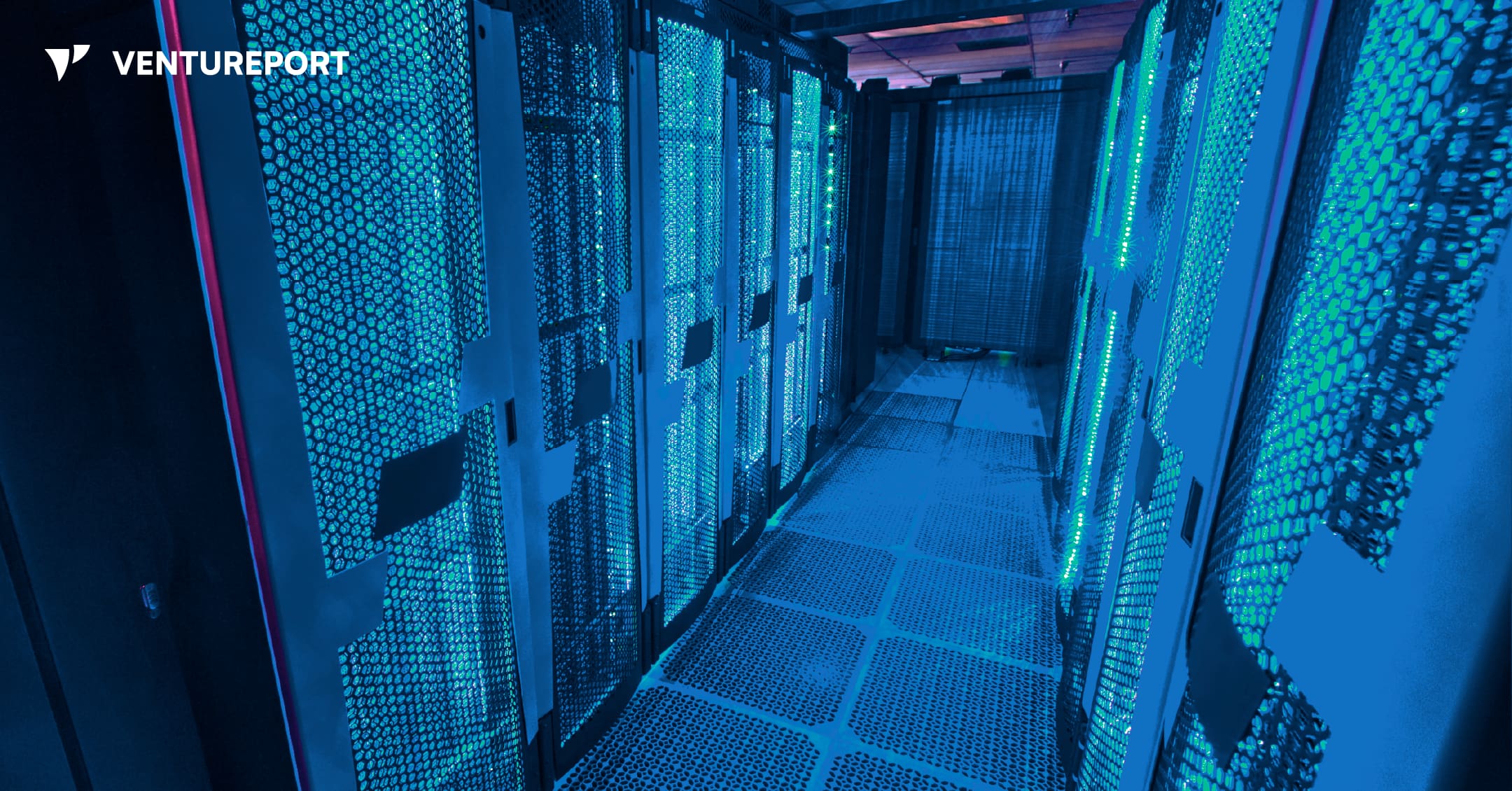
The inside of a data centre, with rows of server racks. PHOTO: FREEPIK
As artificial intelligence models grow larger and more demanding, the quiet pressure point isn’t the algorithms themselves—it’s the AI infrastructure that has to run them. Training and deploying modern AI models now requires enormous amounts of computing power, which creates a different kind of challenge: heat, energy use and space inside data centers. This is the context in which Supermicro and NVIDIA’s collaboration on AI infrastructure begins to matter.
Supermicro designs and builds large-scale computing systems for data centers. It has now expanded its support for NVIDIA’s Blackwell generation of AI chips with new liquid-cooled server platforms built around the NVIDIA HGX B300. The announcement isn’t just about faster hardware. It reflects a broader effort to rethink how AI data center infrastructure is built as facilities strain under rising power and cooling demands.
At a basic level, the systems are designed to pack more AI chips into less space while using less energy to keep them running. Instead of relying mainly on air cooling—fans, chillers and large amounts of electricity, these liquid-cooled AI servers circulate liquid directly across critical components. That approach removes heat more efficiently, allowing servers to run denser AI workloads without overheating or wasting energy.
Why does that matter outside a data center? Because AI doesn’t scale in isolation. As models become more complex, the cost of running them rises quickly, not just in hardware budgets, but in electricity use, water consumption and physical footprint. Traditional air-cooling methods are increasingly becoming a bottleneck, limiting how far AI systems can grow before energy and infrastructure costs spiral.
This is where the Supermicro–NVIDIA partnership fits in. NVIDIA supplies the computing engines—the Blackwell-based GPUs designed to handle massive AI workloads. Supermicro focuses on how those chips are deployed in the real world: how many GPUs can fit in a rack, how they are cooled, how quickly systems can be assembled and how reliably they can operate at scale in modern data centers. Together, the goal is to make high-density AI computing more practical, not just more powerful.
The new liquid-cooled designs are aimed at hyperscale data centers and so-called AI factories—facilities built specifically to train and run large AI models continuously. By increasing GPU density per rack and removing most of the heat through liquid cooling, these systems aim to ease a growing tension in the AI boom: the need for more computers without an equally dramatic rise in energy waste.
Just as important is speed. Large organizations don’t want to spend months stitching together custom AI infrastructure. Supermicro’s approach packages compute, networking and cooling into pre-validated data center building blocks that can be deployed faster. In a world where AI capabilities are advancing rapidly, time to deployment can matter as much as raw performance.
Stepping back, this development says less about one product launch and more about a shift in priorities across the AI industry. The next phase of AI growth isn’t only about smarter models—it’s about whether the physical infrastructure powering AI can scale responsibly. Efficiency, power use and sustainability are becoming as critical as speed.