
A new AI model replaces months of simulation with near-instant predictions, changing how spacecraft operations are prepared
Updated
August 10, 2026 5:56 PM

Northrop Grumman Stargaze serves as the mother ship for the Pegasus, an air-launched orbital rocket. PHOTO: UNSPLASH
Flexcompute, a startup that builds software to simulate real-world physics, is working with Northrop Grumman to change how space missions are prepared. Together, they have developed an AI-based system that can predict how spacecraft respond during critical manoeuvres such as docking—when one spacecraft moves in and connects with another in orbit. These steps have traditionally taken months of preparation.
At the centre of this work is a long-standing problem in space operations. When a spacecraft fires its thrusters, the exhaust plume interacts with nearby surfaces. These interactions can affect movement, temperature and stability. Because these effects are difficult to test in real conditions, engineers have relied on large volumes of computer simulations to estimate outcomes before a mission. That process is slow and resource-intensive.
The new system replaces much of that workflow with a trained AI model. Instead of running millions of simulations, the model learns patterns from physics-based data and can make predictions in seconds. It also provides a measure of uncertainty, which helps engineers understand how reliable those predictions are when making decisions.
"At Northrop Grumman, we're pioneering physics AI to accelerate design and solve complex simulation and modelling problems like plume impingement—critical for station keeping, rendezvous and space robotics. Simply put: we're pushing the boundaries of advanced space operations", said Fahad Khan, Director of AI Foundations at Northrop Grumman. "Partnering with Flexcompute and NVIDIA, we're accelerating innovation and mission timelines to deliver superior space capabilities for customers at the speed they need".
The system is built using technology from NVIDIA, which provides the computing framework behind the model. Flexcompute has adapted it to handle the specific challenges of spaceflight, including how gases expand and interact in a vacuum. The result is a tool that can simulate complex scenarios much faster while maintaining the level of accuracy needed for mission planning.
By shortening preparation time, the model changes how engineers approach spacecraft design and operations. Faster predictions mean teams can test more scenarios and adjust plans more quickly. It also helps improve fuel use and extend the lifespan of spacecraft.
"Northrop Grumman's confidence reflects what sets Flexcompute apart", said Vera Yang, President and Co-Founder of Flexcompute. "We are able to take the most accurate and scalable physics foundations and evolve them into highly trained, customized Physics AI solutions that engineers can rely on. This work shows how we are transforming the role of simulation, not just speeding it up, but expanding what engineers can confidently solve and how quickly they can act".
The collaboration points to a broader shift in how engineering problems are being handled. Instead of relying only on detailed simulations that take time to run, companies are beginning to use AI systems that can approximate those results quickly while still reflecting the underlying physics.
"The industry's most ambitious space missions now demand a level of speed and precision that traditional engineering cycles can no longer sustain", said Tim Costa, vice president and general manager of computational engineering at NVIDIA. "By integrating NVIDIA PhysicsNeMo, Northrop Grumman and Flexcompute are transforming complex simulations like plume impingement from days of compute into seconds of insight, drastically accelerating the path from mission concept to orbit".
What emerges from this work is a shift in how missions are prepared. When prediction cycles move from months to seconds, testing and decision-making can happen faster. For space operations, where timing and precision are closely linked, that change could reshape how systems are built and run.
Keep Reading
The IT services firm strengthens its collaboration with Google Cloud to help enterprises move AI from pilot projects to production systems
Updated
March 17, 2026 1:02 AM
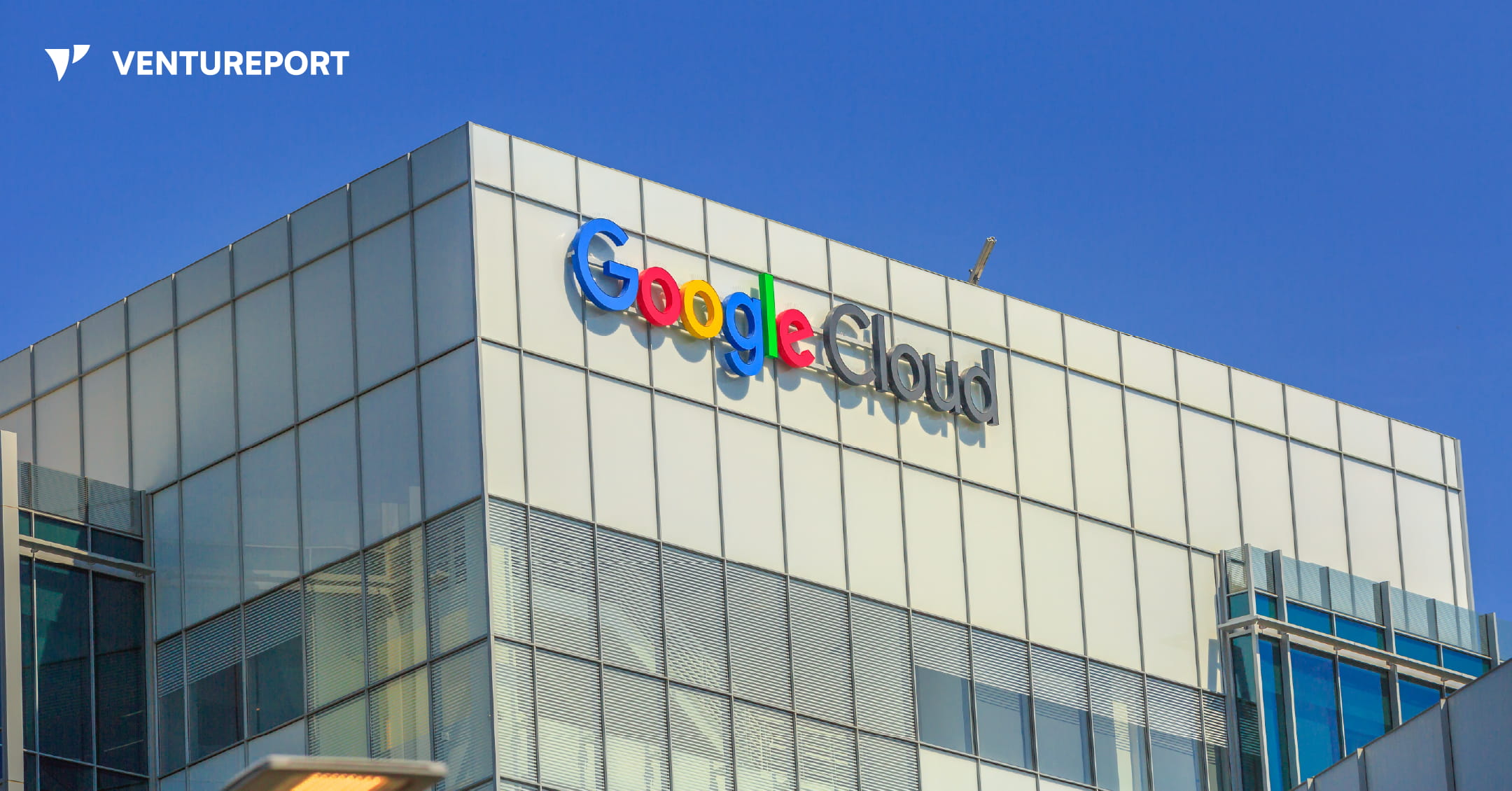
Google Cloud building. PHOTO: ADOBE STOCK
Enterprise interest in AI has moved quickly from experimentation to execution. Many organizations have tested generative tools, but turning those tools into systems that can run inside daily operations remains a separate challenge. Cognizant, an IT services firm, is expanding its partnership with Google Cloud to help enterprises move from AI pilots to fully deployed, production-ready systems.
Cognizant and Google Cloud are deepening their collaboration around Google’s Gemini Enterprise and Google Workspace. Cognizant is deploying these tools across its own workforce first, using them to support internal productivity and collaboration. The idea is simple: test and refine the systems internally, then package similar capabilities for clients.
The focus of the partnership is what Cognizant calls “agentic AI.” In practical terms, this refers to AI systems that can plan, act and complete tasks with limited human input. Instead of generating isolated outputs, these systems are designed to fit into business workflows and carry out structured tasks.
To make that workable at scale, Cognizant is building delivery infrastructure around the technology. The company is setting up a dedicated Gemini Enterprise Center of Excellence and formalizing an Agent Development Lifecycle. This framework covers the full process, from early design and blueprinting to validation and production rollout. The aim is to give enterprises a clearer path from the AI concept to a deployed system.
Cognizant also plans to introduce a bundled productivity offering that combines Gemini Enterprise with Google Workspace. The targeted use cases are operational rather than experimental. These include collaborative content creation, supplier communications and other workflow-heavy processes that can be standardized and automated.
Beyond productivity tools, Cognizant is integrating Gemini into its broader service platforms. Through Cognizant Ignition, enabled by Gemini, the company supports early-stage discovery and prototyping while helping clients strengthen their data foundations. Its Agent Foundry platform provides pre-configured and no-code capabilities for specific use cases such as AI-powered contact centers and intelligent order management. These tools are designed to reduce the amount of custom development required for each deployment.
Scaling is another element of the strategy. Cognizant, a multi-year Google Cloud Data Partner of the Year award winner, says it will rely on a global network of Gemini-trained specialists to deliver these systems. The company is also expanding work tied to Google Distributed Cloud and showcasing capabilities through its Google Experience Zones and Gen AI Studios.
For Google Cloud, the partnership reinforces its enterprise AI ecosystem. Cloud providers can offer models and infrastructure, but enterprise adoption often depends on service partners that can integrate tools into existing systems and manage ongoing operations. By aligning closely with Cognizant, Google strengthens its ability to move Gemini from platform capability to production deployment.
The announcement does not introduce a new AI model. Instead, it reflects a shift in emphasis. The core question is no longer whether AI tools exist, but how they are implemented, governed and scaled across large organizations. Cognizant’s expanded role suggests that execution frameworks, internal deployment and structured delivery models are becoming central to how enterprises approach AI.
In that sense, the partnership is less about new technology and more about operational maturity. It highlights how AI is moving from isolated pilots to managed systems embedded in business processes — a transition that will likely define the next phase of enterprise adoption.