
A new approach examines how individual cells respond to drugs, aiming to identify risks earlier in development.
Updated
August 10, 2026 5:56 PM

Close up of a capsule blister pack. PHOTO: UNSPLASH
DeepCyte, a startup in the drug development space, is focusing on a long-standing problem: why drugs that appear safe in early testing still fail in clinical trials or are withdrawn later due to toxicity. DeepCyte has launched with US$1.5 million in seed funding to build tools that detect and explain the harmful effects of drugs at much earlier stages.
The startup’s approach focuses on how individual cells respond to a drug. Instead of analysing cells in bulk, it studies them one by one. This helps capture differences in how cells react, which are often missed in traditional testing methods.
Drug toxicity remains one of the main reasons for failure in drug development. Methods such as animal testing and bulk cell analysis do not always reflect how human cells behave. This gap has pushed the industry to look for more reliable and human-relevant ways to test drug safety.
DeepCyte combines cell-level data with artificial intelligence. Its platform, MetaCore, studies what is happening inside individual cells by capturing detailed molecular information. This data is used to build large datasets that can train AI models.
Additionally, the company has developed an AI system called DeeImmuno. It is designed to predict whether a drug could be toxic and identify the biological reasons behind it. In internal testing on 100 drugs, the system identified different types of toxicity and their underlying mechanisms with a reported accuracy of 94 percent.
The focus on explaining why a drug is toxic, not just whether it is, reflects a broader shift in the industry. Regulators such as the U.S. Food and Drug Administration and the European Medicines Agency have been encouraging methods that rely more on human cell data and clearer biological evidence. The seed funding will be used to develop and scale these tools. The company aims to help drug developers make earlier decisions, which could reduce costly failures in later stages. Whether tools like this become widely used will depend on how they perform in real-world settings. For now, DeepCyte’s approach highlights a growing effort to make drug testing more precise by focusing on how drugs affect cells at the most detailed level.
Keep Reading
A humanoid robot being escorted away by police in Macau has gone viral online, prompting jokes about what some called the world’s first “robot arrest.”
Updated
April 1, 2026 8:55 AM
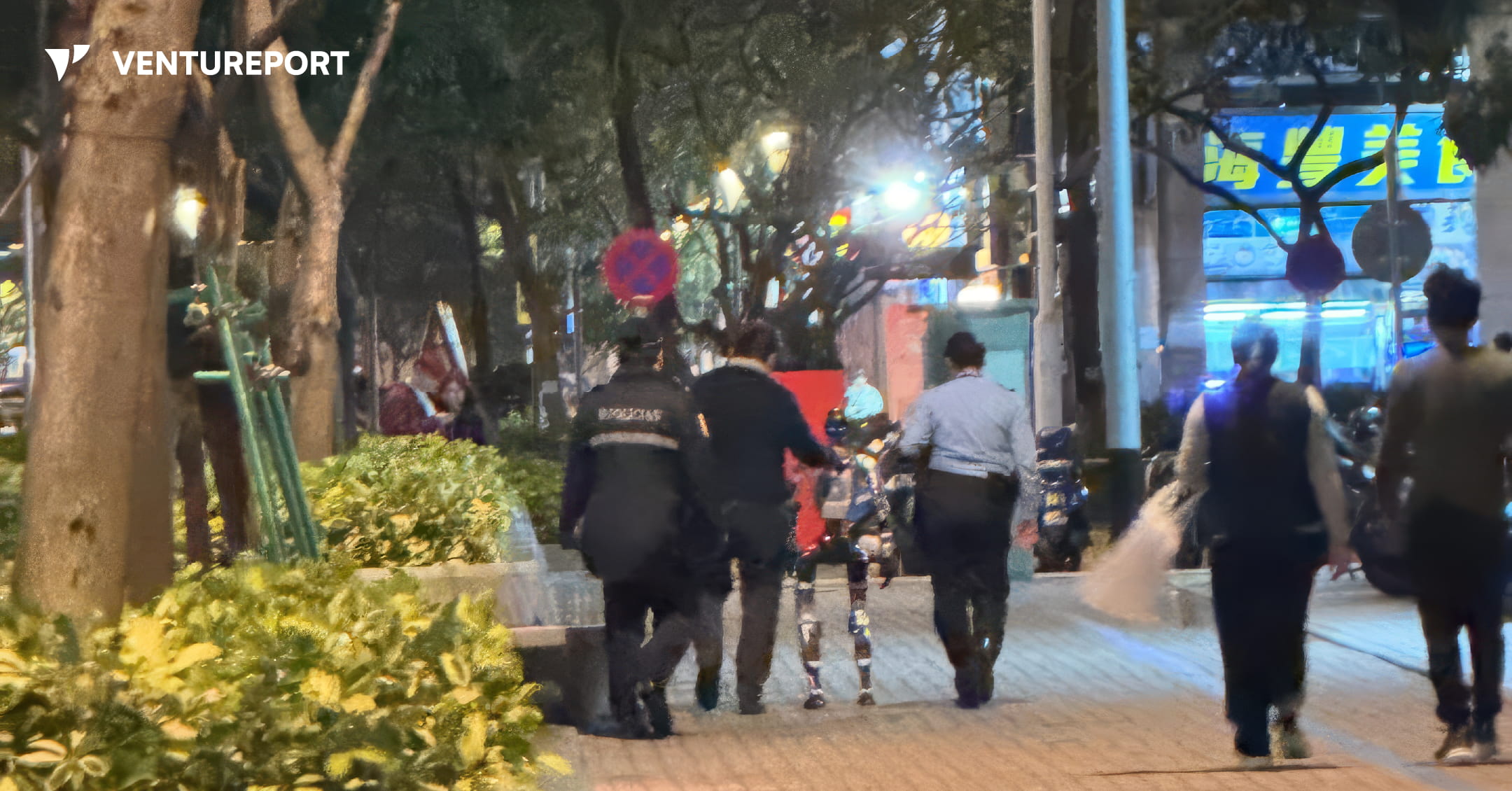
Macau police officer accompanying the humanoid robot. PHOTO: THREADS@BOXOF_CHOCOLATE
Police in Macau recently detained a humanoid robot after it frightened an elderly woman on a public street. The unusual encounter quickly spread online, prompting jokes about what some called the world’s first “robot arrest”.
On the evening of March 5, the robot was taken away by officers after the encounter triggered alarm among bystanders. Videos circulating on social media show an elderly woman confronting the robot on a sidewalk, visibly distressed and shouting that her “heart is pounding” while demanding to know why such “nonsense” was happening on the street. In the clip, the robot raises both hands toward the woman after she lashes out in fear — a gesture many viewers interpreted as a sign of apology.
Shortly afterwards, two officers from the Macau Public Security Police Force were seen escorting the robot and a man believed to be its operator away from the area. An officer is seen placing his right hand on the robot’s shoulder — the same posture police often use when presenting arrested suspects in official photographs.
That scene quickly spread online, fuelling jokes about what some called the world’s first “robot arrest”.
Photos shared online show a humanoid robot with long limbs and exposed mechanical joints, built from a black metallic frame without an outer shell. In dim lighting, several commenters said it resembled a “moving skeleton” — a striking sight for pedestrians encountering it unexpectedly on the street.
Witnesses said the woman appeared severely shaken and an ambulance was eventually called to take her to the hospital.
The incident also sparked discussion online about robots operating in public spaces. Some commenters argued that experimental technologies should be tested in controlled environments, while others said machines moving through public areas should have clearer designs or safety measures to avoid alarming pedestrians.
It remains unclear who deployed the robot or what purpose it was serving in the area at the time of the incident. Authorities have not released further details about the device or whether any action was taken following the encounter.