
From AI diagnostics to exoskeletons, the event highlights how healthcare tech is moving into real-world use
Updated
May 1, 2026 2:25 PM

Tesla Bot Optimus, designed by Tesla. PHOTO: ADOBE STOCK
The China International Medical Equipment Fair 2026 will open in Shanghai from April 9 to 12 at the National Exhibition and Convention Center. It is one of the largest gatherings in the medical device industry. This year’s edition will cover more than 320,000 square metres. Nearly 5,000 companies and brands are expected to participate, representing over 20 countries and regions. Organisers also expect more than 200,000 professional visitors and buyers from around 150 markets.
A key focus this year is the growing use of artificial intelligence in healthcare. One of the headline technologies is an AI agent designed to carry out multiple diagnoses from a single scan. The exhibition will also feature diagnostic software that is already in clinical use. In addition, an integrated platform for AI training and inference will be showcased to improve computing capacity within healthcare institutions.
Robotics will also play a central role at the event. New systems across surgical procedures, rehabilitation and elderly care are expected to be presented. Together, these developments point to a steady move toward more precise and assisted forms of care. Many of these technologies are designed to support clinicians and patients, especially in tasks that require consistent accuracy or long-term physical assistance.
For the first time, the event will introduce a dedicated Future Tech Arena. It will focus on brain-computer interfaces, embodied intelligence and university-led innovation. The space will include AI-assisted MRI systems for Alzheimer’s diagnosis. It will also feature brain-computer interface technologies used for cognitive assessment and training, along with wearable robotic exoskeletons.
Alongside product showcases, the event will continue to act as a platform for international trade and collaboration. An International Zone will host exhibitors from countries such as the United States, Germany, Japan, South Korea, the United Kingdom, France, Singapore, Malaysia and Thailand. This provides a view of how different markets are approaching medical technology. It also reflects the global nature of innovation and deployment in this sector.
The programme will include a set of networking and exchange formats under its “We” initiative. These include discussion stages with representatives from consulates and industry organisations, as well as matchmaking sessions based on verified buyer demand. Guided tours will also be organised to help international visitors connect with relevant exhibitors. In parallel, organisers are working with hospital partners to provide medical support services for attendees during the event.
Across the four days, hundreds of forums are scheduled. These will bring together policymakers, researchers and industry leaders to discuss regulatory frameworks, market access and the future of healthcare innovation. Some of these sessions will be led by the Global Harmonization Working Party in collaboration with the Ministry of Health of Malaysia, with a focus on regulatory alignment and cross-border cooperation in medical devices.
As healthcare systems continue to adopt digital tools and advanced equipment, events like CMEF provide a clear view of how these technologies are being developed and applied. The scale of participation this year reflects continued activity across both innovation and international collaboration in the medical device sector.
Keep Reading
Where Hollywood magic meets AI intelligence — Hong Kong becomes the new stage for virtual humans
Updated
February 7, 2026 2:18 PM

William Wong, Chairman and CEO of Digital Domain. PHOTO: YORKE YU
In an era where pixels and intelligence converge, few companies bridge art and science as seamlessly as Digital Domain. Founded three decades ago by visionary filmmaker James Cameron, the company built its name through cinematic wizardry—bringing to life the impossible worlds of Titanic, The Curious Case of Benjamin Button and the Marvel universe. But today, its focus has evolved far beyond Hollywood: Digital Domain is reimagining the future of AI-driven virtual humans—and it’s doing so from right here in Hong Kong.
.jpg)
“AI and visual technology are merging faster than anyone imagined,” says William Wong, Chairman and CEO of Digital Domain. “For us, the question is not whether AI will reshape entertainment—it already has. The question is how we can extend that power into everyday life.”
Though globally recognized for its work on blockbuster films and AAA games, Digital Domain’s story is also deeply connected to Asia. A Hong Kong–listed company, it operates a network of production and research centers across North America, China and India. In 2024, it announced a major milestone—setting up a new R&D hub at Hong Kong Science Park focused on advancing artificial intelligence and virtual human technologies. “Our roots are in visual storytelling, but AI is unlocking a new frontier,” Wong says. “Hong Kong has been very proactive in promoting innovation and research, and with the right partnerships, we see real potential to make this a global R&D base.”
Building on that commitment, the company plans to invest about HK$200 million over five years, assembling a team of more than 40 professional talents specializing in computer vision, machine learning and digital production. For now, the team is still growing and has room to expand. “Talent is everything,” says Wong. “We want to grow local expertise while bringing in global experience to accelerate the learning curve.”

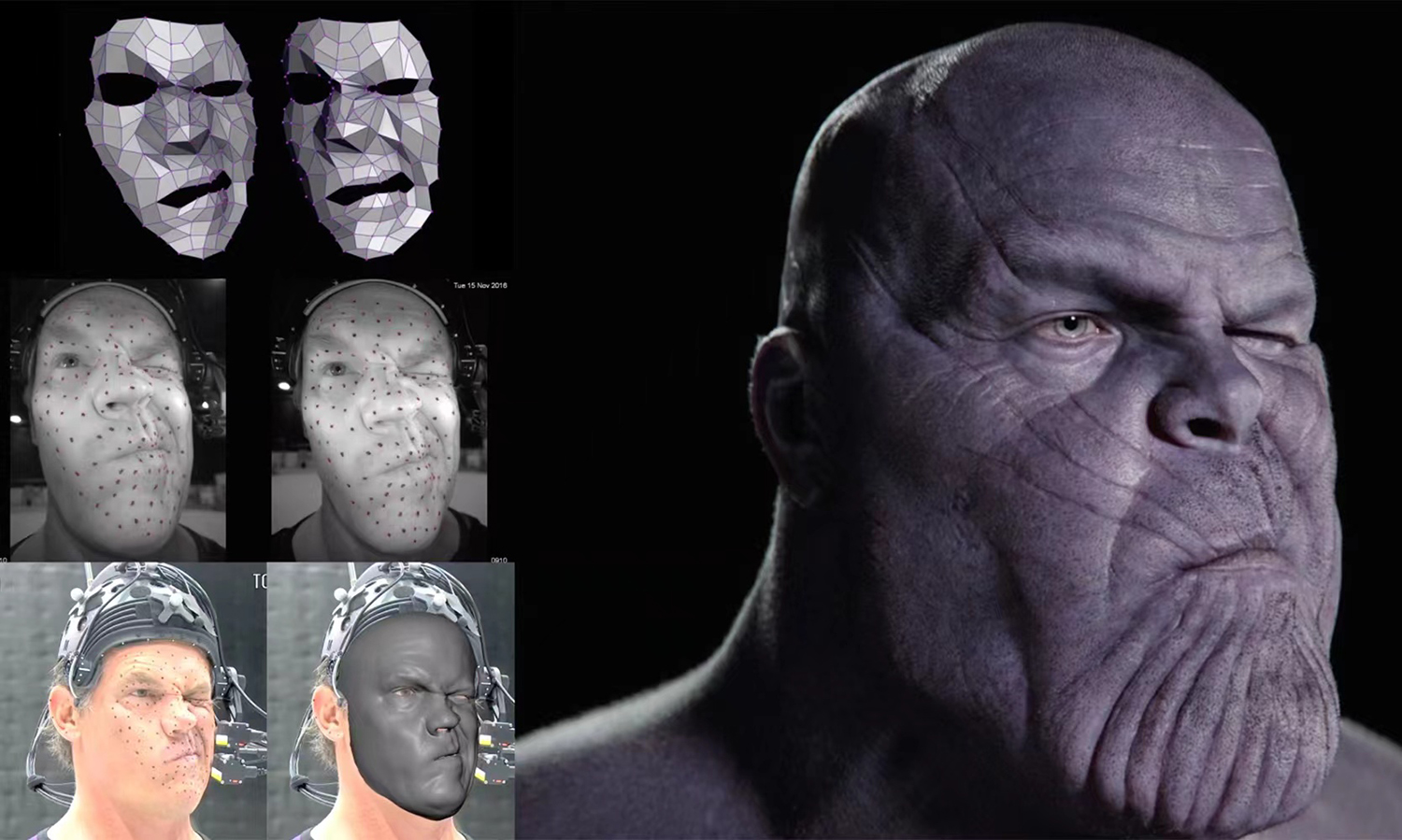
Digital Domain’s latest chapter revolves around one of AI’s most fascinating frontiers: the creation of virtual humans.
These are hyperrealistic, AI-powered virtual humans capable of speaking, moving and responding in real time. Using the advanced motion-capture and rendering techniques that transformed Hollywood visual effects, the company now builds digital personalities that appear on screens and in physical environments—serving in media, education, retail and even public services.
One of its most visible projects is “Aida”, the AI-powered presenter who delivers nightly weather reports on the Radio Television Hong Kong (RTHK). Another initiative, now in testing, will soon feature AI-powered concierges greeting travelers at airports, able to communicate in multiple languages and provide real-time personalized services. Similar collaborations are under way in healthcare, customer service and education.
“What’s exciting,” says Wong, “is that our technologies amplify human capability, helping to deliver better experiences, greater efficiency and higher capacity. AI-powered virtual humans can interact naturally, emotionally and in any language. They can help scale creativity and service, not replace it.”
To make that possible, Digital Domain has designed its system for compatibility and flexibility. It can connect to major AI models—from OpenAI and Google to Baidu—and operate across cloud platforms like AWS, Alibaba Cloud and Microsoft Azure. “It’s about openness,” says Wong. “Our clients can choose the AI brain that best fits their business.”
Establishing a permanent R&D base in Hong Kong marks a turning point for the company—and, in a broader sense, for the city’s technology ecosystem. With the support of the Office for Attracting Strategic Enterprises (OASES) in Hong Kong, Digital Domain hopes to make the city a creative hub where AI meets visual arts. “Hong Kong is the perfect meeting point,” Wong says. “It combines international exposure with a growing innovation ecosystem. We want to make it a hub for creative AI.”
As part of this effort, the company is also collaborating with universities such as the University of Hong Kong, City University of Hong Kong and Hong Kong Baptist University to co-develop new AI solutions and nurture the next generation of engineers. “The goal,” Wong notes, “is not just R&D for the sake of research—but R&D that translates into real-world impact.”

The collaboration with OASES underscores how both the company and the city share a vision for innovation-led growth. As Peter Yan King-shun, Director-General of OASES, notes, the initiative reflects Hong Kong’s growing strength as a global innovation and technology hub. “OASES was set up to attract high-potential enterprises from around the world across key sectors such as AI, data science, and cultural and creative technology,” he says. “Digital Domain’s new R&D center is a strong example of how Hong Kong can combine world-class talent, technology and creativity to drive innovation and global competitiveness.”
Digital Domain’s story mirrors the evolution of Hong Kong’s own innovation landscape—where creativity, technology and global ambition converge. From the big screen to the next generation of intelligent avatars, the company continues to prove that imagination is not bound by borders, but powered by the courage to reinvent what’s possible.