
With operations across 50 countries, MagicLab is pairing new robot systems with a platform strategy aimed at wider commercial adoption
Updated
August 10, 2026 5:56 PM
.jpg)
A standing yellow robotic arm. PHOTO: UNSPLASH
MagicLab Robotics is a Chinese startup that describes itself as an embodied AI company. At an event in Silicon Valley this week, it outlined its global ambitions and introduced new products designed for real-world use. The company said its international business now spans more than 50 countries and regions, with overseas markets accounting for 60% of total sales in 2025. That gives some indication of how quickly Chinese robotics firms are expanding beyond their home market.
At the centre of the announcement was MagicLab’s latest product line-up. It included Magic-Mix, described as a foundational world model for robots, the H01 dexterous robotic hand and its humanoid robot, MagicBot X1. In practical terms, the company is trying to build robots that can better understand their surroundings and perform physical tasks with greater precision. That is the core idea behind embodied AI, where intelligence is combined with movement and interaction in the real world rather than limited to software alone.
MagicLab says it develops both hardware and software internally. Its product range includes humanoid robots and four-legged machines, with systems designed for factories, commercial services and home use. The company also outlined where it sees demand emerging. It listed sectors such as healthcare, manufacturing, logistics, security, public safety, education and household assistance.
That wide spread of target markets reflects a broader challenge in robotics. Building capable machines is only one part of the equation. The harder task is finding enough practical uses where customers are willing to pay for them.
MagicLab also used the summit to set out a long-term commercial goal. It projected a path toward US$14 billion in annual revenue by 2036 through wider adoption of embodied AI systems. It also announced what it calls the “Co-Create 1000 Initiative”, a plan to work with external developers and partner companies.
As part of that effort, the startup said it plans to invest US$1 billion over the next five years to build a developer ecosystem that would allow third parties to create new applications for its robots. The strategy mirrors what happened in smartphones and cloud software, where ecosystems often mattered as much as the original hardware. If robotics follows a similar path, companies that attract developers could gain an advantage over those selling machines alone.
For now, MagicLab’s announcement is less about immediate breakthroughs and more about positioning. The company is presenting itself not simply as a robot maker, but as a platform business seeking a role in the next phase of intelligent machines.
Keep Reading
A step forward that could influence how smart contracts are designed and verified.
Updated
January 8, 2026 6:32 PM
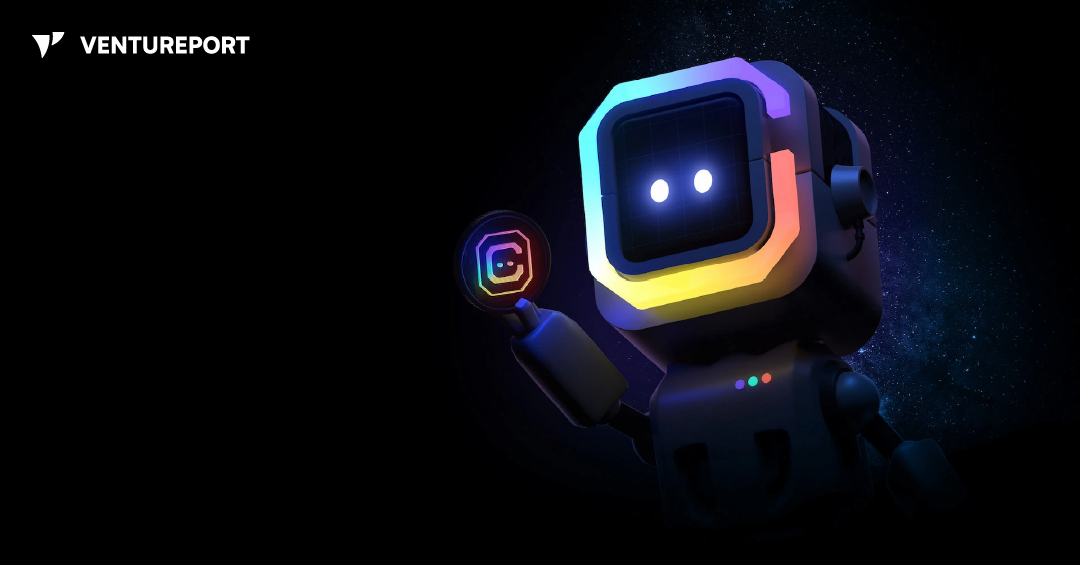
ChainGPT's robot mascot. IMAGE: CHAINGPT
A new collaboration between ChainGPT, an AI company specialising in blockchain development tools and Secret Network, a privacy-focused blockchain platform, is redefining how developers can safely build smart contracts with artificial intelligence. Together, they’ve achieved a major industry first: an AI model trained exclusively to write and audit Solidity code is now running inside a Trusted Execution Environment (TEE). For the blockchain ecosystem, this marks a turning point in how AI, privacy and on-chain development can work together.
For years, smart-contract developers have faced a trade-off. AI assistants could speed up coding and security reviews, but only if developers uploaded their most sensitive source code to external servers. That meant exposing intellectual property, confidential logic and even potential vulnerabilities. In an industry where trust is everything, this risk held many teams back from using AI at all.
ChainGPT’s Solidity-LLM aims to solve that problem. It is a specialised large language model trained on over 650,000 curated Solidity contracts, giving it a deep understanding of how real smart contracts are structured, optimised and secured. And now, by running inside SecretVM, the Confidential Virtual Machine that powers Secret Network’s encrypted compute layer, the model can assist developers without ever revealing their code to outside parties.
“Confidential computing is no longer an abstract concept,” said Luke Bowman, COO of the Secret Network Foundation. “We've shown that you can run a complex AI model, purpose-built for Solidity, inside a fully encrypted environment and that every inference can be verified on-chain. This is a real milestone for both privacy and decentralised infrastructure”.
SecretVM makes this workflow possible by using hardware-backed encryption to protect all data while computations take place. Developers don’t interact with the underlying hardware or cryptography. Instead, they simply work inside a private, sealed environment where their code stays invisible to everyone except them—even node operators. For the first time, developers can generate, test and analyse smart contracts with AI while keeping every detail confidential.
This shift opens new possibilities for the broader blockchain community. Developers gain a private coding partner that can streamline contract logic or catch vulnerabilities without risking leaks. Auditors can rely on AI-assisted analysis while keeping sensitive audit material protected. Enterprises working in finance, healthcare or governance finally have a path to adopt AI-driven blockchain automation without raising compliance concerns. Even decentralised organisations can run smart-contract agents that make decisions privately, without exposing internal logic on a public chain.
The system also supports secure model training and fine-tuning on encrypted datasets. This enables collaborative AI development without forcing anyone to share raw data—a meaningful step toward decentralised and privacy-preserving AI at scale.
By combining specialised AI with confidential computing, ChainGPT and Secret Network are shifting the trust model of on-chain development. Instead of relying on centralised cloud AI services, developers now have a verifiable, encrypted environment where they keep full control of their code, their data and their workflow. It’s a practical solution to one of blockchain’s biggest challenges: using powerful AI tools without sacrificing privacy.
As the technology evolves, the roadmap includes confidential model fine-tuning, multi-agent AI systems and cross-chain use cases. But the core advancement is already clear: developers now have a way to use AI for smart contract development that is fast, private and verifiable—without compromising the security standards that decentralised systems rely on.