
With operations across 50 countries, MagicLab is pairing new robot systems with a platform strategy aimed at wider commercial adoption
Updated
August 10, 2026 5:56 PM
.jpg)
A standing yellow robotic arm. PHOTO: UNSPLASH
MagicLab Robotics is a Chinese startup that describes itself as an embodied AI company. At an event in Silicon Valley this week, it outlined its global ambitions and introduced new products designed for real-world use. The company said its international business now spans more than 50 countries and regions, with overseas markets accounting for 60% of total sales in 2025. That gives some indication of how quickly Chinese robotics firms are expanding beyond their home market.
At the centre of the announcement was MagicLab’s latest product line-up. It included Magic-Mix, described as a foundational world model for robots, the H01 dexterous robotic hand and its humanoid robot, MagicBot X1. In practical terms, the company is trying to build robots that can better understand their surroundings and perform physical tasks with greater precision. That is the core idea behind embodied AI, where intelligence is combined with movement and interaction in the real world rather than limited to software alone.
MagicLab says it develops both hardware and software internally. Its product range includes humanoid robots and four-legged machines, with systems designed for factories, commercial services and home use. The company also outlined where it sees demand emerging. It listed sectors such as healthcare, manufacturing, logistics, security, public safety, education and household assistance.
That wide spread of target markets reflects a broader challenge in robotics. Building capable machines is only one part of the equation. The harder task is finding enough practical uses where customers are willing to pay for them.
MagicLab also used the summit to set out a long-term commercial goal. It projected a path toward US$14 billion in annual revenue by 2036 through wider adoption of embodied AI systems. It also announced what it calls the “Co-Create 1000 Initiative”, a plan to work with external developers and partner companies.
As part of that effort, the startup said it plans to invest US$1 billion over the next five years to build a developer ecosystem that would allow third parties to create new applications for its robots. The strategy mirrors what happened in smartphones and cloud software, where ecosystems often mattered as much as the original hardware. If robotics follows a similar path, companies that attract developers could gain an advantage over those selling machines alone.
For now, MagicLab’s announcement is less about immediate breakthroughs and more about positioning. The company is presenting itself not simply as a robot maker, but as a platform business seeking a role in the next phase of intelligent machines.
Keep Reading
From pre-orders to market entry, Rokid’s Taiwan campaign reflects how AI hardware is being introduced to consumers today.
Updated
January 8, 2026 6:30 PM
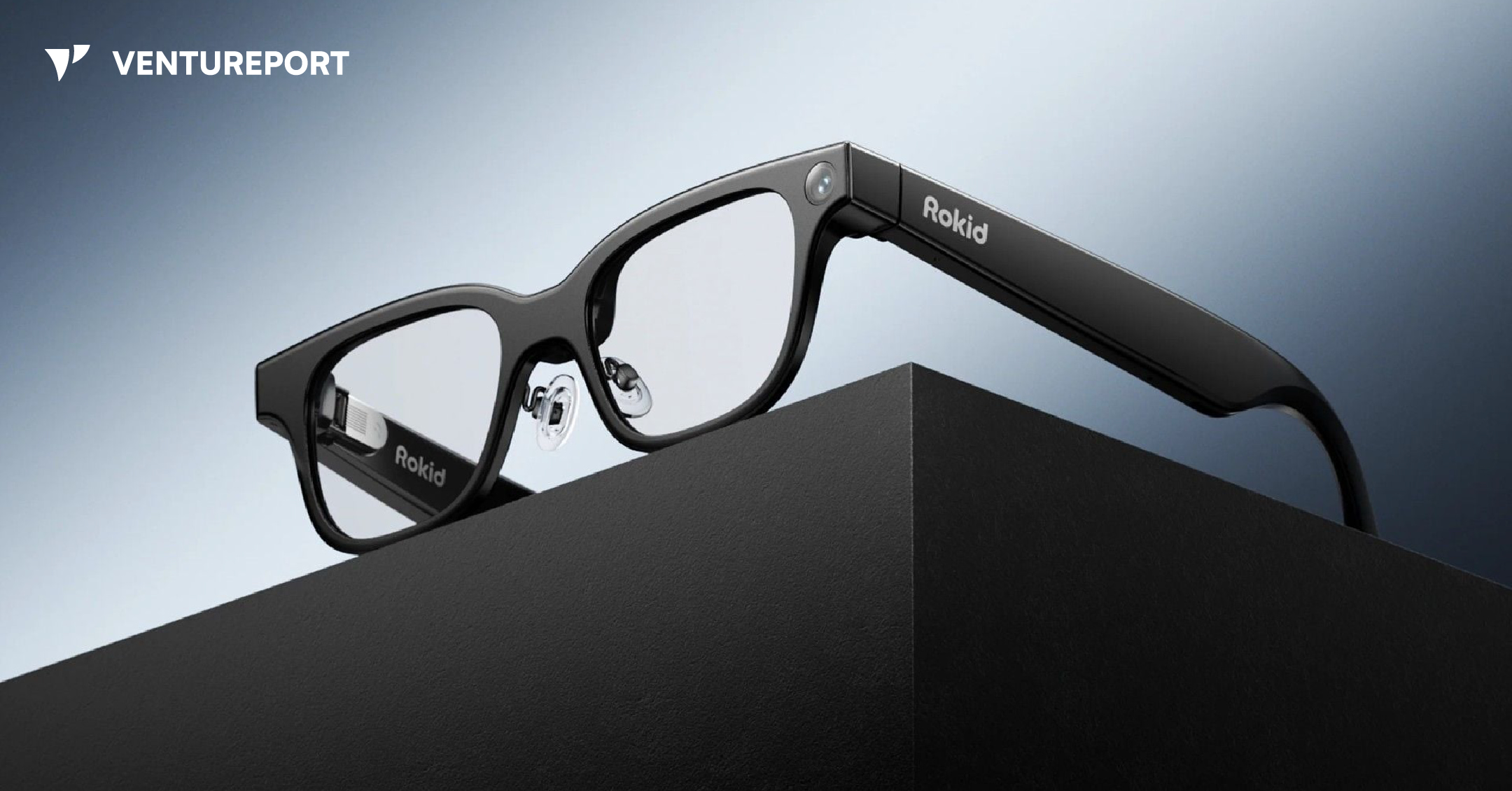
Rokid Glasses, a pair of AR glasses from Rokid. PHOTO: ROKID
Rokid has reached a significant crowdfunding milestone in Taiwan. Its Rokid Glasses campaign surpassed NT$62 million in pre-order funding on zeczec, Taiwan’s creative-oriented crowdfunding platform. The campaign ranked No. 1 across all categories on the platform in 2025 and entered the Top 10 funded campaigns in zeczec’s history, setting new records for AI and XR-related projects.
The campaign launched on October 28 and became one of the platform’s most prominent technology initiatives of the year. According to the company, the outcome followed growing visibility for Rokid Glasses after product showcases in New York, Berlin, Singapore and Paris, positioning the Taiwan campaign within a broader international rollout.
The crowdfunding achievement coincided with Rokid’s official market entry in Taiwan. On December 10, the company debuted Rokid Glasses locally, introducing the product to media, partners and early users in the region. The Taiwan launch mirrored earlier international events and connected the online crowdfunding campaign with a physical market presence.
Rokid Glasses combine augmented reality displays with built-in AI functions, including real-time multilingual translation, live transcription, navigation, object recognition and voice assistance. These capabilities were central to how the product was presented during both the crowdfunding campaign and the Taiwan launch, without framing the project as a traditional consumer electronics release.
The Taiwan campaign builds on Rokid’s prior crowdfunding history. The company previously raised more than US$4 million on Kickstarter, where Rokid Glasses became the highest-funded XR wearable project on the platform. The zeczec campaign extends that track record into one of Asia’s most established consumer electronics markets.
“Taiwan has one of the world's most mature and discerning consumer electronics markets”, said Said Justo Chang, Head of Global Channels at Rokid. “Reaching the top of Taiwan's crowdfunding platform is a great commercial achievement. We are excited to finally introduce Rokid Glasses to Taiwan”.
More broadly, the campaign highlights how crowdfunding platforms continue to function as launch and distribution channels for emerging AI and XR hardware. In Rokid’s case, product rollout, market entry and public participation converged within a single campaign, marking a notable moment for AI-enabled wearables in Taiwan’s technology landscape.