
With operations across 50 countries, MagicLab is pairing new robot systems with a platform strategy aimed at wider commercial adoption
Updated
August 10, 2026 5:56 PM
.jpg)
A standing yellow robotic arm. PHOTO: UNSPLASH
MagicLab Robotics is a Chinese startup that describes itself as an embodied AI company. At an event in Silicon Valley this week, it outlined its global ambitions and introduced new products designed for real-world use. The company said its international business now spans more than 50 countries and regions, with overseas markets accounting for 60% of total sales in 2025. That gives some indication of how quickly Chinese robotics firms are expanding beyond their home market.
At the centre of the announcement was MagicLab’s latest product line-up. It included Magic-Mix, described as a foundational world model for robots, the H01 dexterous robotic hand and its humanoid robot, MagicBot X1. In practical terms, the company is trying to build robots that can better understand their surroundings and perform physical tasks with greater precision. That is the core idea behind embodied AI, where intelligence is combined with movement and interaction in the real world rather than limited to software alone.
MagicLab says it develops both hardware and software internally. Its product range includes humanoid robots and four-legged machines, with systems designed for factories, commercial services and home use. The company also outlined where it sees demand emerging. It listed sectors such as healthcare, manufacturing, logistics, security, public safety, education and household assistance.
That wide spread of target markets reflects a broader challenge in robotics. Building capable machines is only one part of the equation. The harder task is finding enough practical uses where customers are willing to pay for them.
MagicLab also used the summit to set out a long-term commercial goal. It projected a path toward US$14 billion in annual revenue by 2036 through wider adoption of embodied AI systems. It also announced what it calls the “Co-Create 1000 Initiative”, a plan to work with external developers and partner companies.
As part of that effort, the startup said it plans to invest US$1 billion over the next five years to build a developer ecosystem that would allow third parties to create new applications for its robots. The strategy mirrors what happened in smartphones and cloud software, where ecosystems often mattered as much as the original hardware. If robotics follows a similar path, companies that attract developers could gain an advantage over those selling machines alone.
For now, MagicLab’s announcement is less about immediate breakthroughs and more about positioning. The company is presenting itself not simply as a robot maker, but as a platform business seeking a role in the next phase of intelligent machines.
Keep Reading
Amid AI and tech startups, Eastseabrother proved the power of demand and trust.
Updated
January 23, 2026 10:41 AM
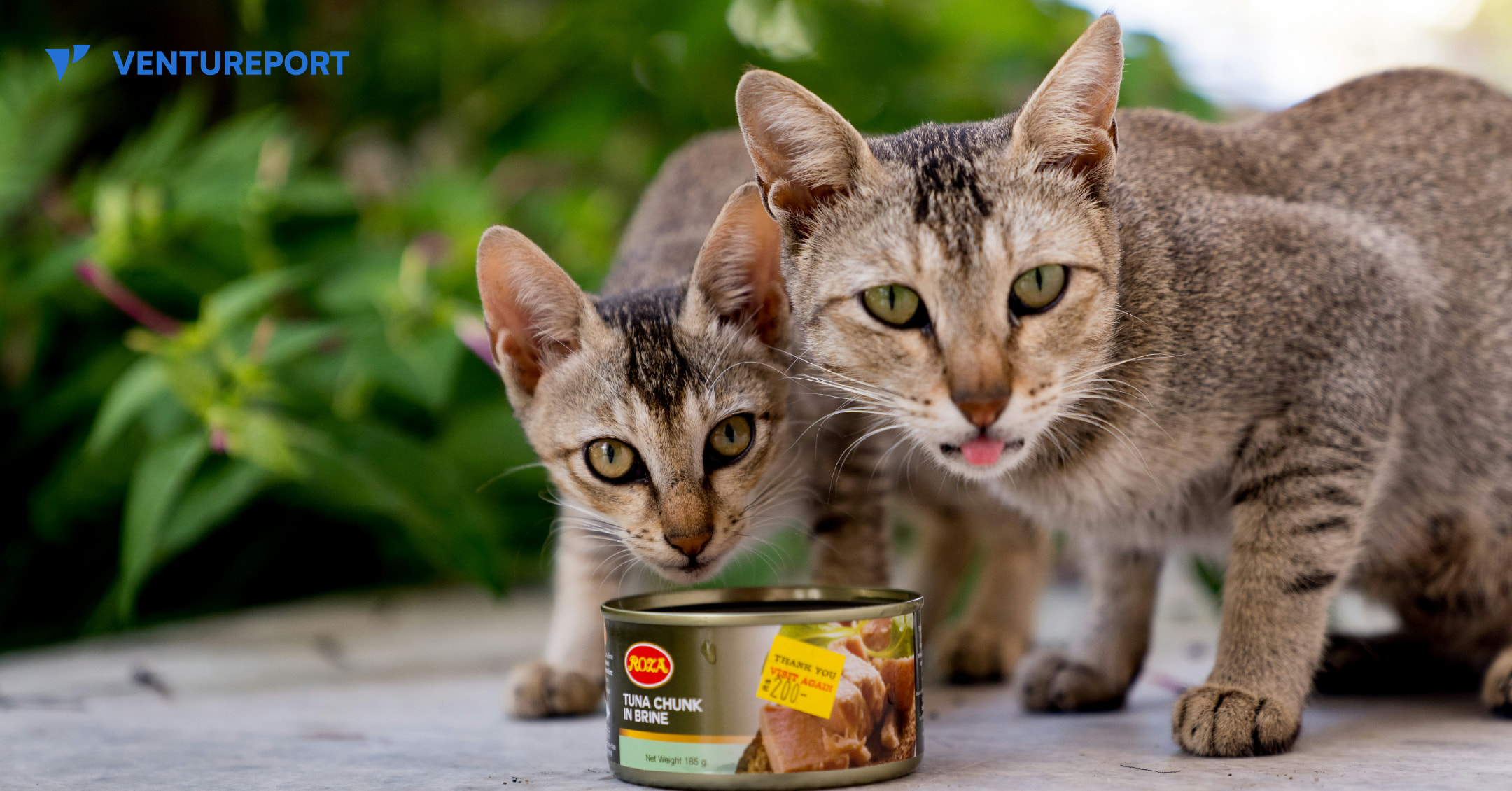
Cats having a jolly good time with a can of tuna. PHOTO: UNSPLASH
At a Silicon Valley pitch event crowded with AI, SaaS and deep-tech startups, the company that stood out was not selling software or algorithms. It was selling pet treats.
Eastseabrother, a premium pet food brand from South Korea, ranked first at a Plug and Play–hosted investor pitch competition in Sunnyvale. The product itself is simple: single-ingredient pet treats made from wild-caught seafood sourced from Korea’s East Sea. The company follows a principle it calls “Only What the Sea Allows”, working directly with regional fishermen while avoiding overfishing. With no additives and minimal processing, what sets Eastseabrother apart is not novelty, but control—over sourcing, supply chains and consistency.
That clarity helped the company walk away with both Best Product and Best Potential. “Investors asked detailed questions about repeat purchase rates and customer feedback, not just our technology or supply chain”, said Eunyul Kim, CEO of Eastseabrother. “That told us the market is shifting—real consumer trust now carries as much weight as a compelling tech narrative”.
What truly caught investors’ attention was not an ambitious vision of the future, but concrete evidence of traction today. Eastseabrother has already secured shelf space in specialty pet stores across California, New York and North Carolina, including an exclusive partnership with EarthWise Pet, a national specialty retail chain. At a consumer showcase at San Francisco’s Ferry Building, the brand recorded the highest on-site sales among all participating companies.
At its core, the pitch was built on simplicity: one ingredient, clear sourcing and a defined customer need. In a market saturated with complex products and abstract claims, that focus and transparency stood out.
The judges’ decision also reflects a broader shift in venture capital thinking. Not every successful startup is built on complex software or high-tech innovation. In categories like pet care—where trust, quality and transparency shape buying behavior—execution and credibility can matter more than technical sophistication.
Today, Eastseabrother has extended its reach beyond the U.S., expanding into Singapore and Hong Kong, with additional plans to grow further in North America as demand for premium pet food rises. And the broader takeaway from this pitch is not that consumer brands are overtaking tech startups. It is that investors are increasingly focused on fundamentals: who is buying, why they are returning and whether the business can sustain itself beyond the pitch deck.