
How ChinaMarket uses digital tools to make cross-border sourcing faster and more accessible for smaller businesses

A rack of colourful scarves. PHOTO: UNSPLASH
The 5th RCEP (Shandong) Import Commodities Expo opened this week at the Linyi International Expo Center, bringing together more than 5,300 buyers and over 400 exhibitors from 48 countries. Alongside the scale of the event, a quieter shift was visible in how trade itself is being organised.
ChinaMarket, the official platform of Linyi Mall, used the expo to show how sourcing is moving from manual coordination to software-led systems. On the first day, it hosted procurement matchmaking sessions and signed agreements with buyer groups from Argentina, South Korea and Ghana. But the focus was less on the deals themselves and more on the mechanism behind them.
The platform operates as a structured network of verified manufacturers, grouped by industrial clusters. Instead of buyers searching supplier by supplier, the system uses data and AI tools to match demand with production capacity. At the expo, this process was made visible through real-time data screens and guided sourcing sessions, where procurement teams connected directly with factories across categories such as building materials, textiles and electronics.
"Sourcing suppliers separately was time-consuming and inefficient. ChinaMarket accurately matches our needs and recommends reliable factories, saving us considerable effort," commented an Argentine buyer.
The underlying problem being addressed is not new. Cross-border sourcing is often slow, fragmented and dependent on intermediaries. What is changing is how that process is being compressed. By combining supplier verification, demand matching and communication into a single system, platforms like ChinaMarket aim to shorten sourcing cycles. They also reduce uncertainty in procurement decisions.
Financing is another layer where the model is evolving. Even when suppliers and buyers are matched efficiently, access to capital can still slow transactions down. Small and medium-sized firms often face constraints around payment terms and access to credit in international trade.
ChinaMarket’s “data + order financing” model links transaction data with financial services, allowing funding decisions to be tied more directly to verified orders rather than external collateral. In practice, this shifts part of the risk assessment from institutions to platform-level data.
The company is also extending this structure into agricultural supply chains. At the expo, it signed an agreement with a local government in Yinan County to build a digitally managed agricultural belt. The model combines sourcing at origin with platform distribution, with an emphasis on traceability for buyers across RCEP markets. This reflects a broader attempt to standardise supply visibility in sectors that are typically less digitised.
Geographically, the platform has been expanding into Southeast Asia. It has launched a digital marketplace in Malaysia and established operations in Indonesia, including support for government-linked procurement projects. These moves suggest a focus on embedding the platform within regional trade flows rather than operating as a standalone marketplace.
"We aim to be a 'super connector' between Chinese industrial belts and global markets", said Quan Chuanxiao, Chairman of Depth Digital Technology Group and ChinaMarket. "By digitizing the cross-border trade process, we solve trust and efficiency issues, making it simpler, faster, and more reliable for overseas buyers to source from China".
What emerges from the expo is less about a single platform and more about a shift in infrastructure. Trade is gradually moving toward systems where discovery, verification, negotiation and financing are handled within integrated digital layers. The question is not whether sourcing can be digitised, but how reliably these systems can scale across industries where trust and execution still depend on physical outcomes.
Keep Reading
From pre-orders to market entry, Rokid’s Taiwan campaign reflects how AI hardware is being introduced to consumers today.
Updated
January 8, 2026 6:30 PM
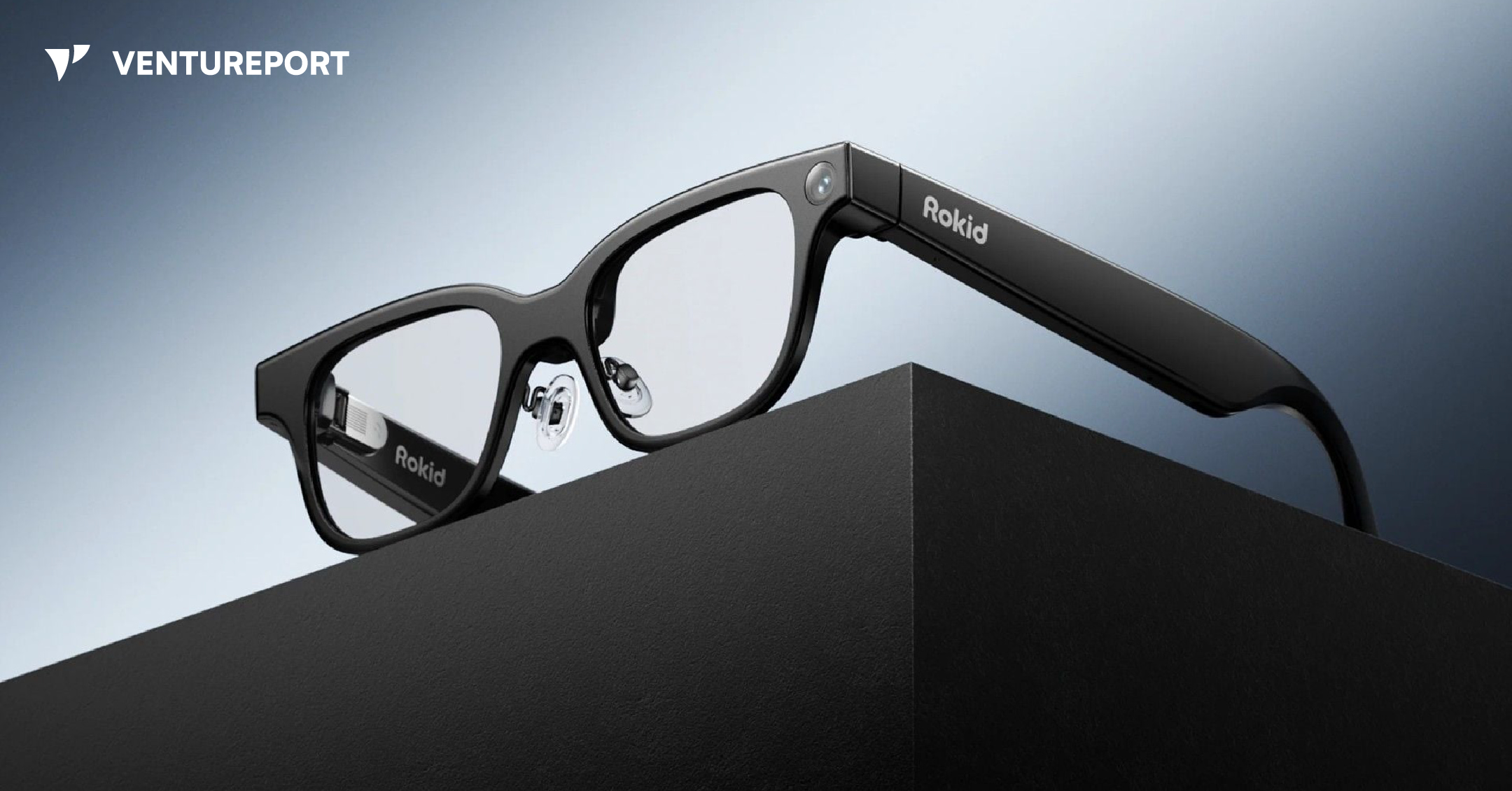
Rokid Glasses, a pair of AR glasses from Rokid. PHOTO: ROKID
Rokid has reached a significant crowdfunding milestone in Taiwan. Its Rokid Glasses campaign surpassed NT$62 million in pre-order funding on zeczec, Taiwan’s creative-oriented crowdfunding platform. The campaign ranked No. 1 across all categories on the platform in 2025 and entered the Top 10 funded campaigns in zeczec’s history, setting new records for AI and XR-related projects.
The campaign launched on October 28 and became one of the platform’s most prominent technology initiatives of the year. According to the company, the outcome followed growing visibility for Rokid Glasses after product showcases in New York, Berlin, Singapore and Paris, positioning the Taiwan campaign within a broader international rollout.
The crowdfunding achievement coincided with Rokid’s official market entry in Taiwan. On December 10, the company debuted Rokid Glasses locally, introducing the product to media, partners and early users in the region. The Taiwan launch mirrored earlier international events and connected the online crowdfunding campaign with a physical market presence.
Rokid Glasses combine augmented reality displays with built-in AI functions, including real-time multilingual translation, live transcription, navigation, object recognition and voice assistance. These capabilities were central to how the product was presented during both the crowdfunding campaign and the Taiwan launch, without framing the project as a traditional consumer electronics release.
The Taiwan campaign builds on Rokid’s prior crowdfunding history. The company previously raised more than US$4 million on Kickstarter, where Rokid Glasses became the highest-funded XR wearable project on the platform. The zeczec campaign extends that track record into one of Asia’s most established consumer electronics markets.
“Taiwan has one of the world's most mature and discerning consumer electronics markets”, said Said Justo Chang, Head of Global Channels at Rokid. “Reaching the top of Taiwan's crowdfunding platform is a great commercial achievement. We are excited to finally introduce Rokid Glasses to Taiwan”.
More broadly, the campaign highlights how crowdfunding platforms continue to function as launch and distribution channels for emerging AI and XR hardware. In Rokid’s case, product rollout, market entry and public participation converged within a single campaign, marking a notable moment for AI-enabled wearables in Taiwan’s technology landscape.