
How ChinaMarket uses digital tools to make cross-border sourcing faster and more accessible for smaller businesses

A rack of colourful scarves. PHOTO: UNSPLASH
The 5th RCEP (Shandong) Import Commodities Expo opened this week at the Linyi International Expo Center, bringing together more than 5,300 buyers and over 400 exhibitors from 48 countries. Alongside the scale of the event, a quieter shift was visible in how trade itself is being organised.
ChinaMarket, the official platform of Linyi Mall, used the expo to show how sourcing is moving from manual coordination to software-led systems. On the first day, it hosted procurement matchmaking sessions and signed agreements with buyer groups from Argentina, South Korea and Ghana. But the focus was less on the deals themselves and more on the mechanism behind them.
The platform operates as a structured network of verified manufacturers, grouped by industrial clusters. Instead of buyers searching supplier by supplier, the system uses data and AI tools to match demand with production capacity. At the expo, this process was made visible through real-time data screens and guided sourcing sessions, where procurement teams connected directly with factories across categories such as building materials, textiles and electronics.
"Sourcing suppliers separately was time-consuming and inefficient. ChinaMarket accurately matches our needs and recommends reliable factories, saving us considerable effort," commented an Argentine buyer.
The underlying problem being addressed is not new. Cross-border sourcing is often slow, fragmented and dependent on intermediaries. What is changing is how that process is being compressed. By combining supplier verification, demand matching and communication into a single system, platforms like ChinaMarket aim to shorten sourcing cycles. They also reduce uncertainty in procurement decisions.
Financing is another layer where the model is evolving. Even when suppliers and buyers are matched efficiently, access to capital can still slow transactions down. Small and medium-sized firms often face constraints around payment terms and access to credit in international trade.
ChinaMarket’s “data + order financing” model links transaction data with financial services, allowing funding decisions to be tied more directly to verified orders rather than external collateral. In practice, this shifts part of the risk assessment from institutions to platform-level data.
The company is also extending this structure into agricultural supply chains. At the expo, it signed an agreement with a local government in Yinan County to build a digitally managed agricultural belt. The model combines sourcing at origin with platform distribution, with an emphasis on traceability for buyers across RCEP markets. This reflects a broader attempt to standardise supply visibility in sectors that are typically less digitised.
Geographically, the platform has been expanding into Southeast Asia. It has launched a digital marketplace in Malaysia and established operations in Indonesia, including support for government-linked procurement projects. These moves suggest a focus on embedding the platform within regional trade flows rather than operating as a standalone marketplace.
"We aim to be a 'super connector' between Chinese industrial belts and global markets", said Quan Chuanxiao, Chairman of Depth Digital Technology Group and ChinaMarket. "By digitizing the cross-border trade process, we solve trust and efficiency issues, making it simpler, faster, and more reliable for overseas buyers to source from China".
What emerges from the expo is less about a single platform and more about a shift in infrastructure. Trade is gradually moving toward systems where discovery, verification, negotiation and financing are handled within integrated digital layers. The question is not whether sourcing can be digitised, but how reliably these systems can scale across industries where trust and execution still depend on physical outcomes.
Keep Reading
A new bet on early heart failure detection and why women’s health is at the center.
Updated
January 8, 2026 6:28 PM
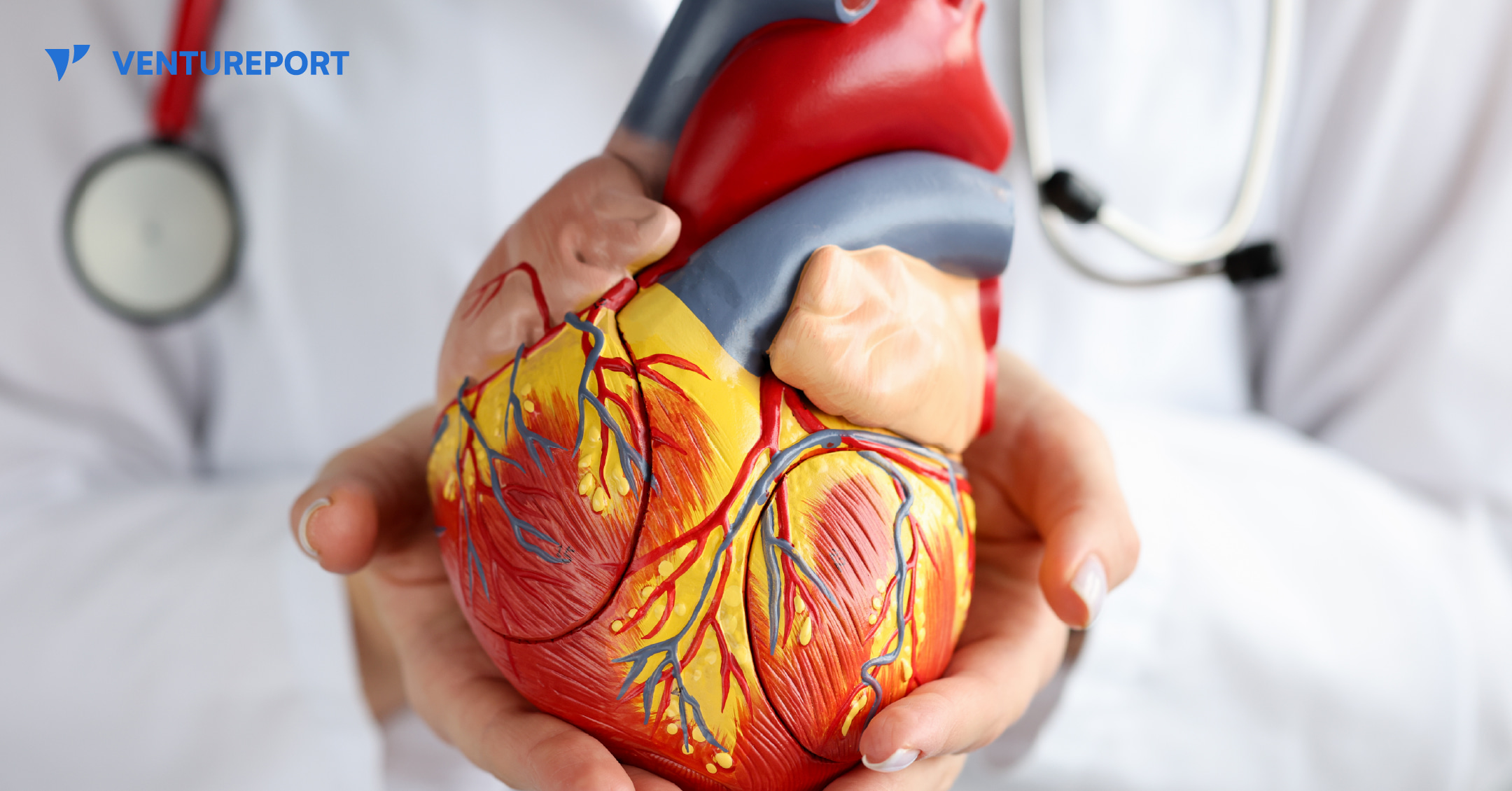
A doctor holding an artificial heart model. PHOTO: ADOBE STOCK
Heart disease does not always announce itself clearly, especially in women. Many of the symptoms are ordinary, including fatigue, shortness of breath and swelling. These signs are frequently dismissed or explained away. As a result, many women are diagnosed late, when treatment options are narrower and outcomes are worse. That diagnostic gap is the context behind a recent investment involving Ultromics and the American Heart Association’s Go Red for Women Venture Fund.
Ultromics is a health technology company that uses artificial intelligence to help doctors spot early signs of heart failure from routine heart scans. It has received a strategic investment from the American Heart Association’s Go Red for Women Venture Fund.
The focus of the investment is a long-standing blind spot in cardiac care. Heart failure with preserved ejection fraction, or HFpEF, affects millions of people worldwide, with women disproportionately impacted. It is one of the most common forms of heart failure, yet also one of the hardest to diagnose. Studies even show women are twice as likely as men to develop the condition and around 64% of cases go undiagnosed in routine clinical practice.
Ultromics works with a tool most patients already experience during heart care: the echocardiogram. There is no new scan and no added burden for patients. Its software analyzes standard heart ultrasound images and looks for subtle patterns that point to early heart failure. The goal is clarity. Give clinicians better signals earlier, before the disease advances.
“Heart failure with preserved ejection fraction is one of the most complex and overlooked diseases in cardiology. For too long, clinicians have been expected to diagnose it using tools that weren't built to detect it and as a result, many patients are identified too late,” said Ross Upton, PhD, CEO and Founder of Ultromics. “By augmenting physicians' decision making with EchoGo, we can help them recognize disease at an earlier stage and treat it more effectively.”
The stakes are high. Research suggests women are twice as likely as men to develop the condition and that a majority of cases are missed in routine clinical practice. That delay matters. New therapies can reduce hospitalizations and improve survival, but only if patients are diagnosed in time.
This is why early detection has become a priority for mission-driven investors. “Closing the diagnostic gap by recognizing disease before irreversible damage occurs is critical to improving health for women—and everyone,” said Tracy Warren, Senior Managing Director, Go Red for Women Venture Fund. “We are gratified to see technologies, such as this one, that are accepted by leading institutions as advances in the field of cardiovascular diagnostics. That's the kind of progress our fund was created to accelerate.”
Ultromics’ platform is already cleared by regulators for clinical use and is being deployed in hospitals across the US and UK. The company says its technology has analyzed hundreds of thousands of heart scans, helping clinicians reach clearer conclusions when traditional methods fall short.
Taken together, the investment reflects a broader shift in healthcare. Attention is shifting earlier—toward detection instead of reaction. Toward tools that fit into existing care rather than complicate it. In this case, the funding is not about introducing something new into the system. It is about seeing what has long been missed—and doing so in time.