
How ChinaMarket uses digital tools to make cross-border sourcing faster and more accessible for smaller businesses

A rack of colourful scarves. PHOTO: UNSPLASH
The 5th RCEP (Shandong) Import Commodities Expo opened this week at the Linyi International Expo Center, bringing together more than 5,300 buyers and over 400 exhibitors from 48 countries. Alongside the scale of the event, a quieter shift was visible in how trade itself is being organised.
ChinaMarket, the official platform of Linyi Mall, used the expo to show how sourcing is moving from manual coordination to software-led systems. On the first day, it hosted procurement matchmaking sessions and signed agreements with buyer groups from Argentina, South Korea and Ghana. But the focus was less on the deals themselves and more on the mechanism behind them.
The platform operates as a structured network of verified manufacturers, grouped by industrial clusters. Instead of buyers searching supplier by supplier, the system uses data and AI tools to match demand with production capacity. At the expo, this process was made visible through real-time data screens and guided sourcing sessions, where procurement teams connected directly with factories across categories such as building materials, textiles and electronics.
"Sourcing suppliers separately was time-consuming and inefficient. ChinaMarket accurately matches our needs and recommends reliable factories, saving us considerable effort," commented an Argentine buyer.
The underlying problem being addressed is not new. Cross-border sourcing is often slow, fragmented and dependent on intermediaries. What is changing is how that process is being compressed. By combining supplier verification, demand matching and communication into a single system, platforms like ChinaMarket aim to shorten sourcing cycles. They also reduce uncertainty in procurement decisions.
Financing is another layer where the model is evolving. Even when suppliers and buyers are matched efficiently, access to capital can still slow transactions down. Small and medium-sized firms often face constraints around payment terms and access to credit in international trade.
ChinaMarket’s “data + order financing” model links transaction data with financial services, allowing funding decisions to be tied more directly to verified orders rather than external collateral. In practice, this shifts part of the risk assessment from institutions to platform-level data.
The company is also extending this structure into agricultural supply chains. At the expo, it signed an agreement with a local government in Yinan County to build a digitally managed agricultural belt. The model combines sourcing at origin with platform distribution, with an emphasis on traceability for buyers across RCEP markets. This reflects a broader attempt to standardise supply visibility in sectors that are typically less digitised.
Geographically, the platform has been expanding into Southeast Asia. It has launched a digital marketplace in Malaysia and established operations in Indonesia, including support for government-linked procurement projects. These moves suggest a focus on embedding the platform within regional trade flows rather than operating as a standalone marketplace.
"We aim to be a 'super connector' between Chinese industrial belts and global markets", said Quan Chuanxiao, Chairman of Depth Digital Technology Group and ChinaMarket. "By digitizing the cross-border trade process, we solve trust and efficiency issues, making it simpler, faster, and more reliable for overseas buyers to source from China".
What emerges from the expo is less about a single platform and more about a shift in infrastructure. Trade is gradually moving toward systems where discovery, verification, negotiation and financing are handled within integrated digital layers. The question is not whether sourcing can be digitised, but how reliably these systems can scale across industries where trust and execution still depend on physical outcomes.
Keep Reading
Amid AI and tech startups, Eastseabrother proved the power of demand and trust.
Updated
January 23, 2026 10:41 AM
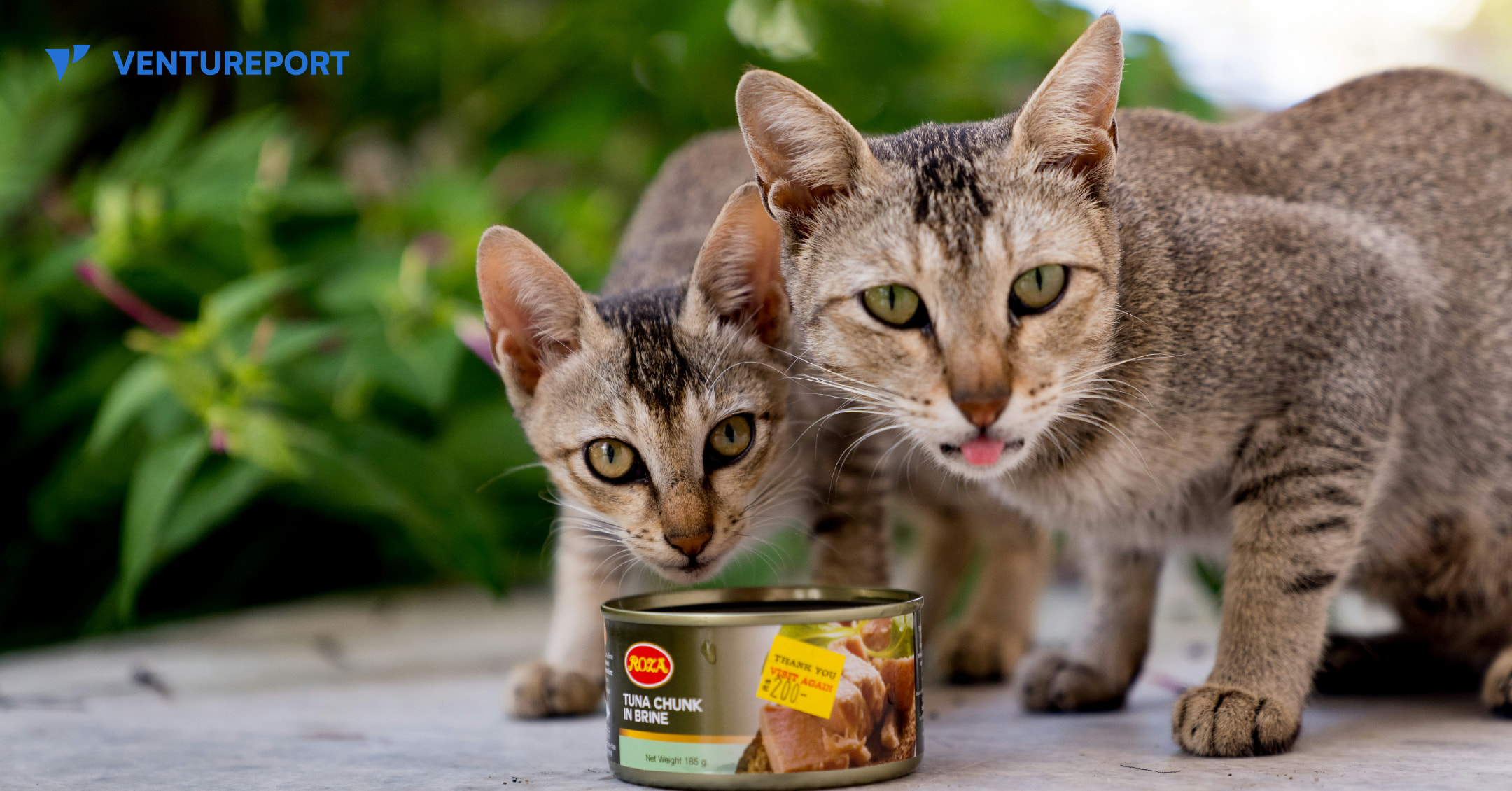
Cats having a jolly good time with a can of tuna. PHOTO: UNSPLASH
At a Silicon Valley pitch event crowded with AI, SaaS and deep-tech startups, the company that stood out was not selling software or algorithms. It was selling pet treats.
Eastseabrother, a premium pet food brand from South Korea, ranked first at a Plug and Play–hosted investor pitch competition in Sunnyvale. The product itself is simple: single-ingredient pet treats made from wild-caught seafood sourced from Korea’s East Sea. The company follows a principle it calls “Only What the Sea Allows”, working directly with regional fishermen while avoiding overfishing. With no additives and minimal processing, what sets Eastseabrother apart is not novelty, but control—over sourcing, supply chains and consistency.
That clarity helped the company walk away with both Best Product and Best Potential. “Investors asked detailed questions about repeat purchase rates and customer feedback, not just our technology or supply chain”, said Eunyul Kim, CEO of Eastseabrother. “That told us the market is shifting—real consumer trust now carries as much weight as a compelling tech narrative”.
What truly caught investors’ attention was not an ambitious vision of the future, but concrete evidence of traction today. Eastseabrother has already secured shelf space in specialty pet stores across California, New York and North Carolina, including an exclusive partnership with EarthWise Pet, a national specialty retail chain. At a consumer showcase at San Francisco’s Ferry Building, the brand recorded the highest on-site sales among all participating companies.
At its core, the pitch was built on simplicity: one ingredient, clear sourcing and a defined customer need. In a market saturated with complex products and abstract claims, that focus and transparency stood out.
The judges’ decision also reflects a broader shift in venture capital thinking. Not every successful startup is built on complex software or high-tech innovation. In categories like pet care—where trust, quality and transparency shape buying behavior—execution and credibility can matter more than technical sophistication.
Today, Eastseabrother has extended its reach beyond the U.S., expanding into Singapore and Hong Kong, with additional plans to grow further in North America as demand for premium pet food rises. And the broader takeaway from this pitch is not that consumer brands are overtaking tech startups. It is that investors are increasingly focused on fundamentals: who is buying, why they are returning and whether the business can sustain itself beyond the pitch deck.