
Updated
January 8, 2026 6:33 PM

A group of entrepreneurs coming up with different ideas. PHOTO: FREEPIK
If startup success stories usually make you picture cutting-edge tech, you might be missing a big part of the picture. Sometimes, the weirdest ideas shine the brightest, making real money and delighting both founders and customers. From ordinary rocks turned into pets to renting live chickens, these unusual startups show how far creativity and a pinch of humor can go.
If you think the business world is all suits and serious pitches, think again—welcome to the wonderfully weird side of entrepreneurship.
Owning a pet is a joy, but let’s be honest—it’s also a handful. Between shedding fur, endless feeding schedules, surprise messes and finding a sitter when you’re away, pet parenting is not exactly effortless.
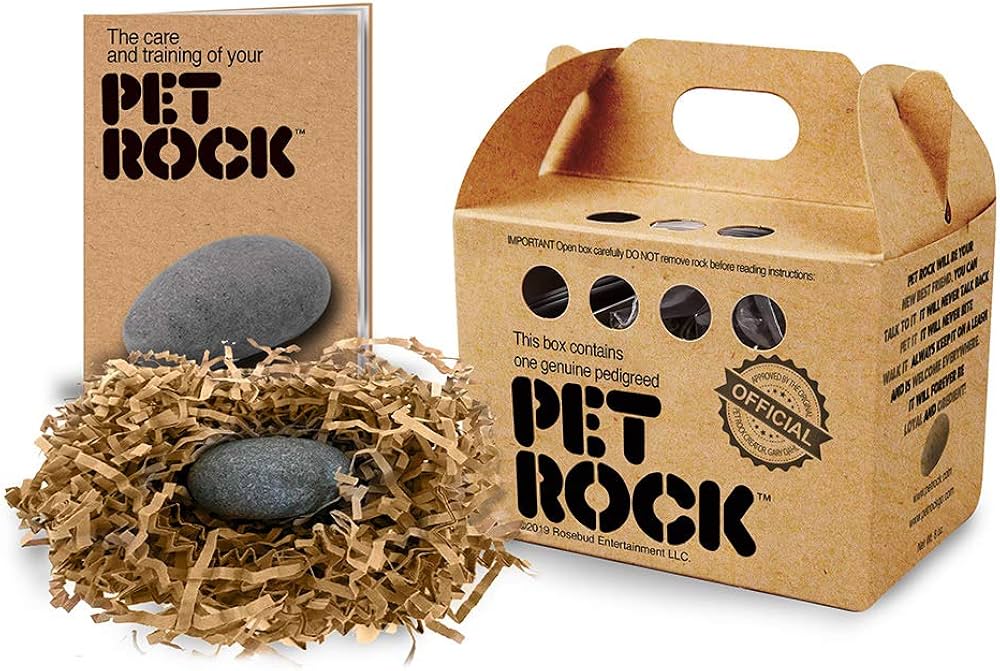
Back in 1975, an advertising executive named Gary Dahl found himself joking about this very problem over drinks with friends. His solution for the “perfect” pet: a rock. No feeding, no walking, no grooming and absolutely no accidents on the carpet.
What started as a joke quickly snowballed into a real business. Smooth stones were sourced from Rosarito Beach in Mexico, then packed in playful cardboard “pet carrier” boxes with little air holes and a bed of straw. To make the experience even more cheeky, every Pet Rock came with a care manual that instructed owners to give their new companion sunlight, affection and, of course, a name.
It was absurd and hilarious, but it worked. Selling at US$3.95 apiece in the ’70s, Pet Rocks became a cultural phenomenon. Today, you can still find them on Amazon, but they will now set you back around US$29.99 or more. Would you bring home a Pet Rock? People in the ’70s sure did.

Back in 2013, Phil and Jenn Tompkins a couple duo, launched the company "Rent The Chicken" with one straightforward goal: give people a chance to try raising backyard hens and enjoy fresh eggs without the long-term commitment.
Through partnerships with local farmers across the U.S. and Canada, this backyard chicken rental startup brings egg-laying hens straight to people’s yards. It offers different rental packages, but a standard six-month rental costs around US$500. This usually includes two hens ready to lay within days, a portable coop, feed, food and water dishes and expert support for any chicken-related questions.
The chickens arrive in spring and stay until fall. When the season ends, families can choose to return the hens, extend the rental or even buy them for about US$40 each at the end of the contract.
Today, the company works with partners in 29 states, from Oregon to Texas, and in parts of Canadain p. For people outside those areas, an out-of-area purchase package that comes with three hens can be shipped anywhere in the 48 contiguous states in the U.S. for about US$1,550.
In a way, it’s a fun and hands-on path to food security — giving families the joy of collecting their own eggs and knowing exactly where their breakfast comes from.

By day, Gadlin worked as a full-time web developer for a television broadcasting company. Outside of work, he poured his energy into comedy and writing. That creative streak took him back to high school days, when he had drawn silly cats for a comic series called Silly Cats Comic.
With those doodles as his foundation and a bit of basic design know-how, Gadlin launched his website, “I Want to Draw a Cat For You” in 2011. The concept was as simple as it was funny: visitors would describe the cat of their dreams and Gadlin would personally hand-draw it, then send it their way.
This quirky startup idea landed him on Shark Tank, where he secured an offer of US$25,000 from investor Mark Cuban for a 33% stake in the business. Not bad for stick-figure cats.
When the site first launched, customers could pay extra US$5 for colour. Shipping cost US$1 if they didn’t mind the drawing arriving in a folded envelope, or US$5 for a flat mailer. For delivery within 48 hours, there was a US$19.95 rush fee that many customers were happy to pay.
These days, Gadlin leans more on digital delivery and limited runs of his cat drawings at US$50, rather than mailing every single piece of his art. What he once described as “mediocre cat drawings” has become proof that a simple, original idea can claw its way into the startup world.

Imagine arriving in a new city with no one to show you around. That is exactly the kind of situation where RentAFriend can help.
Launched in 2009 by Scott Rosenbaum, the unusual business was inspired by Japan’s “rental family” services, where people can hire a friend, a date or even a parent for a short period. Rosenbaum saw an opportunity to adapt that concept for North America, but with a focus strictly on platonic friendship.
Here’s how it works: Anyone can sign up as a “friend” for free by creating a profile, listing their interests and setting an hourly rate. People who want to hire pay a membership fee, typically around US$24.95 a month, to connect with friends across the platform.
With a rented friend, you can do pretty much anything platonic. Go sightseeing, hit a museum, catch a game, work out together or even bring them along to a party or family event. At its heart, RentAFriend connects people who need company with those happy to earn a little extra simply by being one.
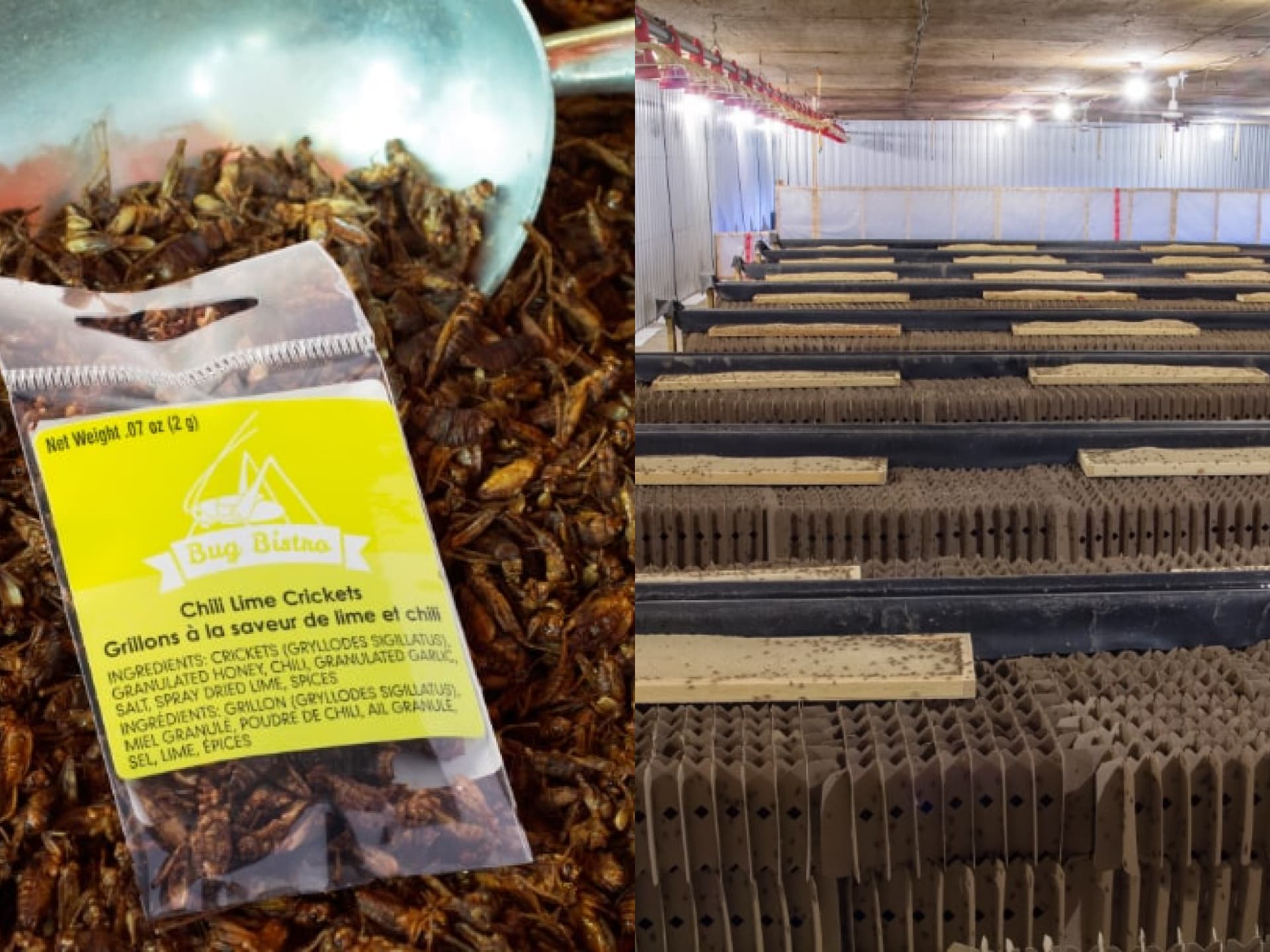
Back in 2014, in the small town of Norwood, Ontario, Canada, three brothers—Jarrod, Darren and Ryan Goldin, set out to do something that sounded downright bizarre at the time: farm crickets for people to eat.
The idea first struck Jarrod after he saw a cricket-based nutrition bar on television. Around the same time, the UN released a report on edible insects as a sustainable food source. Suddenly, the “weird” idea didn’t seem so weird after all.
At Entomo Farms, crickets are raised in cage-free “cricket condos”, where they live in warm, dark spaces that mimic their natural habitat. They’re fed and cared for until they reach about six or seven weeks old, then humanely harvested using a CO₂ method. From there, they’re rinsed, roasted and ground into a fine powder—no additives, just pure cricket protein.
The appeal goes beyond novelty. Crickets are packed with nutrients and need far less land, feed and water than beef, making them both healthy and eco-friendly.
While their approach may seem unconventional, what drives Entomo Farms is simple: making sustainable, responsible food accessible to everyone.
These startups prove that innovation doesn’t always wear a serious face. Sometimes, it turns up wrapped in humor, curiosity or even a touch of absurdity, yet still manages to spark real change. From crickets turned into protein to chickens rented out by the season, each weird startup idea shows that entrepreneurship thrives when people dare to think differently.
While some of these unusual business ideas burned bright then faded, others are still evolving in the background, shifting from fads to niche services or steady, quiet companies. What they share is a willingness to test an idea most people would dismiss at first glance.
That is the real takeaway for founders. Weird startup ideas will not always scale into unicorns, yet they can test new consumer habits, open up fresh markets and shape culture in surprising ways. If you are building something new, there is space for products that make people laugh, think or raise an eyebrow before they reach for their wallet.
Keep Reading
Why More Growth Companies Are Looking Beyond the Traditional IPO
Updated
August 10, 2026 5:56 PM
.jpg)
Enhanced Games at Resorts World Las Vegas. PHOTO: FACEBOOK@ENHANCEDGAMES
Enhanced Games reached the public markets in less than six months.
In an era where traditional IPOs can take more than a year to complete, the speed of the company’s merger with A Paradise Acquisition Corp. (NASDAQ: APAD) stands out, particularly given the significantly tighter regulatory scrutiny surrounding SPAC transactions since 2021.
The transaction highlights why some growth-stage companies are evaluating special-purpose acquisition companies (SPACs) as a viable alternative to the traditional IPO process.
Led by Dr. Aron D’Souza and backed by investors including Peter Thiel and Christian Angermayer, Enhanced Games announced its Business Combination Agreement with APAD in November 2025. The transaction closed in May 2026, bringing the company to the public markets materially faster than the timeline typically associated with a conventional IPO.
For decades, the traditional IPO has been considered the default route for private companies entering the public markets. But for many high-growth businesses today, the process has become increasingly slow, expensive, and difficult to execute efficiently.
A conventional IPO can take well over a year to prepare, involving extensive audits, regulatory reviews, underwriter coordination, investor roadshows, and careful timing against market conditions. During that period, companies remain exposed to volatility, shifting investor sentiment, and delayed access to capital. According to EY, many companies postponed planned IPOs amid market volatility and uncertainty surrounding U.S. tariff announcements, highlighting how sensitive IPO execution can be to broader market conditions.
For businesses operating in fast-moving industries, timing matters. Delayed access to liquidity can slow expansion, hiring, acquisitions, partnerships, and product development at critical stages of growth.
That is one reason why the merger between Enhanced Games and APAD is notable. The SPAC structure allowed Enhanced Games to negotiate valuation, governance terms, and financing arrangements early in the process, compressing many of the steps normally associated with a conventional IPO into a single transaction.
Enhanced Games operates across sports, media, performance science, and wellness, sectors that require significant upfront investment and rapid execution. Earlier access to public capital provided the company with liquidity, visibility, and strategic flexibility at an important stage of growth.
The public listing also gives the company tradable equity that can potentially support acquisitions, partnerships, athlete compensation structures, sponsorship arrangements, and future fundraising initiatives. These capabilities are particularly relevant in industries evolving as rapidly as sports entertainment, wellness, and human-performance science, where speed itself can become a competitive advantage.
The deal also highlights one of the SPAC market’s core advantages: the ability to combine capital raising and public-market entry within a single process.
Beyond speed, the SPAC structure offered Enhanced Games another major advantage: earlier visibility into valuation.
In a traditional IPO, pricing is largely determined near the end of the process through institutional book-building and investor demand during the roadshow phase. Even late-stage IPO candidates can face valuation cuts, downsized offerings, or postponed listings if market conditions weaken.
Recent IPO markets have repeatedly demonstrated this risk. Instacart went public in 2023 at an approximate US$9.9 billion valuation, which is dramatically below the US$39 billion private valuation it achieved during the 2021 market peak. Similarly, WeWork’s failed IPO attempt became one of the clearest examples of how rapidly investor sentiment can shift during the IPO process.
SPAC mergers operate differently.
Enhanced Games secured an implied enterprise valuation of approximately US$1.2 billion months before closing the transaction. While the merger still required SEC review and shareholder approval, the company gained significantly greater visibility into deal economics much earlier in the process.
That certainty is particularly valuable for growth companies whose valuations are tied more closely to long-term platform potential than near-term profitability.
Rather than relying entirely on shifting IPO market sentiment, the SPAC structure allowed Enhanced Games to negotiate around its broader growth strategy and future expansion plans from the outset.
The Enhanced Games transaction also reinforces why some growth-stage companies evaluate SPACs as an alternative to the traditional IPO process.
Traditional IPO investors often prefer businesses with long operating histories, stable earnings, and predictable growth profiles. Many expansion-stage companies simply do not fit that model yet, even if their long-term opportunities are substantial.
SPACs offer a different pathway.
Instead of waiting years to achieve the operational maturity typically expected in a conventional IPO, companies can access public-market capital earlier while still in growth mode.
For Enhanced Games, early access to the public markets provides more than capital. Public equity can support acquisitions, partnerships, athlete compensation structures, sponsorship arrangements, and future fundraising efforts. These capabilities are particularly important in sectors evolving as rapidly as sports entertainment, wellness, and human-performance science, where speed itself can become a competitive advantage.
The transaction also highlights how the SPAC market has evolved since the speculative boom of 2020 and 2021.
Today’s de-SPAC environment operates under significantly tighter regulatory scrutiny, including enhanced disclosure requirements, greater SEC oversight, and stricter treatment of projections and liability standards.
The Harvard Law School Forum on Corporate Governance noted that redemption rates spiked in 2022, in some cases approaching 100%, contributing to a significant slowdown of the SPAC activity.
In response to rising investor concerns and regulatory pressure, the U.S. Securities and Exchange Commission adopted enhanced SPAC disclosure and liability rules in 2024 designed to align de-SPAC transactions more closely with traditional IPO standards. Sponsors also faced greater pressure to demonstrate financing certainty, stronger disclosures, and more credible post-merger execution.
Enhanced Games completed its transaction within this more disciplined environment.
Its Form S-4 included audited financial statements, governance disclosures, transaction details, and extensive risk-factor analysis subject to SEC review. The company also supplemented SPAC trust proceeds with a separately arranged US$40 million PIPE financing commitment designed to strengthen liquidity and improve deal certainty.
That structure reflects a more institutional and disciplined SPAC market than the speculative wave seen several years ago.
The Enhanced Games transaction demonstrates that, despite tighter regulation and a far more selective market environment, SPACs can offer certain growth companies a practical alternative to the traditional IPO.
For businesses prioritising speed, capital access, and execution certainty, a well-structured de-SPAC transaction may provide a more efficient route to the public markets, particularly when supported by credible financing, disciplined structuring, and strong investor backing.